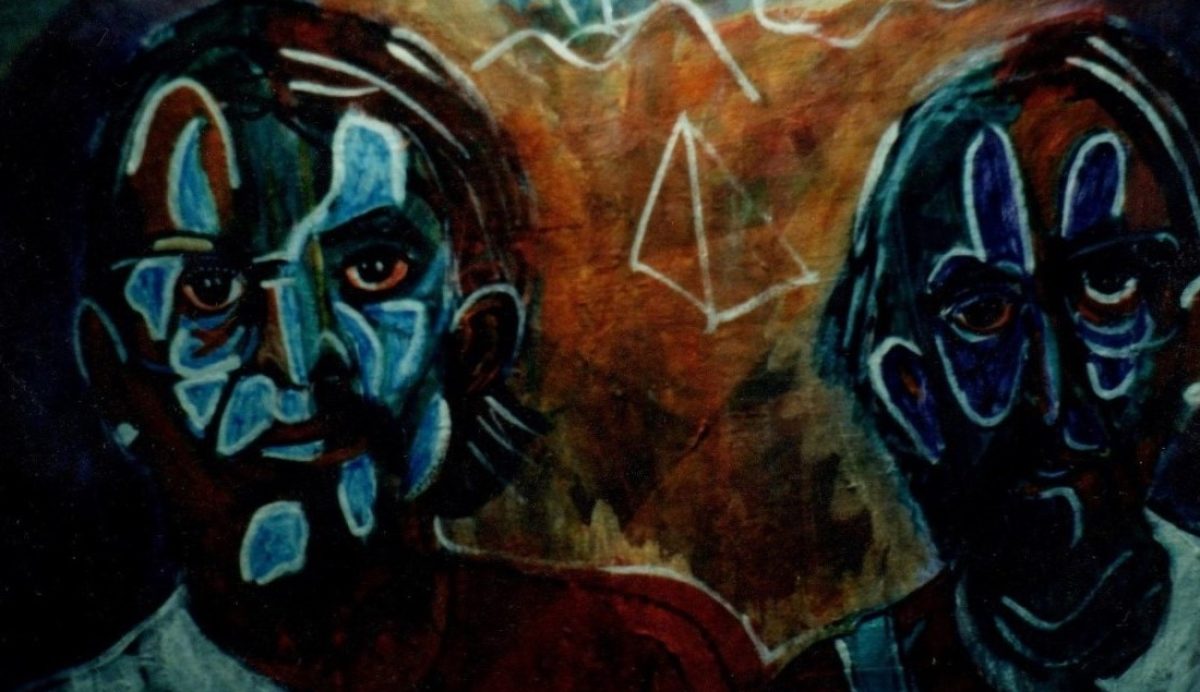
Coming after publications of his poetry and a novel, High House and Radio (1991)
is a collection of Rooplall Monar’s short stories. If the back cover is a reliable
guide readers are invited to follow the lives of characters who once occupied
cramped living quarters on a Sugar Estate, who now live independently in
their own homes.
The stories come draped in the satins of Guyanese Indianness, and on that level
they might intrigue those pursuers of groups and constituencies, the pollsters
and publishers who enjoy framing the cultural plight of their preferred
collectives.
But collectives (ethnic or religious) are ice blocks inside which the human
spirit lies frozen, with all its contradictions and unconscious bits. You expect
talented writers to chip away at these blocks so that individual fates might
be freed, and minds made open again to possibilities and diverse view-
points.
Monar’s fiction has encouraged snappy comparisons with writers working a
similar literary terrain, Sam Selvon (in Ways of Sunlight, 1957) or V. S Naipaul
(in Miguel Street, 1959). And obligatory references to “the kala pani” voyage.
Those older writers brought incisive observation and humour to bear on a
mosaic of desperate living.
After his remarkable achievement with Janjhat (1989), Monar in this collection
creates a world that showcases the Indianness of his Indians. The stories don’t
probe deeper than that.
His Indian folk occupy a self-contained village on the coast (Annandale). They
no longer work for the sugar estate, but lack of education has severely
handicapped their life prospects.
The old estate worker solidarities have begun to fray; tempers and divisions
develop a sharper edge. “Over me dead body, no Hindu blood in me family”,
a Muslim father shouts at his daughter who is thinking of getting married. “Greed
and selfishness invade people spirit”, another character says in a bitter jokey
rum shop mood.
Monar has set his own limits for these stories – intense creole talk and amusing
portraits that release ripples of laughter and recognition. Characters often
get drunk and feel emboldened to perform reckless acts. Village tricksters use
their wits to survive. And humour is at the level of the unemployed man whose
day to day problems are compounded at night by his unhelpful wife – her bulky
torso and heavy thighs making bedroom intimacy strenuous if not completely
satisfying labour.
On occasion black creoles from an adjacent village (Buxton) cross boundary
lines: a woman, unhappy with her black obeah man, searches for a Hindu spirit
man and hopes for better results. There are “thiefing black people” who raid
backyards for poultry; and idle black youth whose crude sexual comments as
Indian girls walk by raise tension and alarm.
Tension swells into aggression as when politically generated violence sweeps
across the land. A few stories (“Election Fever”) look at volatile situations
during Election time when Indians became random targets.
Though Monar doesn’t write with an activist’s eye for Indian grievance, the
stories shed light on the predicament of self-sufficient communities, where
caution and a hushed anxiety are the main rules of engagement when darkness
and outsiders approach the prayer flags at the gates.
Monar’s prose – “And don’t talk, them coolie people beetee yapping while
one-two coolie women beating they chest dab dab: ‘O Bhagwan, is real
murderation.’” – lies like thick thick paragrass on every page. Sometimes he
seems happy to display his easy way with creole words. At other moments the
narrator’s voice wears you down with its revved up ethnic speak.
You sense the need for editorial oversight and suggestion so that the language
hews to the task of delineating character, offering insight. A world wide
webbish Indian, drawn to the book’s Indianness, might feel compelled to
tread gingerly through a word field like this: “But gat luck, she nah gat none big
brodda in the house, else he mighta fat-eye she, cause nowadays, you cyan
trust some buddy an sissy never mind them come-out pon one mumma-belly.”
≈☼≈
So much of short story success depends on its cast of invented characters. Monar
has called up folk from his own village experience; but his Danky, Mule, Bansi,
Bungu, Naimoon & Shairool don’t stay on in the imagination after you’ve closed
the book. They behave in recognizably Guyanese ways, arguing & cussing,
scheming & daring, beating tassa drums & cooking mutton curry; and on
drunken occasions they dish out “one proper cut-rass” to their wives.
In the Booker sugar estate days of the 60s, where these stories are set, and
later in the 70s, when “folk” culture helped stoke anticolonial fires, fiction like
this gave reason for awards and performance; and an overseas delight in the
liberation of a once marginalized language and culture.
Monar’s fiction received a special Judges’ Prize in 1987. And Janjhat has beenhailed as his remarkable upcoming Guyanese novel.
But new territory is already laid out and waiting for Monar’s attention. Up from
the estate canefields more of his Indians, no longer prepared to tolerate
bypass, have made expanded moves from rural dwelling to new residence in
the towns, where they dispense political patronage and must “look outward”,
share residential space and intermingle with non-Indian creoles and strangers.
Authors Edgar Mittelholzer and Jan Carew once worked like porknockers in
similar areas of human scramble and depredation. They’ve left us standards
and enduring literary models. There have been solitary attempts at political-
murder mystery, but the field remains wide open for literary forays: into the
acquisitive itchiness of administers-in-chief; their always self-serving lovers;
or the creole melodramas of our desperate housewives.
In this day and age, if serious literary fiction seems unwanted or must stay
locked up overseas institutions of higher reading, a second tier of well-
crafted books could keep us pleasurably engaged.
Otherwise, Guyana will remain at the mercy of freelance entrepreneurs in yachts,
who sail in, make sly gestures and company, then quickly sail out. Writers with
Monar’s storytelling talent would appear to have their work cut out for them.
Book Reviewed: “High House and Radio”: Rooplall Monar: Peepal Tree Press,
England, 1991, 176 pgs. (A version of this article appeared in 2007)

 FARJOURNEY CARIBBEAN