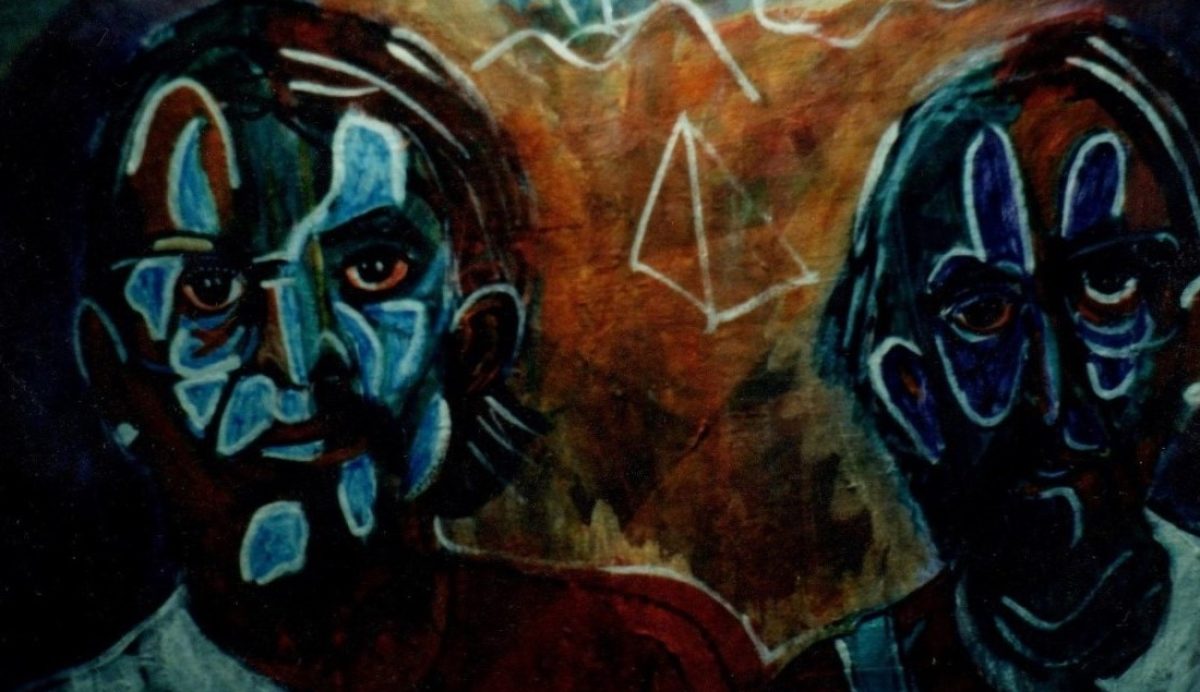
Mahadai Das (1954 – 2003)
Since her death in 2003 the poetry of Mahadai Das has been embraced
in some quarters with as much fervor and sadness as the poetry of
Martin Carter. Not far behind the glowing tributes are many references
to her personal life. You could develop any number of profiles from
intimate details made public about her.
Consider these for instance: “Delivered by midwife on October 22nd
1954”, with its hints at susceptibilities and risk. “The oldest of ten
children”, upon whom great expectations were hoisted, and a fate
beyond multiple childbearing sealed. Her death after illness and “open
heart surgery”, suggesting a talented child might have come into the
world already marked for death.
Other details may or may not support the notion of a foreshadowed
life: the former beauty queen (Miss Diwali, 1971) and standard bearer
of beauty for her ethnic group; the political activist, going against the
current, choosing to align her hopes not with a race-based party.
Answering instead a post-Independence call to nation building: “I Want
to be a Poetess for My People.”
In Bones (1988) you might anticipate the pea shelling of women
“issues”, a feminist rigour in the lines. There is, instead, delicate
sentiment and a wistful self-probing. “Though I have reason/ to blow
trumpets, I play/ an elegiac flute in silver hours/ of a misty morning,
calling birds with songs.” (“Resurrection”).
Bird images are everywhere in this collection; but then there’s so much
one would wish to take flight from in Guyana: the drain clog of poverty
and ethnic preference, the cast nets of unremorseful ideologues. Das
admits to being “Bird stricken./Shrunken my globe, my joys, small
circumference.” Birds like thoughts fly out of her head; sometimes
their fate is the clipped wing, or ̶ like “a pigeon anklestrung/
homefed” ̶ the trapped availability of spirit.
Das has been gathered in the folds of ethnic heroism, her past mistakes
forgiven. Her folly as an East Indian woman (in the 70s) was to cross
over into political territory controlled vindictively by black men.
Reviled quietly for this act of ethnic infidelity, she was forgiven and
welcomed back in death by the heritage keepers (and others following)
and embraced as a victim of idealism and her own “naïve faith” –
wanting to be a “poetess” inclusive of the wrong people.
What’s not so openly acknowledged is the first surge of bravery that
pushed her craft out against race-based currents; that front running,
off limits individuality that landed her eventually in the company of
black men. (There were reports – accompanied by the trashiness of
newspaper comment – of sexual assault on Das while on National
Service in the 70s).
Insular group thinking, not base impulses, was surely what worried Das
most. And the irony cannot be missed of her life running out in
Barbados, then an island of more accommodating black men.
≈ ↨ ≈
One wonders what if anything Das was “committed” to after her flight
from Guyana. There is ample record of “travel” and “study”, but in
Bones little evidence of all the harrowing or enlightening stuff she
must have lived through as she moved among men and around the
world. Poems set in North America (“Chicago Spring”) or drawn from
her reading (“For Anna Karenina”) don’t display much more than
transient insight and undemanding metaphor.
What Bones reveals, however, is the readiness of the Diwali beauty
queen to be participant in parades of national achievement. The
problem was, she found no emerging “nation” in Guyana, and no worthwhile “people” achievement.
Consequently Das wrapped herself up and shipped away. “In your
heart, I have not found a port/ but wide-open seas where I may
dream.” In low, dark moments of limbo her lines wander off from her
declared purpose into spasms of self-commiseration. “I mourn
unflowered words, / unborn children inside me.” “Like a packcamel
in desert terrain/ I will ride, the load of existence/ upon my camel’s
hump”.
If the sentiments there sound a bit lush and long-suffering for a still
young “poetess”, wallowing on the page in wet clichés, you could
blame her welcome backers for ignoring her flaws, for shielding her
person and poetry from what was perceived as unwanted gossip and
character smear.
There are poems in Bones about regret, isolation, yearning and death;
but Das offers only spare reflections on these themes – “Tomorrow, I
rise/ between dead thighs of another day” – leaving an occasional
puzzle at the end for reader homework. In one long poem (“For Maria
de Borges”) Das conjures auras of vulnerability and circling doom, using
vivid if uninspired imagery: “Death rides, high black moon over all my
dreams. /Secret rider across sky’s low fields.”
The tremulousness of the estranged heart, rather than her beauty and
body beset on all sides, was the subject that really preoccupied her.
Between ages 40 to 49 life expectations, you suspect, begin to solidify.
In Das there’s a sense of so much business unfinished, of something
ambivalently poised and pained but not yet formed. The “bird” image
comes to mind again. Das seems constantly up there, lone sparrow in
bruising winds; beating against currents, but wanting some strong arm
or rock to rest on; and unable to find rest (or laurels) in religious faith
or ethnic solidarity or diasporic achievement.
For she might have considered becoming a niche poet (like Guyanese
poet Grace Nichols) writing long-memoried, winning poems about her
race and her uplifted womanhood. She could have sneaked into
academia, funneling her roots and victim experience into Ethnic or
Gender studies. There was certainly no lack of agreeable choices.
Circumstances and her illness, it seems, cut short her options.
Still, you can’t help but admire the tireless, flight test wings that
ignored fears and warnings, and kept daring the unknown. The
“nerve” of her, they must have said; the uncommon will to strive
despite the odds – “My bark of reeds/ is frail, light stems –
insufficient. The current is fierce.”
Das writes a “Sonnet To A Broom”, its function “to gain only a clean
floor of truth.”. Like the poet it toils away with no expectation of
praise or reward: “Yet unreproachful, you return to use/efficient
though abused, but willing.”
You keep hearing in her lines beats of goodness and resilience; a (pre)
disposition perhaps too openly trusting for road or sea (“Unlike
Columbus/ I am neither helmsman nor sailor”). You sense, too, an
embryonic “consensual” Guyanese identity, the birth of which seemed
precious and important to Das. It is for this reason the “arrival” of her
talent merits our patience and commemoration.
There was so much, it seems, still forming, pushing out the shell, in
her poetry; and in her life – as in the lives of “the people” she wrote
for – so many transitions incomplete. Though from all indications you’d
have to think she was getting there.
– W.W.
Book Reviewed: Bones: Mahadai Das: Peepal Tree Press, England
1988: 53 pgs. (A version of this article appeared elsewhere in 2008)

 FARJOURNEY CARIBBEAN