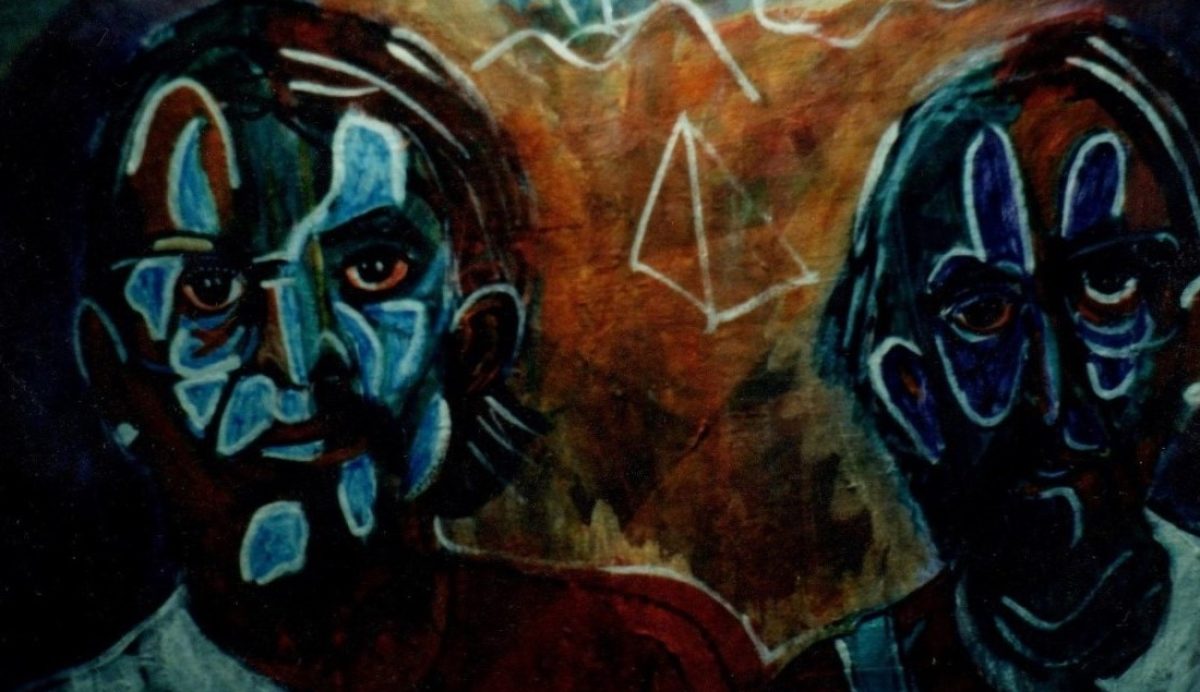
Back in 2013 Guyanese writer Ryhaan Shah published her second novel,
“Weaving Water”. It ventured into settings already crossed by, for instance,
David Dabydeen in his novel, “The Counting House” (2005). The concerns
are similar: characters are shipped from their native India and set down as
indentured labourers for the sugar estates in British Guiana.
As a professor at a British University, author Dabydeen leavened the
historical drama of his novel with the grain and weight of his research
activity. Ms Shah’s writerly origins are in journalism, and her novel, based
on a less solid retrieval grounds, follows a winding path between “fantasy”
and a wavy rendition of a familiar theme.
There are telling differences in ______________________________
the narratives. The vessel leaving
Ms Shah’s India ̶ “the “SS Ganges” ̶ WEAVING WATER
is the last ship “to cross the kala pani by
for British Guiana in 1917″. Her central
characters, Rampat and Parvati, take Ryhaan Shah
on roles and responsibilities that might
have taxed the sympathies of other Cutting Edge Press, 2013
passengers with worries of their own. 254 pgs.
___________________________
Without given the matter second thought they decide to “adopt” a baby
born on the Guiana bound ship (the mother dies and, with little ceremony
or teary detail, is buried at sea).
The ship borne “family” arrives eventually in the village of Corriverton,
Berbice and begin the heartfelt mission of the novel: bury talk of
“returning”, raise Neela, the “adopted” child, and build new family
bonds and a grounded residence. Much of this “building” will take place
under the mesh scaffolding of duties, deities and rituals.
≈ ֍ ≈
With no physical connection to her biological mother, or to her “mother
country”, Ms Shah’s Neela grows up as a quiet, self-absorbed child and
then as a girl of extraordinary capacities. Her parents, as if compensating
for their own childless relationship, pour love and devotion into her
upbringing.
She is kept away from colonial school rooms, and at age 15 “[she] read the
‘Bhagavad Gita, the whole of it, in Hindi…sang all the bhajans and chalisas
at the mandir in the most beautiful voice.”
Village folklore and superstition develop around her; stories spread about
her gifts for “magic…omens and signs… to become water itself then turn
herself back into human form.” Rampat, her “father”, registers the real
life family concerns about her future ̶ her marriage prospects, her willful
behaviour at times (her frequent unexplained disappearance from the
household).
Ms Shah uses chunky pages and paragraphs to describe the colonial forces
arraigned against the family’s survival. These include the Canadian
Presbyterian Church, the British (Anglican) school system, plantation
owners, the neighboring creole culture. And a particular menace in the
form of a black overseer named Sampson, appointed to whip and keep the
indentured labourers in place.
Black Sampson paves the way for the introduction of another central
character, Billa. He is from the North of India. He worships a non-Hindu
god, but on the ship and in the village he strikes a lasting jahaji bhai
friendship with Rampat and Parvati.
Defying archival images of the slender, dhoti-clad estate labourer, Billa’s
work routines on the estate bulk him up ̶ “[his] arms became muscled…
his stomach flat…[he] bristled with fighting energy…big laughter” ̶ to
the point where he fancies his chances in a duel as redeemer of ethnic
manhood.
On the banks of a canal, one day, a brawny Billa challenges and defeats
the bullying black Sampson, and is rewarded with the loser’s “respect” and
a seal of intercultural friendship. (They continue through the novel as
village buddies, sharing confidences and memories of the fight like retired
heavyweight contenders.)
≈ ֍ ≈
It is through Billa’s expanded filters that worrying reports of change
outside the village boundaries come to their attention.
People and agencies are raising issues in the city: bright young men like
Cheddi Jagan (handsome, guest at a village wedding); Forbes Burnham
(eloquent, back home from London); variant party politics and talk of
Independence; communism and the CIA; Walter Rodney, general elections
and those Africans who menace innocent voters with sticks.
At this point Ms Shah’s authorial hand seems unsure how to weave these
“real life” intrusions into her fictional village.
Her aging originals, The SS Ganges cast, soon retire from making
observations. Their descendants ̶ joining the author in a narrative leap to
the 1950s ̶ seem cautious and speculative in their fictional roles. They
express alarm at the restlessness in the city, but merely note for the
record their anxieties about the players and proposals for change; and the
flood of events that could one day race through their barely rooted, not
fully accepted life habits.
You get the sense, then, that with one eye on history Ms Shah’s purpose in
“Weaving Water” is to take her readers on a pleasant “spiritual” Sunday
afternoon drive ̶ past signposts of village cohesion, famous names and
places; past her carriers of survivor traits (enhanced for “symbolic”
cultural value) ̶ so certain this is all her readers want to hear and see.
The novel bypasses the opportunity to pause and examine, if only briefly,
how the indentured mind (apart from the big Billa & black Sampson
punch-up throw-down) grapples with issues of contact, adaptation and
(mis)understanding; as well as those usually undisclosed contradictions,
and areas of personal darkness.
≈ ֍ ≈
The kala pani-to-indentureship “experience”, sometimes referred to as an
“odyssey”, has been embraced by enablers of “Indo-Caribbean Writing”. (A
recent addition to the genre is “Coolie Woman”, 2014, by Gaiutra
Bahadur.) The assumption is that these journeys through fiction ̶ blurring
and holding the ethnic/individual lines ̶ might recover distant connect-
ions, and provide corrective insights into “what really happened” to the
ocean-crossed labourers from India.
Ms Shah’s first novel, “A Silent Life” (2004), was a stumbling, not very
good entry to Guyanese fiction. This time around, after what seems many
long years voyaging to publication, “Weaving Water” shows evidence of
renewed writer confidence.
Her sentences, flecked with authentic Hindi words, ripple along in narrow
homely straits, determined not to upset anyone; slowing for pages of
tender (at times sentimental) descriptions of village innocence; on
occasion sliding into a “fairy-tale” lyricism in an effort to tighten reader
embrace of her characters.
And more often than you might expect, old-time sentences like, “Rampat
always trembled when he remembered…” pop up like speed bumps on the
way.
As part of the colonial indenture “recovery” act (which some consider a
“political” act) “Weaving Water” might succeed in its retro-construction
goals ̶ in “filling in the gaps and silences”; and offering sea and land
markers for readers studiously retracing the kala pani routes.
As a work of fiction, in the wake of similar “new world” evocations ̶ by
established authors Edgar Mittelholzer, Jan Carew and David Dabydeen ̶
the challenge for Ms Shah’s imagination is still to find fresh material, and
the prose strengths that make for a path-breaking connection to a wider
Guyanese and Caribbean and world readership.
In other words, finding ways to measure and interpret those stubborn
“gaps” ̶ with newer understandings, fewer cherished sweetmeats; and
with courage as free ranging as before.
– Wyck Williams

 FARJOURNEY CARIBBEAN