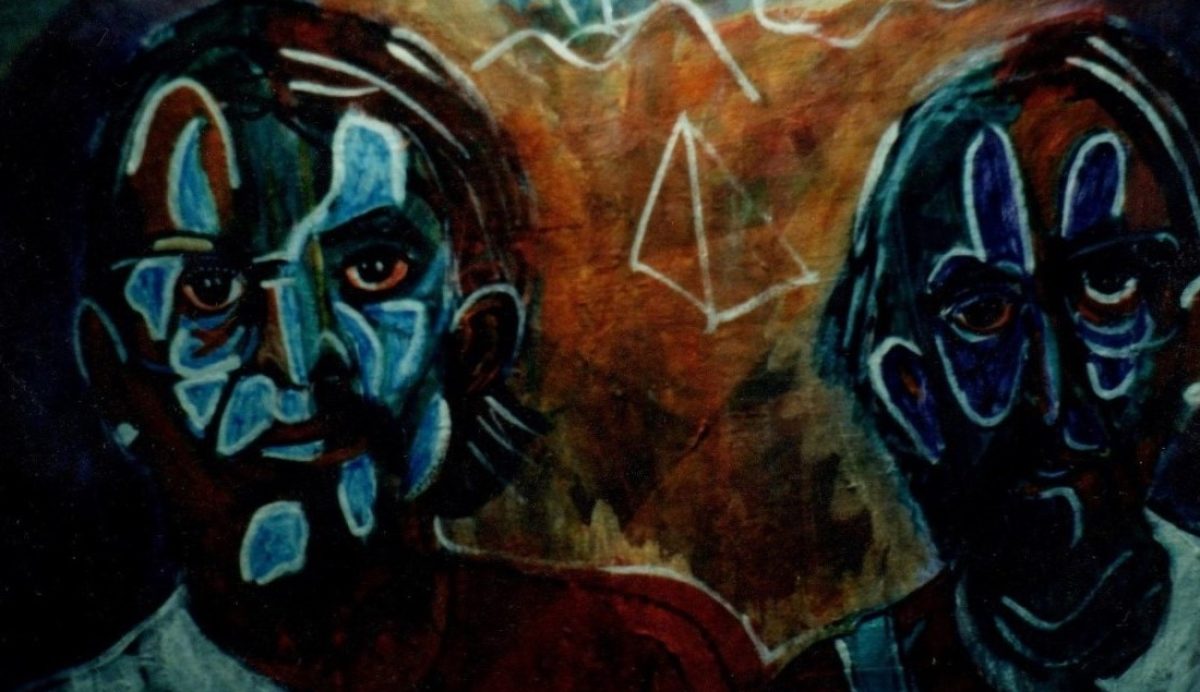
< Situations and Revelations of Passing Notice in Guyana >
Locket #46:
The other day I met the oldest man in my life. Mr. Goldfields. 90 years old.
More than 70 years older than me. I couldn’t believe it. Born way back in
the 1920s or something.
He didn’t look that old. He carried a stick, maybe to fend off stray dogs or
idle young men with hurtful intentions. And he walked with a limp, his thighs
stringy in short pants; pushing himself, step by step, to show everyone age
didn’t matter.
We had a conversation. A one-sided conversation, since he did most of the
talking. With some old men, patience and politeness is required. Like my
grandfather. He was a civil servant, an imperious man ‒ his favorite words,
“May I remind you.” ‒ who expected you to follow his example. And my
grandmother who stayed close to the church of her childhood.
The last thing you want is some old man gassing you to death with
memories and judgment. They do this in the newspapers, on our television,
sounding mournful or excited. How hard or how better everything was in
their day and age. And how much they love their country. What a blessed
place to scatter last thoughts and ashes; their loving thoughts, everybody’s
ashes.
I like the ones waiting with dignity to pass on. Content with a smile and a
pleasant “Good Morning.” If you sit with them, they might not say much,
but every word speaks truth.
This oldster was out for his “morning constitution”, walking, from his home
in Kitty Village, outside Georgetown, to the seawall, then back home. Long
past three score and ten, he said, sounding bible-ish. Taking in the morning
air before the heat and the work traffic took over, by which time he was
back in his yard.
He said he used to walk the length of the sea wall before they raised it to
hold back the ocean. “That seawall is about two miles long. You know how
long it took to build it?” he asked, slowing down for the first time. “Over
thirty years. 30 years hard labour.” Where you hear that? In the gold fields?
“I knew you’d say that. The head on these shoulders holds knowledge.”
After 20 years in the gold fields using your hands, if you walk a lot you live
to be 90; you lose body mass, but your head holds knowledge. Okay.
He said he did a lot of thinking when he walked. Like he was plucking
thoughts from the air, left and right, discarding the ones he didn’t want. He
was far from finished with life.
In his day there was brightness over the land, he said. Brightness? Most of
the buildings were painted white, and the sun fell and spread bright light
everywhere. Everybody, rich or poor, was touched with brightness. You felt
alive. There was space for bicycles, bright light and surprise.
“Now they putting up these stone structures. Sometimes I does stop and
wonder, Who are these prisoners up there in the sky?”
New buildings blocking out the sun, casting shadows. I could see that. And
hot days, burning hot days. I don’t know if the city is more bright or less
bright.
Back home from his walk, a cup of tea was waiting, he said, and two soft
boiled eggs. I could see him at his breakfast table, sipping and munching;
and sorting out new thoughts like pocket change. Night time he poured a
shot of Eldorado rum in a cup of tea, and he listened to the village night
noise.
I wondered if he had a birdcage with a bird. My father won't allow a birds in
our house. Too rural, like hanging sheets outside on a line.
He’d spent his young years, by which he meant 20 to 40, in the gold fields.
In his day without a Go Forward school education (bad exam results), what
else could a young fellow do? Those 20 years were the best years of his life.
He saw everything, did everything, good and bad.
While he spoke I was wondering: did he have family or relatives who worried
about him? And if he came out the gold fields after 40 years, and was now
past six score and ten, what happened to the years in between? what did he
do? did he ever have reason to dress up once in awhile?
+
The very next morning, it was Saturday, and burning with curiosity I got up
meaning to cross paths with him. I'd pretend it was by chance we were
meeting again.
It was raining. I hate having to be out in the rain. I have a bicycle for errands.
He was out there. Soaking wet. Coming back from his walk. Master of the sun
and rain, our old man of the universe. I had to admire his persistence.
He didn’t act surprised to see me. Maybe he thought after the conversation
the day before I had been thinking about what he said; and here I was again
ready for more enlightenment.
When you pass my house you always talking to yourself, I said, joking with
him. “I don’t talk to myself.” I see your lips moving. “I’m thinking aloud.
It only sound like I talking ‘cause now you hearing the words.” Okay.
You don’t live on my street. “This village used to have narrow streets, horse
drawn carts, bicycles. Now the cars and vans, they knocking down cows and
anybody in the way. People starved for the future. They’d run over anything
to get there. Crash into trees, take fast corners, spin and tumble over.
Tyres getting old, they run them to the ground, they keep running on rims
to the future.”
Well, goals and aspirations, usually that’s what drive us forward, I said,
getting off my wheels, matching his steps. “Yes, forward to the fields of
gold and death.” I don’t understand. “The fields you dig, the waste you rinse
and wait to see which serves you first, gold or death.” Okay.
"Then you start to wonder where to end your life.” Where? “I came back
here at age 40. The streets hadn’t changed. Houses the same.” Where to
end your life? “Yes, where. How and when are instruments out your hands.”
“Most people ask the same question – where? – all their life. They wake up
to ordinariness, every day the same ordinariness. The present refusing to
fulfill, refusing go past. Everybody waiting for the future to start. Ignition,
gobble gobble, nothing. Ignition, giggle giggle, nothing.”
His voice was rising and fuming with irritation. Eventually I stopped. I told
him I was really going the other way, I would see him around.
He raised a hand, like he was signing me off; like it wasn’t his fault, he
didn’t interrupt wherever I was going. And it didn’t matter whether or
not I understood what he was saying.
That same night after our conversation I had this dream. I’d taken off for
Bartica, the mining town. I didn’t tell anyone. I traveled until I found what
looked like a mining quarry.
It wasn't how I imagined it. There was a camp and an office and a manager
type fellow outside having a smoke; a place selling liquor; two women,
their brassiere straps dangling, who smiled and asked my name. I didn’t
know where to turn, who to trust.
Then this Amerindian showed up. Tall man in a plaid shirt who smiled and
tried to sell me a bow and arrow kit. He said I had to be careful, this was
a dangerous place. No, not just tigers and snakes. I could get stabbed,
arguing over nothing or nonsense.
He squeezed my shoulders. I had to have tough skin, he said, and a hard
stomach. Maybe this wasn’t the right place for me. He tried again to sell
me the bow and arrow kit.
I told him I liked birds. He identified the bird sounds I was hearing – That’s
the Piha, same three note every time. It set me thinking, maybe I could
become a bird expert one day.
The first night in the hammock, my father showed up, shouting so loud he
woke up everybody.
What are you doing here? I told him it was time to start my 20 to 40. I
wasn’t trying to be rebellious. He went on and on, loud and embarrassing.
We didn’t raise you to come here then return. Your life isn’t circular.
It became clear he hadn’t come all this way to save me, to take me back.
He and his public gassing are now part of a series of dreams I’ve been
having.
Who knows what this place will be like in forty years. If Mr. Goldfields is right,
not much will change. Higher roofs blocking the sun. The ocean pounding the
seawall to get in. Street by street, people and buildings, new and
dilapidated, jostling for brightness and space.
Lots of fellows my age find themselves in the swamps for their lives. All they
can think of is survival, gold and death like gun twins stuck in their pants
belt, if you know what I mean. Lucky if they reach forty and not in jail.
I’d intended to ask the old man about the years after he came out the gold
fields. The fifty or so years? between then and now? That’s a big gap. What
happened? what did he do besides walking? Completely forgot to ask.
Anyway, that is it for me. Not getting up again early in the morning to walk
anywhere with anyone rain or shine. I have things to do. Things!
Mark Duncan Cadogan,
Georgetown, Guyana

 FARJOURNEY CARIBBEAN