Georgetown, Guiana, the 1960s. A different time. If you graduated
secondary school (high school) but could not or did not advance to college
or University studies, a career as artist was distinctly possible. The schools
functioned, dedicated teachers left their mark; poor exam results didn't
mean the end of student aspiration.
Among fine examples of students who moved on to success in the arts ‒
John Agard, Brian Chan and Terence Roberts. It could be argued that
within walls of classroom discipline, a wave of rebellious Guianese artists
found outlets for charging potential they held inside.
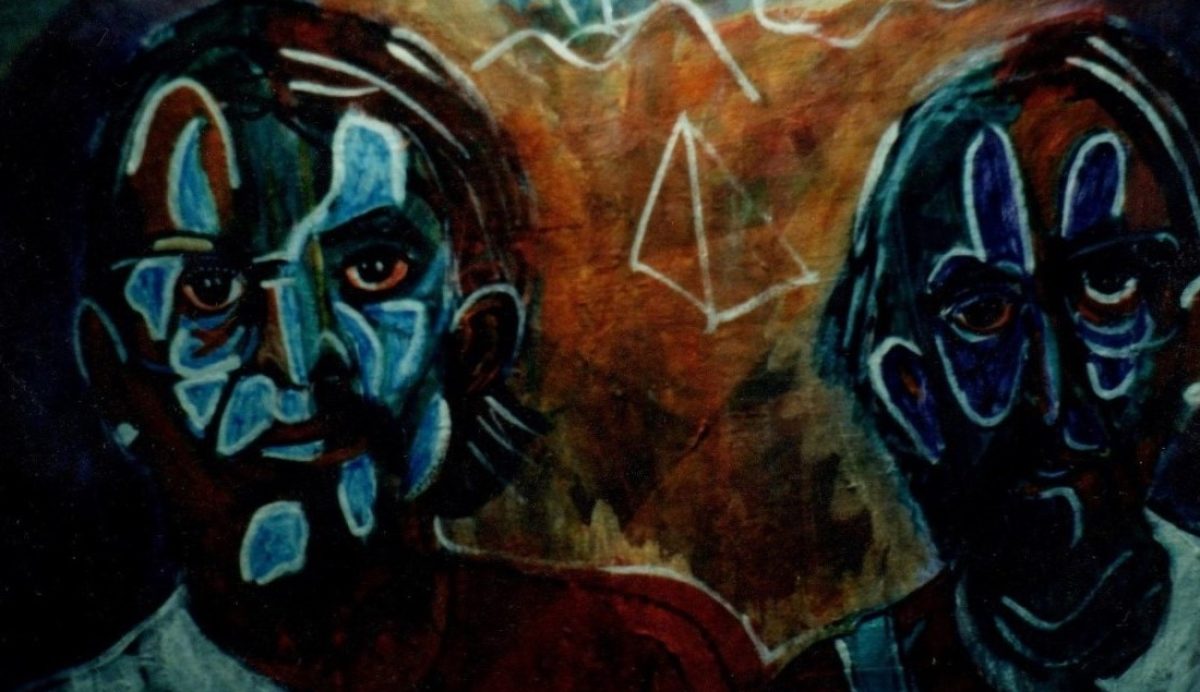
In his book “Antipodal” (2019) Terence Roberts _________________
describes conditions in 1960s that inspired many
to literary and artistic careers outside tertiary ANTIPODAL
institutions, very much on their own. Crucial to by
his own development was the time spent in local
cinema houses and bookstores. Terence Roberts
Back then no matter how rigidly or narrowly Strategic Book Publishing
schooled, everyone was reading. High school USA/Singapore, 2019
teens searching for style or meaningful ____________________
pathways to young adulthood flocked the cinema
for recent releases from Hollywood and Europe, to bookstores for the
latest in magazines and fiction.
On one visit back home Roberts meets a girl named Sasha, many years
younger. He asks about the origin of her name. She explains her deceased
father was a foreman on a sugar estate back in the days. He carried a party
card and he fought for the rights of sugar workers. “At night in the glow of
a kerosene lamp, she remembered him turning pages in books [by]
Dostoyevsky, Lermontov, Zola.”
“Antipodal” is about boyhood years, a young man's struggles. Distancing
himself culturally from the “scowling local Marxists” and “the black
nationalists porting a lumberyard of chips”, Roberts makes a case for
subscribing to “faraway models” to construct his neither-nor artist niche;
giving up the script for one direction, trying another.
His parents he describes as “reclusive liberals, avoiding conflict …maybe too
white or not black enough” for their Guiana counterparts; and not too
concerned with what the neighbors thought. This family scenario links him
into a sequence of conflictual issues (active in silence) from preceding
generations, as was the case with Edgar Mittelholzer.
Adrift, losing interest in do-or-die school exams, he immersed himself in
comic books, novels, popular music, the public library. But real life for him
began inside his head, in the cinema houses of Georgetown’s “nine cinema
screens”.
Over decades he must have seen most of what film viewers today come
across on the TCM cable channel.
Cinema had the power to transform the lives of Guianese of that generation
like nowhere else in the Caribbean. Roberts pays tributes to Hollywood
icons (Elizabeth Taylor, John Cassavetes, Marlon Brando, Montgomery Cliff),
performers on the screen whose dilemmas answered his thoughts about
human nature in multi-ethnic Guiana: the prey on mixed emotions, truths
of what happened never really found out.
Not to appear lopsided, his homage list includes admiration for the work
of Guyanese art giants (Aubrey Williams, Frank Bowling) and art
contemporaries (Cletus Henriques, Carl Martin).
*
He left Guiana in 1969 and became a Canadian citizen in 1978. He has
traveled the world, held successful exhibitions of his paintings. An artist
not yet with fame of name.
Crossing over to book writing is not entirely smooth. “Antipodal” is his third
effort. It’s an intermingling, he might say, of poetry and prose, scenes &
cuts from screenplay and memory. The aim was to present his “experience
…in close-up visual and mental detail”.
Some readers (today’s high school students, for instance, wondering what
possibilities lie ahead after their graduation) might feel overwhelmed by
his flamboyance of detail ‒ the scores of film titles, the names of actors
and film directors he followed over the last millennium.
They might wonder if overexposure to cinema images hadn’t perhaps
skewed his perceptual frames. They might also grow impatient with his
self-revelatory writer’s style that works hard to appear cool and
contemplative.
Responses to passages like this, for example, could run feverish or cringe-
inducing: “I stand still for ages waiting to pee, thinking: this is the time
when histories and mysteries pass like waste through me. My bare body
its own father of philosophy. She’s already undressed, bar-b-que brown
upon a white sheet, her eyes greedy magnets whose lush and slippery
pull I feel.”
The world has moved on from that 60s frenzy of self-awareness and
expression. Roberts is determined to place on record the importance of
that time for a generation of Guianese artists.
While his contemporaries (John Agard, Brian Chan, Victor Davson) altered
the movement to their achievement, Roberts remained fiercely attached
and indebted to his boyhood beginnings, the films and literature which,
despite the ‘colonial’ context, gave shining dimension to his life work.
“Sure, we knew where we were,” he writes, “the muddy river and rowdy
market place, green canals and draycarts.” Adding, “We never cared what
naïve foreigners thought. We never had to, satisfied to the brim of our eyes
with the sights in our city”.
He returned to a Guyana in the 90s. His book stores were gone, his cinema
paradiso of abandoned structures waited to be demolished.
On display he found poverties of trust and official conduct; a crude
rejection of higher standards of competence and system reward. “Intelligent
pursuits [were] leveled to a public wasteland; no one had anything to learn,
nothing to miss of the outer world, since [now] everyone and everything
was as good as anyone and anything.”
He stayed for awhile sharing his narrative; trying, it seems, to reinvent the
‘radical’ dynamics of the old days; after school gatherings of young men and
women curious about art and freedom.
He wrote newspaper articles, offered opinions on film and culture. He’d be
like a young Roger Vadim in 60s Paris, hanging out with friends in local bars;
help cultivate new talent and inquiry, a Guyanese New Wave of writers and
artists.
At some point he stopped everything and left again for Canada.
The course Roberts chose, unlike others – stuck, beating back one thing after
another; grasping windows of opportunity in islands less politically fractured;
or moving away and staying away – comes across as a kind of affirmation,
requiring an extraordinary, offbeat confidence; sheer will to climb his own
ladder, see himself through.
He kept going back as if unwilling to finally let go the ground that shaped
his formative years.
In “Antipodal” he asks, “Is it just me, or does the content of our years add
up to lives lived backward to each second of passing time?” Those readers
in Guyana not fogged up in local news vapours or culprit shielding may
be excused for claiming they’re not in the mood to respond.
- Wyck Williams
Book Reviewed: ANTIPODAL by Terence Roberts, Strategic Book Publishing
& Rights Co, USA/Singapore, 2019, 119 pages
~ ~

 FARJOURNEY CARIBBEAN