You could argue Guyana is no longer a country for fine poetry or poets. Or
anything that signals literary capital. It used to be that place.
There was Martin Carter whose feelings of confinement and defiance
linked arms. Back then (even now) his words got summoned to remind a
fractured country (whose ears never tire of hearing) This is the dark
time my love.
And there is poet-columnist Ian McDonald whose old world sentiments and
wisdom still point readers away (from Georgetown’s obstinacies, its polity
of recycle and pave) to the ecoserenity of Guyana’s Essequibo river region.
Their reposted words, meant to ____________________
encourage and enlighten, also tempt
readers to settle in fat tubs of self- VOICES CARRY
cherishing; sheltering in place there, by
reviewing bubble issues.
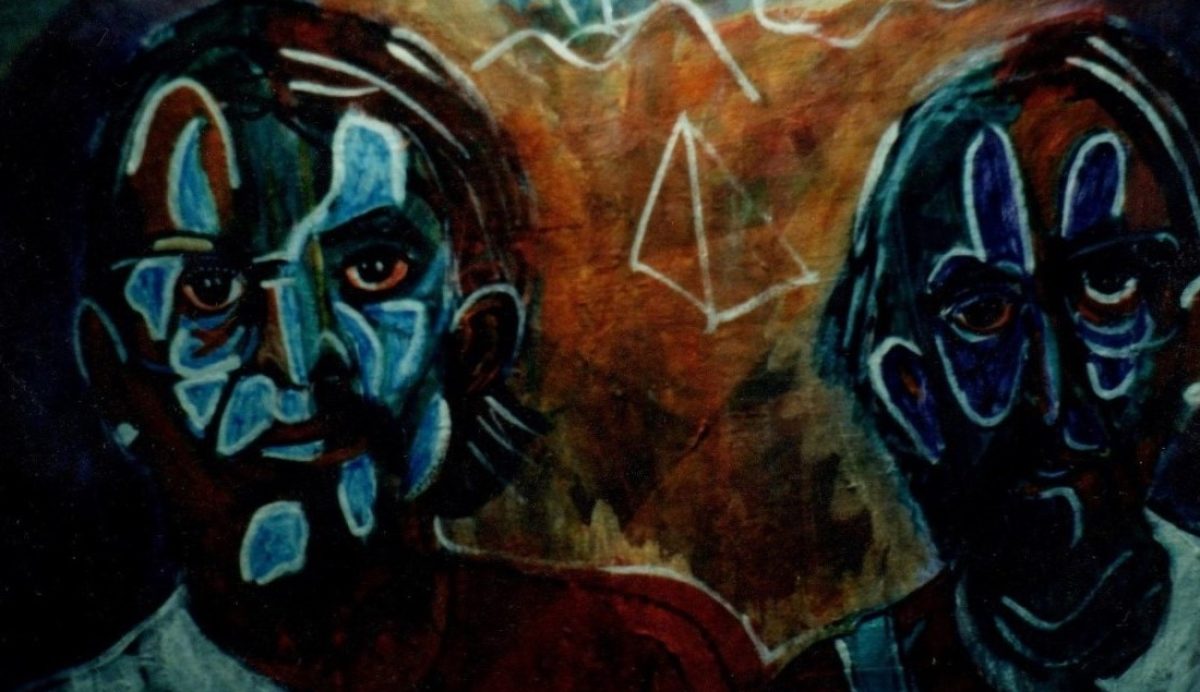
Mervyn Taylor
Mervyn Taylor was born in Trinidad and now Shearsman Books, 2017
resides in New York. His poems deliver lines ____________________
that could expand new interest in Caribbean
writing, its not always dead serious way of inspiring.
This turning elsewhere for creative renewal is not unusual. Back when
Guyana readers were captivated by (then became impatient with) Wilson
Harris’ obscure fiction, they discovered V. S. Naipaul.
The cleareyed storytelling in Miguel Street involved us with folk for whom
life held nothing but tool labour, delusions of importance and influence.
Their experience – day to day, not over an ‘eternity of seasons’; and not
yet the bold ethnographic detailing – came through in bursts of insight and
humour.
Mervyn Taylor does something like that today. He has published six
volumes, starting with An Island of His Own (1992). His most recent,
Country Of Warm Snow (2020), is described as the work and life of “an
immigrant who has been in the US for 50 odd years, whose heart when
he’s in one place, yearns for the other.”
It’s a catchy selling point, hyphenated residency. Readers might expect
another work about divided loyalty, from someone intent aviatorlike on
curating his reputation as the flight course nears end.
In Voices Carry (2017) Taylor’s writes about human encounters (friends,
strangers, spirits) in unlikely places (Islamabad, Brooklyn, Port of Spain);
about diverse people in motion from loss and “long-ago things”.
“They learn as they travel,
what will buoy them up,
what will sink the minute
they let go.” (from “On the Run”)
His lines – closer to early Naipaul prose rhythms, but with breaks for
compassion – avoid the brick moulding of our better known (University
based) regional poets.
Follow, for instance, an anxious visitor to Haiti who sees first a “City of
ground that shudders/ beneath boys on motorbikes / whom women
trust /to take them up hills/ where roads disappear”; who notices what
continues on, despite headlines of earth-heaving devastation.
Or check this snapshot of a singular moment:
“When horses were in the Savannah,
cantering, as in that Walcott poem,
I liked the steam of their early
breath in the paddock, a groom
nose to nose with a skittish one.” (from “Race Gone”)
Or the way Taylor tracks the pain of irreversible occurrence, after a
vacation on the Caribbean island of Tobago – out of the blue “a couple,
hacked nearly to death last year / now back in London.” The episode
fades in the churn of the travel industry but particulates of spiritual
consequence linger.
“…her husband
limping out mornings to their mailbox to see
if the promised aid has come. Nothing,
except an invite from the island’s
House of Assembly, to return, and stay for free.
No one mentions them, not the new guests,
not the waiters, who’ve been warned.” (from “Tobago Love”)
On the page his speech rhythms – not bass heavy, not text enriched –
engage with tenor pan elegance, you could say.
Listeners who have heard him read acknowledge feelings of buoyancy in
the room; his mused revelations differ intonally from what one feels
listening, say, to Kamau Brathwaite. Both men are known for seductive
voice performances in reading rooms.
*
For more comparisons, readers might turn again to VS Naipaul’s gallery
of inventions in Miguel Street (1959) and later A House For Mr. Biswas
(1961). Naipaul in his own conflicted way was a confident modernist. His
prose folk still raise smiles of recognition, making us wonder what we've
become since, what individual character faults obstruct the press Enter
for new thinking.
There’s one poem in “Voices Carry” about someone straight out of Miguel
Street, only in poet Taylor’s hands she transcends “character”.
Marjorie Beepatsingh. “…big-boned / policewoman, famous for arresting
men / who didn’t stand at attention for the anthem.” Taylor suggests her
ghostly presence still patrols the streets of Trinidad & Tobago. People
still ‘fraid:
“….she might arrest them, even
those with no pants. Hold them by the skin,
walk them tippy-toed through the crowd.”
(from “Forged from The Love”)
Without saying so himself, Taylor’s poetry provides portable reading
pleasures, wherever the need wells up for alternatives to digital con-
nection – on a plane (when travel is safe again) or under a beach
umbrella.
Caribbean movers to new lands, whose residents might wonder who they
are, where they came from, could point referentially to the birthplace
of Derek Walcott or Kamau Brathwaite; explain the topography of
distrust and identity drilling, the half-life of hell ketchers under
corbeaux vigilance.
Or they could steer the genuinely curious toward Mervyn Taylor’s Voices
Carry, the immense freedom he embraces and builds, upon the
excavations of Walcott and Brathwaite. These lines from the title poem,
for instance:
“Between the hills and the sea,
when the night is dark and faces
hard to make out, voices carry.
Between midnight and morning
in the narrow lanes, while children
sleep, big people talk, their voices
carrying.”
Right there! In towns and villages anywhere in the world readers will
recognize Taylor’s roots, understand what he notices and wants to talk
about; never making it seem like it’s terribly important, though in
moments of righteous anger we might pause to consider.
Book Reviewed: “Voices Carry”, Mervyn Taylor, Shearsman Books, 2017,
100 pgs
– Wyck Williams

 FARJOURNEY CARIBBEAN