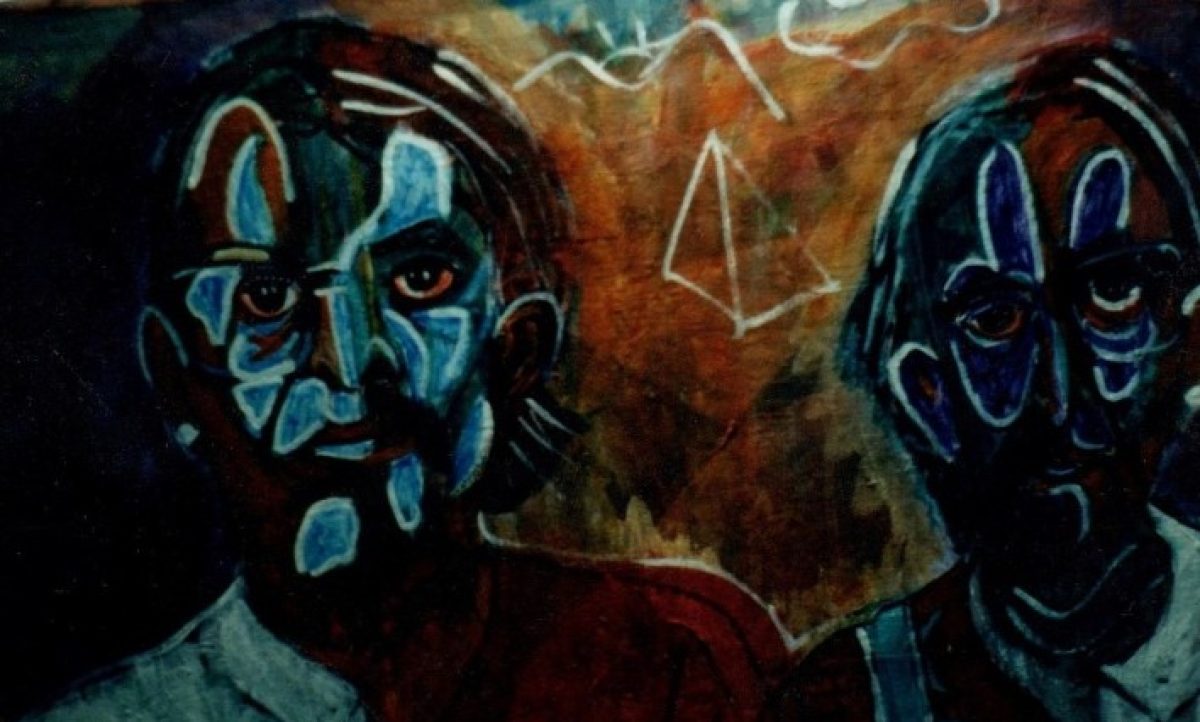
B C D-DAY COMRADES


                                                              "My heart heaves, herds-long…"

                                                               – Gerard Manley Hopkins, "No Worse,
                                                                       There is None"

                                                                                                                   
                        Same old El Dorado hook, find oil generators

                        same caciqui Raleigh premise, land and lords of gold.
                                                                               The dray cart
                        bony death trot. Shades of grass that fail to warn as one
                        eyed reptiles uncoil time to mate.  

                                                                   No morning prayers, out of
                        nowhere Crow & Co. in day clean amber hold.  

                                                         Just the dowry bed rule wish to have
                       you  ̶  brace display stare out at starry starry nights, the moon
                       in hand grip earth lock; vows breeding in. Your navel 
                       ring lustre up for this, peasant bride?  

                       First secretaries lean to pitch the heed, proof cleavage
                       read, as blade strips cane leaves pity pleats on window
                       dress; on forest feathers city crown dust sin positioning;
                       the alphabet dilapidated sites.

                                             What horse sense could resist the feed
                       bags in office treasure? the transfer > flight track shape
                       shift lift to grouse nests in, click, a maple leaf fall free state?
                       learn to curl limb eat brick cold, stuff loss you can write
                       songs about.

                                                                                                  The word 
                       webbed frog leap over muddles, cycles back and forth on
                         old plantation grids; not miles, teeth grinds to go before
                           the pedals stutter: whose net worth's caste
                                                                                                  The fear
                           down floating creek black water deep as Kaie falls
                         bush in master river bending: whose heart caves beak
                       craves darkness?

                       Patria! is so they roll. Hasta Siempre so we fold.

                                                                                                 – W.W.


                             TO A COLONIST


                             You slant by and I know you
                             as someone who is what he
                             knows, something so certain it 

                             has no notion of itself,
                             no name, no voice, only mask
                             of itself as a man with name

                             and words to say to other
                             ghosts whose maskness makes you wince
                             in despair of blind false fools.

                                    You know too much not to be
                                    hiding all hints of yourself
                                    behind your wall of stone facts  

                                    by which you try to limit
                                    the world of the mind to your
                                    golden models of a past 

                                    a stigma in your eye bright
                                    with anger for a world stained
                                    by your own shadowed vision. 

                             But arrogance is excused
                             by neither experience nor
                             ignorance nor innocence.

                             We either surrender pride
                             or flag our stones to ragged
                             fire; either grant stone is smoke

                             or rage till smoke it proves us
                             when easy all its walls fall
                             as hard as we believe them.

                          (from "Fabula Rasa" by Brian Chan) 


NY SLIDE 10.0: BEFORE SHE CAUGHT HER TRAIN


                    Xavier's mother appeared to be studying Radix for the first time  ̶
                    looking him up and down, immensely curious about his association with
                    this white woman.
 

                    Radix shifted from one foot to the next. "So when will they let us see 
                    Xavier?" he asked. This was enough to snap him back into the 
                    conversation. Judy Wiener explained, seemingly just for his benefit,
                    that Xavier's condition needed round the clock observation.
 

                    Xavier's mother looked at her watch. "O, my goodness!" she declared,
                    still ladylike in manner; she had to catch the train to Manhattan. She
                    worked at a bank, from 6.00pm to 2.00am  ̶  "the graveyard shift", she
                    smiled knowingly. In fact, Xavier was on his way to her bank to get her 
                    house key (he couldn't find his) when the incident with the police
                    officer occurred.
 

                    Outside Radix was determined not to seem disinterested right at the
                    point of taking leave. Xavier's mother was buttoning up her coat and
                    explaining more about her son. And for the first time he heard the 
                    anguish of a mother whose child lay in a hospital bed "in critical but
                    stable" condition.
 

                    "I have to contact the lawyer, let him know 'bout the way they have
                     him handcuffed to the bed. Treating him like a common criminal!" This
                     brought them to a halt on the sidewalk.
Judy Wiener folded her arms
                     and shook her head, firmly allied with Xavier's mother on this issue.
 

                     Did she have far to go, Radix asked. Did she need a lift? No, the
                     subway stop was two blocks away; she could manage.
 

                     She reached in her bag, took out a pack of spearmint gum and offered
                     it around. In the cold afternoon light she presented the image of an
                     indomitable island woman, up from island poverty; getting little sleep
                     these days, but not about to give in to self-pity and fatigue. A mother
                     relieved of the aggravation in her marriage, living only for her son
                     now handcuffed to a hospital bed.
 

                     And as if to reinforce the idea of how resourceful she was, she 
                     explained, speaking now for Radix' benefit, that she had tried to enroll
                     Xavier in a high
school on Long Island. They'd told her she would need
                     a referral from a school counselor. "Like he was a delinquent or some-
                     thing!"
  

                     Turned away, her aspirations denied, she had no choice but to send 
                     him to his zoned school, John Wayne Cotter H.S.
  

                     She spoke as if she wanted Radix to understand this, before they went
                     their separate ways bearing half-finished portraits of each other.
                     Whatever he thought about her, he should know this about her son  ̶
                     Xavier was a good boy, a smart, decent boy.
  

                     "Him used to sing in the church choir." (The "him" gave her island
                     origins away, and as she went on she seemed to drop her speech
                     affectations.) His father was a strict man. When they came to New  
                     York he picked up the notion of raising a "straight A student". He
                     insisted the boy's report be free of blemish.  "Him get blows all 'bout
                     him head if his father see even one stray B on the report card."
 

                     Judy Wiener nodded, though Radix couldn't tell if she'd heard the story
                     before and was simply confirming its truth.
 

                     Xavier's father spoke too harshly and lifted his hands once too often to
                     the boy. She couldn't stand aside and witness the "child abuse" any
                     longer. She separated from him taking Xavier with her. It was at this
                     point that Xavier started going down.
 

                     "Him kind of feel like freedom, you know, since his father wasn't
                      around anymore. So him lose the discipline. Him get into some kind 
                      of trouble with the teachers so they put him in Special Education. But
                      Mrs. Wiener here is a good teacher, so I have nothing to worry about,
                      right Mrs. Wiener?"
 

                      It was a good moment to say goodbye, on a note of sweet optimism,
                      after the disappointment at not seeing Xavier. And so after a farewell
                      embrace and handshakes, Xavier's mother went off to catch her
                      train.
 

                      "Isn't it terrible?" Judy Wiener was saying, searching her bags for her
                       car keys as she walked beside Radix.
 

                       He wasn't sure what she meant but he agreed: life was indeed
                       terrible. Black boys handcuffed to hospital beds, that gold-chained
                       man lounging at the street corner with his pitbull  ̶  in the Bronx life
                       was a terrible, fragmented thing. With frothy rapids through which
                       they all navigated; staying closer to this bank or that bank; isolated
                       souls
meeting and sharing distress, then pushing out and away again.

                    (from "Ah Mikhail, O Fidel!", a novel by N.D.Williams, 2001)


VILLAGE BOY SHORT CUTS TO SHIRE


                                                                                 "Marvellous gift…always said so 
                                                                           …wish I had it."
                          
                                                                                                ̶  Samuel Beckett, "Happy Days"

                               
                   Back into the fold they'd smack your head if eyes so
                   much as think of link with bouncing black as night limb
                   intimations. Our path was set, the English pass marked
                   our veils and hair.

                   Raised watching cricket we kept faith seeking fast balls
                   out hit seamers high beyond the boundary. From safe
                   crease to rest stop we scurried, rum happy runs
                   in the stands.  

                   At public school with numbers pure mind ruler we'd  
                   ground algebra in masala, fence our neighbours whole
                   sale loss  ̶  distinction incubating, indenture optimized.

                   Our family choice, the surgeon god play: scrub up, scruples
                   under, invest through neat exclusions; chide swab the closed
                   heart bleed stitch tight what's torn with in house wiring 
                   suicide cells. 

                   Not bad for a village lad whose father knew plantation
                   thirst and cow and hurt left unattended. You should see
                   Pa when he visits his grand child here in Ox shire.

                   His cutlass gasps pride edging forehead lines; bare foot
                   he shuffles out to lawn chairs flowers biscuits Tetley
                   tea. Here the greening rain salves old sod turning hands.
                   Good paddy, our Son, he smiles, viewing the dinner
                   cutlery. 

                        Head stones will scroll
                        House once stilt stuck
                        Home yard broom free
                        These bones we grow
                           or throw 
                        Good gracious me.

                                                        – W.W.


                          THE ANT

                          The ant's a terrible thing,
                              being, I mean,
                          so intent upon doing.
                         
Consider this one taking
                         
    home a massive
                         
morsel of that dead fly's wing,
                    
                          going the same way he came,
                       
     passing others
                        
coming to duplicate him,
                        
this worker wasting no time
                          
  greeting his peers,
                         giving each only a shame-

                         less superficial kiss
                        
    before moving
                        
on. Should I crush one of his
                        
brothers, he would simply pass
                        
   by and forget
                         
it. Such singlemindedness

                         (Mr. Tang says one straight line
                       
    completes Tai, the
                        
Chinese character that signs
                        
Great) frightens me, reminding
                            
me of maniacs
                         
like businessmen going blind 

                         straining at their proving grist.
                        
    But the ant, in
                         
his moment of an utmost
                        
outside of men's best and worst,
                          
  stays well beyond
                         
burdens of future and past.


(from "Nor Like An Addict Would"  ©  by Brian Chan)


Review Article: POETESS ABUSED, BUT WILLING


                     Mahadai Das (1954 – 2003) 


                    Since her death in 2003 the poetry of Mahadai Das has been embraced
                    in some quarters with as much fervor and sadness as the poetry of
                    Martin Carter. Not far behind the glowing tributes are many references
                    to her personal life. You could develop any number of profiles from
                    intimate details made public about her.
 

                    Consider these for instance: “Delivered by midwife on October 22nd
                    1954
”, with its hints at susceptibilities and risk. “The oldest of ten
                    children
”, upon whom great expectations were hoisted, and a fate
                    beyond multiple childbearing sealed. Her death after illness and “open
                    heart surgery
”, suggesting a talented child might have come into the
                    world already marked for death.
 

                    Other details may or may not support the notion of a foreshadowed
                    life: the former beauty queen (Miss Diwali, 1971) and standard bearer
                    of beauty for her ethnic group; the political activist, going against the
                    current, choosing to align her hopes not with a race-based party. 
                    Answering instead a post-Independence call to nation building: “I Want
                    to be a Poetess for My People.”
 

                    In Bones (1988) you might anticipate the pea shelling of women 
                    “issues”, a feminist rigour in the lines. There is, instead, delicate
                    sentiment and a wistful self-probing. “Though I have reason/ to blow
                    trumpets, I play/ an elegiac flute in silver hours/ of a misty morning,
                    calling birds with songs
.” (“Resurrection”).
 

                    Bird images are everywhere in this collection; but then there’s so much
                    one would wish to take flight from in Guyana: the drain clog of poverty 
                    and ethnic preference, the cast nets of unremorseful ideologues. Das
                    admits to being “Bird stricken./Shrunken my globe, my joys, small
                    circum
ference.” Birds like thoughts fly out of her head; sometimes
                    their fate is the clipped wing, or  ̶  like “a pigeon anklestrung/
                    homefed
”  ̶  the trapped availability of spirit.
 

                    Das has been gathered in the folds of ethnic heroism, her past mistakes
                    forgiven. Her folly as an East Indian woman (in the 70s) was to cross
                    over into political
territory controlled vindictively by black men.

                    Reviled quietly for this act of ethnic infidelity, she was forgiven and  
                    welcomed back in death by the heritage keepers (and following others)
                    and embraced as a victim of idealism and her own “naïve faith” –
                    wanting to be a "poetess" inclusive of the wrong people.  
  

                    What’s not so openly acknowledged is the first surge of bravery that
                    pushed her craft out against race-based currents; that front running,
                    off limits individuality that landed her eventually in the company of
                    black men. (There were reports – accompanied by the trashiness of
                    newspaper comment – of sexual assault on Das while on National
                    Service in the 70s).
  

                    Insular group thinking, not base impulses, was surely what worried Das
                    most. And the irony cannot be missed of her life running out in
                    Barbados, then an island of more accommodating black men.


                                                            ≈ ↨ ≈       


                    One wonders what if anything Das was “committed” to after her flight
                    from Guyana. There is ample record of “travel” and “study”, but in      
                    Bones
little evidence of all the harrowing or enlightening stuff she
                    must have lived through as she moved among men and around the
                    world. Poems set in North America (“Chicago Spring”) or drawn from
                    her reading (“For Anna Karenina”) don’t display much more than
                    transient insight and undemanding metaphor.
 

                    What Bones reveals, however, is the readiness of the Diwali beauty
                    queen to be participant in parades of national achievement. The
                    problem was, she found no emerging "nation" in Guyana, no worthwhile
                    “people” achievement.
 

                    Consequently Das wrapped herself up and shipped away. “In your
                    heart, I have not found a port/ but wide-open seas where I may
                    dream
.”  In low, dark moments of limbo her lines wander off from her
                    declared purpose into spasms of self-commiseration. “I mourn
                    unflowered words, / unborn children inside me.
”  “Like a packcamel
                    in desert terrain/ I will ride, the load of existence/ upon my camel’s
                    hump
”.
 

                    If the sentiments there sound a bit lush and long-suffering for a still
                    young "poetess", wallowing on the page in wet clichés, you could
                    blame her welcome backers for ignoring her flaws, for shielding her
                    person and poetry from what was perceived as unwanted gossip and
                    character smear.
 

                    There are poems in Bones about regret, isolation, yearning and death; 
                    but Das offers only spare reflections on these themes – “Tomorrow, I
                    rise/ between dead thighs of another day
” – leaving an occasional
                    puzzle at the end for reader homework. In one long poem (“For Maria   
                    de Borges”) Das conjures auras of vulnerability and circling doom, using
                    vivid if uninspired imagery: “Death rides, high black moon over all my
                    dreams. /Secret rider across sky’s low fields
.”

                    The tremulousness of the estranged heart, rather than her beauty and
                    body beset on all sides, was the subject that really preoccupied her.
 

                    Between ages 40 to 49 life expectations, you suspect, begin to solidify.
                    In Das there’s a sense of so much business unfinished, of something
                    ambivalently poised and pained but not yet formed. The “bird” image
                    comes to mind again. Das seems constantly up there, lone sparrow in
                    bruising winds; beating against currents, but wanting some strong arm 
                    or rock to rest on; and unable to find rest (or laurels) in religious faith 
                    or ethnic solidarity or diasporic achievement.  
 

                    For she might have considered becoming a niche poet (like Guyanese
                    poet Grace Nichols) writing long-memoried, winning poems about her
                    race and her uplifted womanhood. She could have sneaked into
                    academia, funneling her roots and victim experience into Ethnic or 
                    Gender studies. There was certainly no lack of agreeable choices.
                    Circumstances and her illness, it seems, cut short her options.
 

                    Still, you can’t help but admire the tireless, flight test wings that
                    ignored fears and warnings, and kept daring the unknown. The
                    "nerve" of her, they must have said; the uncommon will to strive 
                    despite the odds – “My bark of reeds/ is frail, light stems – 
                    insufficient. The current is fierce.
 

                    Das writes a "Sonnet To A Broom", its function "to gain only a clean
                    floor of truth.".
Like the poet it toils away with no expectation of
                    praise or reward: "Yet unreproachful, you return to use/efficient
                    though abused, but willing."
 

                    You keep hearing in her lines beats of goodness and resilience; a (pre)
                    disposition perhaps too openly trusting for road or sea (“Unlike
                    Columbus/ I am neither helmsman nor sailor
”). You sense, too, an
                    embryonic “consensual” Guyanese identity, the birth of which seemed
                    precious and important to Das. It is for this reason the "arrival" of her
                    talent merits our patience and commemoration.
 

                    There was so much, it seems,  still forming, pushing out the shell, in
                    her poetry; and in her life – as in the lives of “the people” she wrote
                    for – so many transitions incomplete. Though from all indications you’d
                    have to think she was getting there.
 
                                                                                  – W.W.

                   Book Reviewed:  Bones:  Mahadai Das:  Peepal Tree Press, England
                   1988:  53 pgs.  (A version of this article appeared elsewhere in 2008)


CHURCH MOTHER ASIDE


                    Up from cradle, woman wife they striding; slower

                    to firm, prime gone horn down they blowing.

                                                     Exchange their stock in trade,
                    house maid their quick relief  ̶  plump up that résumé
 
                    like pillow!  
̶  some kind of first snip Chief in command
                    assuming.

                    I sing and dust and walk around the room talking
                    to the door knob. Where else could they put it, this in
                    significance? over done fall off lips left still rippling.

                    Matrons of needles thread bare pointing  ̶  Look the devil
                    there
!  ̶  knit veins enchant clap start hell furnacing.
                                                                                                Prayer
                    lets us heal what needs flesh needs to be prepared for.

                    Like termite bite so hard to tell where blade tip ends
                    faith leak begins. And, hear this, elsewhere the behead
                    making a come back.

                    Lord of lords! but look how long, child after child, I
                    waiting for deliverance.                                              
                                                                              Move closer
                    to me, spread on this altar. Take my days, on my side
                    fill my nights dwell deep not flame out slide away.

                                                                                                      -W.W.


                    PRESENT TENSE SUBJUNCTIVE MOOD
                    HORSE SENSE

                    Into the bush on a bronco
                    and out of the bush
on one half-
                    tamed but willing to listen less
                    to the stings of your kicks and whips
                    than to the rhythm of your blood
                    saddled about their memory, now
                         revised, grooved into his hide.

                    Not to be ruled, no transitive
                    verb, no name doing this to that,
                    but, in a cage, something like smoke
                    between its window-bars sliding
                    towards the fenceless zone of breath's
                    resistance-surrender-transcendence,
                    triumph of deténte to no one's.

                     (from "A December Snail"  ©  by Brian Chan)


NY SLIDE 9.9: LINCOLN HEARTS


                     Outside Lincoln Hospital he had to wait for Judy Wiener again. They'd
                     traveled in separate cars, it seemed the best arrangement, and he'd
                     got there first. It occurred to him she might get lost once she came off
                     the expressway. There would be a parking problem in the narrow local
                     streets; she was probably driving around looking for a spot. He'd been
                     standing outside the entrance a full twenty minutes and still no sign of
                     her.
 

                     The temperature had fallen. A cold afternoon wind had sneaked up. 
                     What had started as a balmy night and then a warmer morning was 
                     taking a chilly turn that would surprise everyone coming out of offices 
                     at five o'clock. Weather aside, the traffic flowed, the stores and
                     sidewalks seemed active; people in the Bronx had their reasons to be
                     out and about.
 

                     We wake to situations altered while we sleep, he started thinking: a
                     bullet-pierced body, a door lock broken, drug capsules like scattered
                     seeds on the stoop. Something keeps creeping closer as through a
                     mist, always hard to detect.
                 

                     He looked up at the hospital and imagined Xavier waking up, waiting in
                     bed for the doctors to decide what to do so he could be out again in
                     the streets. The longer he stood waiting for Judy Wiener the stronger
                     his irritation grew.

                     People all about, most of them jobless at this time of day, he had to
                     assume. Vanishing specks. He was a speck waiting to vanish, too,
                     amidst the movement and noise and odors swirling around on this
                     Bronx street. Xavier, too, was a speck. How many people were even
                     aware of his condition up there in a hospital bed? The hospital was a
                     speck. But for its name on the outer wall it was fairly indistinguishable
                     from most buildings around.

                     And who was this guy standing across the road, a strapping young man,
                     dark glasses, gold chain gleaming on his chest, his chin jutting out as if
                     to discourage scrutiny? And beside him a heavy panting fleshy dog?
 

                     It was exactly as he'd imagined  ̶  Judy Wiener had gotten lost. She'd
                     stopped to ask
directions twice, and she was parked on a side street
                     two blocks away. She explained all this on the sidewalk, going through
                     her bag again like a squirrel. She looked up at the hospital as if
                     surprised to find it actually standing there.
 

                     Inside the doors they hesitated. Xavier's mother had said she'd be
                     waiting to meet them in the lobby. There were rows of chairs in a
                     waxed waiting area, but she wasn't there.
 

                     A security officer, a youngish, balding man standing in a corner
                     chewing gum, studied them. Two stern-faced receptionists at the
                     reception desk listened as a doctor in white coat handed over a folder,
                     whispered instructions, clicked shut his ballpoint and headed for the
                     elevators.
 

                     They approached the reception desk; but then someone called her
                     name and rushed toward Judy Wiener and it seemed Xavier's mother
                     had found them.
 

                     She'd just come off the elevator; she'd been upstairs to see Xavier;
                     they weren't allowing him visitors at this hour. And he lay there
                     handcuffed to his bed. Handcuffed to his bed.
 

                     Radix stood aside watching the two women embrace after a flurry of
                     smiles and exclamations. He was introduced as a teacher who knew 
                     Xavier very well. "He's from the West Indies, too." Judy Wiener
                     added. Xavier's mother extended a limp hand and smiled a wary island
                     smile. Then she turned back to Judy Wiener.
  

                     Radix had expected a mild-mannered, good-hearted lady gripping a
                     handbag, her face a mask of distress. Xavier's mother  ̶  Mrs.
                     Haltaufauderhude
!  ̶  was a short woman, in her thirties, he guessed.
                     She wore a blue beret, and a London Fog  raincoat unbuttoned to
                     reveal her shimmering corduroy pants outfit and Nike footwear. She
                     carried a Channel 13 TV tote bag with a magazine sticking out, and
                     her perfume hung like a protective mist around her.
 

                     With animated gestures, her bracelets jangling, she explained her
                     intention to protest to "the proper authorities" about Xavier being in 
                     handcuffs. "I mean, come on…" , she kept saying, in a tone of ladylike
                     outrage. Judy Wiener, arms folded, nodded and shared her outrage.
 

                     For awhile Radix could think of nothing to say. He sort of hovered over
                     the two women. At times he looked from one concerned face to the
                     other, and he tried to wedge his own concern somewhere in the heart
                     of the conversation.
 

                     At some point he sensed silence around them, a lull in the conver- 
                     sation. Perhaps feeling they ought now to include him in their 
                     exchanges, the women turned their attention to him.

                          (from "Ah Mikhail, O Fidel!", a novel by N.D. Williams, 2001)


FESTIVAL FOR ISLAND CROWS


                     It had faces baked in macadamia nuts, accents fine
                    
tuned to play pen civilize; stand up drone home run
                    
come rally from the cold, hugging up in short sleeves
                     
    hot sun prose.

                     It had prizes too embarrassing to keep; panel heads
                    
nuancing desire through fern gullies of surge. The old
                    
lion of the sea laid back among his palettes and trophies,
                         
cub text mates like anemones on his reef.

                     It had genre divas accessorizing, spritzing Noir skin
                    
fragrance on island crime. "What do readers want?
                    
shots fired chopped heads pay back madrassi hoods?
                       a 
night watch man skill set from Scotland Yard?"                            

                     So much gone wrong, harmonium or steel; blank white
                    
page fenced for fabulous Marley grazing, while in Mas
                    
tents hand maidens kneel setting jaws dressing nation
                         
wounds in water colours; not for dry eye. 

                     It have waist band just wake up from carnival iron.
                    
Those wind tight couplet cheeks! what riddims
                    
rhymes they passing? whose temper swings incense
                    
    Ash Wednesday bells? 

                     It have bawling and seeding, scorning and healing;
                    
fame pale facing the beach time sharing; memories
                    
like sugar cake wrap tight for road side tray; dance
                         
hall turn styling hunger bass man thunder. 

                     Not paid to come, topped up to leave, give trombone
                    
regards to Miguel Street, the Israelite Twelve. Sweeter
                         than ever this year, compère; light house
               
         switch down, catch the wave next year.
                                                                                        – W.W.


                      DESERT


                      Something to say, you think? But an urge
                      of sand at the mercy of the wind
 

                      that pelts every attempt at meaning
                     
into storms of vanity and scoops 

                      of the impossible realised.
                      And few know how to listen; how's that 

                      for bathos? But frustration, failure
                     
and sheer cussedness are your hardest

                      masochistic addictions and so
                     
here you go again: Beyond the reach 

                      of paper ladders sagging with worms of words
                     
slipping down one another's backs,

                      and over oases of moonlight
                     
attesting to the somewhere sea as source

                      of sand and wind, its temple-masks, hang
                     
the ripest stars, unmoved, staring down

                      at these lovely dumb dunes, these deaf men
                     
stifled by their latest wriggling word.


                    (from "Scratches On The Air", by Brian Chan)


Review Article: WHAT JOHNNY SAID TO THE QUEEN


                    England's Queen Elizabeth II visited the colony of British Guiana in
                    1966. The visit, recorded for storage by a British film crew, went
                    according to plan and protocol: with lines of local dignitaries
                    extending gloved hands; bouquets and dance presentations, the
                    exchange of proprieties; crowds lining the streets, some breaking to
                    run with the motorcade. In its own way an official visit packed with
                    the orchestrated expectations of its time.

                    The "progressive" forces of the day, exhibiting what might be
                    considered a passive defensive (and turf patrolling) mindset, had called
                    on the populace to boycott the occasion; perhaps fearing any display
                    of public enthusiasm for royal visits might distract from the ideological
                    march to anywhere, coast clear of colonial markers.
 

                    British Guiana became Guyana in the following year, and for a short
                    period after that the nation witnessed an upheaval of cultural
                    expression. John Agard was part of a creative movement which culmi-
                    nated in the showcase of regional talent during the seminal
                   "Carifesta" event in 1972.

                    He moved to England in the 1970s and has lived there ever since,
                    publishing poetry collections for children, garnering awards; and
                    performing "hit" poems on tour to delight and applause.

                    One crowning moment must have been his visit with Queen Elizabeth in
                    2012 to receive the Queen's Gold Medal for Poetry (an achievement, it
                    bears pointing out, that was grounded in those formative years in
                    Georgetown.)
 

                    Agard's development as a poet started with his youthful involvement in
                    the theatre arts. It bypassed the customary path through University so
                    that text and author have found a "voice" unaffected by the bland duty
                    that sometimes tasks language; as might seem the case with, say,
                    Guyanese professors Mark McWatt and David Dabydeen whose poems,
                    happy to revisit and review the passage of human suffering and
                    time's dust,
accomplish much with collegial ado but feel safer sticking
                    to the home o
ffice grid. 


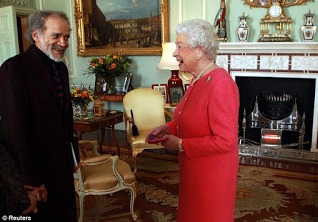
Queen shares a laugh w John Agard

                                                 [Poet John Agard shares a laugh with Queen Elizabeth II] 


                    In the 1990s a stint as Writer in Residence at London's South Bank
                    Centre cast Agard as that weirdly successful "Bard at the Beeb" whose
                    words became suddenly available to beebish listeners. In his latest
                    collection, "Travel Light Travel Dark" he pokes around the baggage of
                    imperial geographics for truths undeclared: "Is that the blood/ of the
                    Gambia/ flowing under a Thames aria?"  "What light can your green
                    darkness, Atlantic,/ shed on a traffic that has scarred your waters?"

                    He assembles teams of celebrated players for a friendly (pre-season
                    like) game of  questioning assumptions and probing paradoxes. There
                    are star performers like Prospero, Caliban, Jimi Hendrix & Handel
                    (from "Water Music"), Sussex, Chelsea, Georgetown (from Guyana),
                    Mayfair (from London), cane fields & horn pipes, King Lear & the Moor ,
                    Christopher Columbus, Michael Holding.

                    Some readers might cavil: this manoeuvre, set apart from modern-day
                    spikes of street tension, creates space for high culture cruising. And
                    the word play (the "hoodie in the hood", "the ship in citizenship")
                    makes nice rap moves, quickly taken, but seem designed to titillate
                    receding commonwealth sensibilities.

                    His metaphors might strike others as too easily summoned and put to 
                    work. Take his "Colour Poems", for instance, in which colours ring out
                    fresh (and not so fresh) twists of meaning: red, he writes, "makes an
                    art of bleeding slowly"; and  green "thrives on a single leaf's trans-
                    figuration".

                    In the wider Caribbean context, Agard's poetry calls to mind the
                    ground-raking "folk aesthetics" work of the Barbadian scholar-poet
                    Kamau Brathwaite (minus the shouter fonts, the return-home sense
                    of "mission".) You'll note the effort to disrupt patterns of thinking,
                    the shift towards new centres of creative energy; and the poet's
                    not-fully preparedness to embrace the literary legacy passed down
                    through the English tradition and old colonial schools.

                    "Travel Light Travel Dark" seems more like a contemporary dance
                    between the Queen's language and its creole relation; carried off here
                    with the level of clarity and responsible revelation you find first in the 
                    poetry of Guyana's Martin Carter.

                    Agard might have sensed that circumstances were perhaps right to
                    trigger a new conversation among not quite equals, across language 
                    borders, in a new interdependent framework  ̶  "I'm here to navigate
                    -/not flagellate/ with a whip of the past."  ̶  putting aside the recent
                    history of patronage or indifference; even as the issue of "reparations" 
                    with its long memory surfaces, and transAtlantic souls buckle up for
                    unfinished business.

                    "Travel Light Travel Dark" with its readiness to "engage" raises again the
                    possibility of open new gates for otherness. If you follow closely when
                    the poems are read  ̶  and Agard brings a weathery charm on stage for
                    his readings  ̶  you'll discover his roguish wit; thought loading when he
                    pauses; intensity as the old angst searches for new outlets, and today's
                    sea-crossing survivors attempt to wire a new connectedness.

                     It's a stimulating collection in its own way, far in front of the one-eyed
                    unrelenting banality of "progressive" thinking and practice in his native
                    land. It offers versions and conceits that might well sparkle on the
                    coffee table of England's now older monarch.   
                                                                                                 - Wyck Williams

                     Book Reviewed: "Travel Light Travel Dark", John Agard,  BloodAxe 
                     Books Ltd, (UK, 2013), 95 pgs.


NY SLIDE 9.8: THE DOWN STAIRCASE


                     Radix spent the morning pondering his future  ̶  what might happen if
                     he were excessed; or reassigned to another school, say, in Brooklyn,
                     miles and bridges away. Would he have to consider moving? Did he
                     really want to continue teaching?
 

                    When he saw Judy Wiener in the cafeteria, sitting with a teacher he
                    didn't know, he lost no time moving toward her. he pulled out a chair,
                    nodded politely and sat tight-lipped. "What's the matter, Michael?" she
                    asked, quick to sense his distress. He waved a hand as if the matter
                    could easily wait.
 

                    All around him, the cafeteria noise; tense white faces leaning forward,
                    talking to each other, scooping up food with plastic forks.
 

                    The teacher sitting with Judy Wiener abruptly shrugged and sighed in a 
                    way that suggested there was not much anyone could do about what- 
                    ever they'd been discussing. "Talk to you later," she said, remembering
                    to smile at Radix.
 

                    And before he could utter a word Judy Wiener said, "That was  Mrs.
                    Summerhays, Xavier's Guidance Counselor. Did you hear about Xavier?"
                    Radix shook his head. "He's in a hospital…with gunshot wounds." Radix
                    looked at her, his heart going cold, his own discomfort fast dissipating.
                    "He was shot by a police officer in a subway station…resisting arrest…"
                    She said resisting arrest as if she didn't believe it, not her Xavier.
                    "What happened?" Radix asked.
                         
                    It seemed Xavier was on a subway platform, somewhere in Manhattan.
                    He heard a train rushing in; he had to go down a long flight of stairs
                    which was crowded; it meant he'd miss the train on the lower level.
                    There was an up escalator not in motion; without thinking he charged
                    down the up escalator. When he got to the bottom a police officer
                    tried to arrest him. "For walking down an up escalator?"
 

                    What happened next was not clear. Xavier started to walk away,
                    protesting he'd
done nothing wrong. The cop tried to stop him. Xavier
                    dared the cop to arrest him
for something that stupid. There was a
                    scuffle, the officer's gun went off. The next
thing they knew he'd been
                    shot.
 

                    He was in an Intensive Care unit, his condition critical. The bullet had
                    lodged somewhere near his heart. The doctors were afraid to operate.

                    Radix' stomach stirred, reminding him he had forty minutes, no, thirty
                    minutes, to eat before the bell. He didn't have the will to move. Judy
                    Wiener had spoken in a low intense voice which transfixed him. Not
                    just her voice. The look on her face, the moistness in her eyes. A 
                    student  ̶  her Xavier!  ̶  had been shot.
  

                    What could he say to her? He returned her stare. He could see right
                    down to where she kept her feelings for the Xaviers of this world. She
                    managed a week smile and she told him his teaching break would soon
                    be over.
  

                    When he came back to the table, with a cup of coffee and a Danish
                    roll, her lips were compressed, her shoulders rounded; and her body
                    seemed to sag with the weight of this fresh calamity. "Where is he, 
                    which hospital?" His voice was sharp with concern. "He's at Lincoln     
                    Hospital."

                    Judy Weiner took a deep breath, then reached for her bag, taking out
                    a mirror. "I'm going to see him this afternoon." And Radix said, "I'll
                    come with you, if that's alright." "Of course, we'll go right after
                    school."
 

                    She got up to go. She wore a red dress which hung down her body like a
                    sack. He'd never really paid attention to the body inside that dress
                    until this moment,in this sack dress. She launched into chatter about 
                    things she had to do and perhaps they could meet in the lobby and go
                    off to the hospital together; or would it make sense
to get there in
                    separate cars?

                    He waited for her in the lobby as the school streamed out. There was 
                    some sort of Art class display, artwork stuck around the walls by the
                    Art teacher, with the title, The Joy Of Spring. No one seemed in the
                    mood to stop and look. Judy Wiener was taking her time.

                    She didn't exactly rush from the elevators, frantic and apologetic.
                    Radix saw her walking toward him, self-absorbed; stopping to
                    put o
n her dark glasses, rummaging in her bag, her lips moving
                    nervously. And he found himself studying her again. The legs seemed 
                    fairly confident under the sack dress. Something about the face,
                    though - a little too passive and unlucky; the face of someone who
                    spent too much time worrying; who found little reason these days
                    to exert herself.

                     (from "Ah Mikhail, O Fidel!", a novel by N.D.Williams, 2001)


SUMMER FEEDING THE FISH DAYS


                                                                             for Yonette D, back in the days


                    This office worker on the 17th floor in this movie
                    would perch on the window sill, during lunch break,
                    working to impress this girl he wants to sleep with;
                    tossing dollar bills like brand tissue from a stock
                    he grows for parley. 

                                    Guessing the gold bait would land at the feet of
                    juggle
jobbers down town up streaming; though some air
                   
lift like hems get snagged in tree limbs; or settle behind
                   
a dumpster; get stuck like pigeon marks on wind shields come
                    unstuck brake 
miles away at traffic lights or toll booths;
                    last to palm.
                              

                                                                   Feeding the fish, he tells the girl
                   
whose nipples peak lips cheery nibbling the view: he's
                   
up load funny, can afford to take her out to dinner;
                   
make her laugh hard on court play.

                    Aha! you tee off  ̶  knowing Fore! how cloud borne
                   
poems find you: at an attic window stuck in mood swing,
                   
girl friend in limbo under rumpled quilt; a snow event
                   
out butterfly flake initials, uncatchable  ̶  as when crowd               

                      funding fingers click
                  
   the muse in cat scat heat swipes world wide altitudes;
                   
  your sky code blue.
                                                           – W.W.


                                  THE MUSE

                                  
                                                              cannot admire every
                         
jewel she inspires in men
                        
who are after all nothing but
                        
(even when gods she makes them feel)
                        
and so sometimes produce nothing
                        
but polished tediums or bright lies
                        
which they, like brats, demanding atten-
                        
tion, drop in her lap, expecting
                        
for their efforts no less a reward
                        
than her love and continued blessings
                        
for each and every one of their
                        
beautiful complaints about her
                        
unjustified neglect of them.


                    (from "Scratches On The Air"  by Brian Chan)