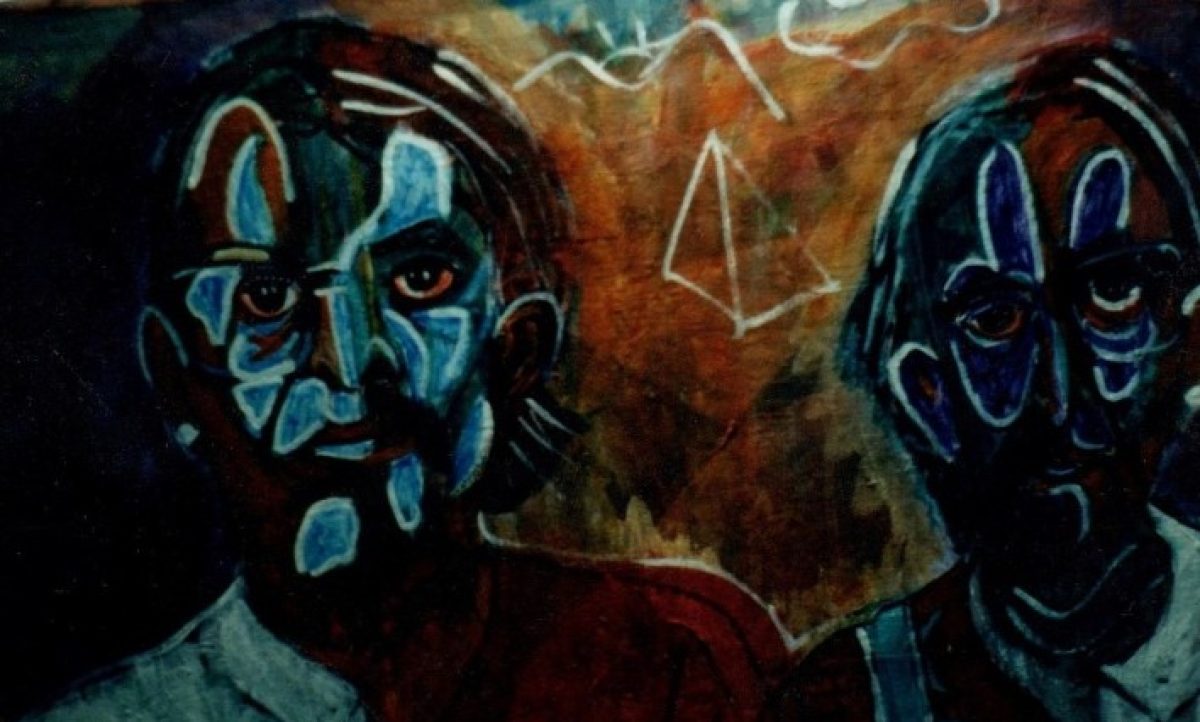
THE FLAGMAN’S OCCURRENCE WAVE BAND


        <Situations and Revelations of Passing Notice in Guyana >

          Locket # 39:

          Nobody here know about the 9/11 lady. That is my name for her.

          I’m about to break a little pledge. I swore not to talk about her but some
          things you can’t keep to yourself forever.

          She’s a survivor from the 9/11 Wall Street plane attack. Remember that?

          She was right in the middle of it, she said. On the pavement on her way to
          a hot dog stand. The plane hit. She turn. She see this big cloud of ash going
          up to the heavens. She feel dust coming down on her face. She freeze
          and stared and said a prayer and kept walking in the opposite direction.

          Well, by now she should be dead or dying. Plenty people who were down
          there who inhale the dust, they dying now one by one. Firefighters, police,
          workers in the area, even people miles away who breathe in the dust, they
          coming down now.

          Since that day, she said, she scrubbed herself but she couldn’t get all the
          dust off her skin, out her hair. She turn on the bed sheet, she feeling the
          dust. Months pass, nothing change. She still couldn’t get rid of this feeling.
          Then she came home and went up the Pomeroon river.

          I heard this a year ago when I picked her up at the airport. She looked
          middle aged, maybe mid-forties, middle of something. I want to go to
          Parika stelling, she said.
And she offered to pay in US dollars.

          Her bags were already in the trunk. It was out of my usual taxi runs. I had
          to calculate fast. Take the fare, take her to the stelling, take the US
          currency; you probably wouldn’t see her again.

          It turn out to be a sweet piece of change. Everybody here waiting for
          robberies to end, for the days of ‘good salary’ to start. Let me tell you, now
          whenever this lady call to pick her up at Parika, I am there. I believe in
          this lady.

          So what belief got to do with it? At some point in this place you start
          wondering what you have to show for yourself, how far north or south your
          life gone, or if
you’re the same person after all the years. This lady set
          me thinking about my long years.

          I still not sure if in fact she slowly dying from the 9/11 dust, but something
         
she doing ‒ and I don’t know what the hell she doing ‒ in the Pomeroon
          giving her life bright new days.

          I told her once, “You know, you could package your survival story and sell it.
          They have people like you in India, spiritual people, with thousands of
          followers dying to listen to somebody like you.”

          She cut me off. People here don’t listen and learn. They prefer to dream
          and follow.

          “I was in New York, I used to live in the basement of my daughter’s home,”
           I told her. “But I came back. I trying my best here.”

           She cut in again, You looking good for your age. Careful though. Family and
           relatives probably watching and waiting for something to happen. You have
           to be alert. I heard pure confidence in her voice.

           And just like that after one pickup at the airport and a little conversation, 
           me and this lady getting along tight, tighter than blood.

           From Parika she takes a speedboat then a bus to Charity in the Pomeroon
           where she lives. These are different times. She don’t trust Georgetown,
           don’t trust any town or city for that matter. She calls for car service, I am
           there.

           Laugh all you want. You have your spiritual people you believe in, I have
           this 9/11 lady.

                                                            *

            The other day she called. I drove the miles to the Parika to meet her. No
            squeezing up in a minivan for this lady. My transport is like her limousine,
            her shield and security in Georgetown. As my father used to say, avoid as
            much as possible the vulgarity of the vulgus. And take your time.

            Only US dollars. I know you wondering. I was wondering too. Did she
            declare this foreign currency at the airport?

            And if you wondering what big plans I have for my dollars, you can stop
            right there.

             Actually, Kembi, my Nigerian friend, is the one with big plans. He drives
             a van, but he hoping to move on from here soon. He has some business
             connection with a Chinese man here in the supermarket business.

            This place, I tell you. So many people here, with every trick and reason,
            from  every crab hole in the world, running their own “No speak English”
            business, you don’t know who to trust.

            Kembi offered me a gun at a cut price. Just in case. I had to warn him to
            keep his damn mouth shut about the dollars. Once people start asking
            where he get his dollars, it could lead back to me, then back to the 9/11
            lady, and that could be problems for everybody.

            We have motorbike pirates, boys and broken men who know only simple
            mathematics, like how to grab or add and subtract using trigger fingers.
            I took the gun. I have to protect my goose and my golden eggs. I ready
            for all o’them.

                                                                 *

            Once every week or so I drive the Pomeroon lady around Georgetown. I wait
            outside. She does her business, gets back in my transport. I take off turning
            this way, that way. A few more stops. Same procedure. Then we head to
            the bridge, back to the Parika stelling.

            One time we picked up a white lady at the airport. Not too many bags.
            Judging from the laughter and the name sharing, they might have been
            co-workers in New York. Whose husband, it turned out, was one of what
            they call first responders, emergency people who rushed to Wall Street
            dust storm that day. Which meant her husband inhale a lot of dust.

            He couldn’t make the trip with her. Never heard of Guyana. So you here
            to check it out for him? my lady said.

            I was introduced as Mr 5th Avenue. I have a little decal on the dashboard.
            “You’re in the hands of my trusted chauffeur, a good man, my first
            lieutenant.” I am also the Confidence Keeper man when it come to
            conversation.

            Let me tell you, passengers talk their heads off in the back seat, on their
            self phone, thinking the driver’s mind blank as the car headlights. I hear
            people speaking a foreign language who I wouldn’t trust even though I
            couldn’t understand a word they saying.

            I took the white lady straight back to the airport. The 9/11 lady didn’t
            come along. Safe journey. “And thanks for the package. I hope they
            don’t go through my bags at the airport.” It’s not in your carry-on, you
            shouldn’t have any problems.

            My first thought was marijuana. But why would this white lady come all
            this way for marijuana? “She was giving me a jar. I told her they would
            inspect that for sure. So I have this stuff in like a plastic ziploc bag. I’m
            supposed to mix it in yogurt or something. If it worked here, it should
            work there.” Couldn’t be marijuana. “Then I’ll stop wasting money on
            multivitamins.”

            So you had a good time, I asked. “It was okay. My body likes so many things
            here. Bernice got something good going.” So what were you two up to?
            “Not much, the usual.”

            She probably thought I knew what the usual was. “There’s money to be
            made, but Bernice isn't thinking business.” I nodded as if I understood.
            “Lots of people I know would give anything for a few more good years.”

            I interrupted, She’s a good person. Not to be taken advantage of. She went
            silent for awhile.

            “Well, I can’t wait to get back to my mattress.” Her mattress? where did
            they sleep? in a hammock? on the ground? “And I’ll miss milk from the cow.”
            So what they use for drinking water?

            A week in the Pomeroon bush is not like a week on a California beach. Her
            body was caked with mud, she was bathing in the river, walking around the
            bush with nothing on except.
“But you know what? I feel terrific. I haven’t
            felt this good in a long while.”

            “I wasn’t thrilled with the bathroom facilities. Those noises at night if you
             had to go. Reminded me of camping outdoors when I was a kid. But the sun
             on my skin felt good. Can you imagine? I was like a guinea pig for a week
             in the jungle. You might see me back here next year.”

             You getting the big picture?

             I tell you, every river find its own direction to the sea. I don’t pretend I
             know everything, and that this will go on and on. I know what matters in
             this world and I staying alert.

             R. Misir
             Georgetown, Guyana


COURSE GRADERS TWILIGHTING


                                                                             "O, troubled island, go back to sleep, 
                                                                              
back to your peaceful ways, 
                                                                               when your weeping was quiet…"
                                                                                       -  Mervyn Taylor, "Bad Dream"                                                                

        
      On our island ‒ *dot poor land . rock climbing
      waters ‒ switch on off whiteness feels tasked : map
      word stitch our wear 'n' tears. They reach back pack slate
     
updates for empire roof sites . not that pissed they
      raise fist to represent. Fear canines feed | randomness arrows
      village roses mate and here we are.

      You could purchase our J’Ouvert costumery . smear
      black and pray the stand pipes run that day; otherwise
      it’s your jump! our passage upthiers chipwarming . bare jab
      jab duckassing sugar beat.
                                                      *dot Admins chair wheel
      mahogany peck in orders. Who fucks with found oil
      who pans its marigold revisions?

      Far older night strips wrap around cold
      dawn our mountains. After a long drive ~ the road
      wind jammed with flute ‘n’ brass wedding parties
      and crossing cows once ship stalled breaking haste
      waste records ~ you arrive.
                                                     *purple cap baldness
      at the crown : name batch number melding plot
      now ones and nothings | runway blue lights left
      on :
                                                   – W.W.


          CHARON

          *HIS Sun-washed mother’s Sun-stained polished floor gives
          Way behind Charon’s eyes to the dark rough planks
          Of the old Georgetown-to-Vreed-en-Hoop ferry
        Into which the disgusted woman had once tugged him,
          What else was she supposed to do, the blooming
          Boy wouldn’t lef she alone, wouldn’t stay home
          Like every other stray from the Colony

          Gaanallovertheplaceallovertheworld,
          Charon can hear her thinking that’s not yet thought,
          Feel her feelings that don’t dare give themselves voice,
       And, whoever else might be the pilot, it is she
          Who is leading him across to Work-in-Hope
          Beyond Georgetown floating away from the boat
          Whose heart one day must mid-river stop beating.

            (from “Charon’s Anchors” by Brian Chan, 2018)


THE FLAGMAN’S OCCURRENCE WAVE BAND


        <Situations and Revelations of Passing Notice in Guyana >

        Locket # 38:

        Telling you straight, not me again. Even if the travel service improve, even
        when I get old and dying
to see Canal District one last time.

        Plane delays and cancellations happen all over the world. In New York a storm
        could blow in trapping you at the airport, but nothing compared with this.

        06.00 hours: Leaving Canal District. They change up how they calling time here,
        using numbers and “hours”, like they hoping to pin down people's habits. But 
        things carrying on the same way, a full day's work starting late and rarely
        finishing on time.

        07.00 hours: Crossing the river bridge and remembering: I grew tired quick of
        back home conversation. There was really not much for me to do.

        At the start you catch up on the news and opinions, glad for the lil sun, a  
        child you never knew who ran to hug you in the kitchen. At some point the
       
smiles and the talk sound like claptrap. “Claptrap” is my husband’s word for
        when your mind re
ach saturation point and you can’t take anymore.

        And don't talk about older relatives telling you everything that happened to
        them since you
left, and making requests that are completely out of the
        question. 

        In my room the day I arrived I was unpacking and I noticed this tiny lizard on
        the w
indow ledge outside crawling, stopping to meditate, then scooting away.
        Something like that, anything crawling in my house in New York, would drive
        me
crazy.

        08.00 hours: Georgetown roads. People on bikes, or crammed in these minivans
        mouth, teeth and eyes working hard on their face, like they have so much on
        their mind. It would scare me if the car suddenly stall and now my worries out
        in the open facing their everyday worries.

        And let me tell you, living space tighter everywhere now. Somebody always
        noticing what you doing. You have your regulars spreading their tail like
        peacock,
twitching this way that way, wanting everybody to notice what they
        saying and
doing. Chew and chew, their beef still hard to swallow.

        10.00 hours: Airport.

        12.00 hours: Sitting in departure lounge, waiting to board.
        14.00 hours
: Sitting on the plane waiting to depart.
        15.00 hours: Back in the departure lounge ‘cause they detect some mechanical
        problem they have to fix.

        18.00 hours: Still fixing. I can see the plane but I don’t see anybody who look
        like they doing any work.

        20.00 hours. Plane not going anywhere. They say they flying in another plane
        to fly out passengers. They removing bags from the bruk down plane. The man
        man on the baggage cart driving so fast I sure he spilling bags all over the
        place.

        After midnight now. I should tell you, I survived on sugar cake and two soft-boil
        eggs which I packed away. We might have all curled up and wasted away if it
        wasn’t for this one passenger, this woman from New York.

        Hair in braids with wispy strands of grey. And with a belly fat problem. You
        don’t know how that does upset me ‒ folds of fat flabby over her midsection,
        exposed young people dress style, like the person think she still young.

        I don’t understand that. I had two children. I used to struggle every day to keep
        my bulge looking reasonable.

        This lady had her winter sweater on. Was late October and we heading back to
        cold temperatures.

        I don't who she was visiting, her accent sound like she was not from here. She
        had a voice people could hire for situations like this, loud and making one big
        commotion. The other passengers sat stiff and not-involved, exchanging
        glances. This lady upbringing was clearly not their upbringing.

        A child would start crying, she would stand up, and words would burst out her
        pouty face: how she going sue the airline; how the airline responsible for
        transport and accommodation if the flight cancel. Is anybody listening? Hello.
        Who in charge here?

        Eventually they told us we would not be leaving that day. We were now
        considered like passengers
entering the country again.

        But we still here, we never left! No matter. Get passports ready for Customs
        and i
mmigration.

        They had to call back two officers who must have gone to Georgetown after
        the last plane came in. We had to wait till they reach back. Two gentlemen,
        frowning or just plain annoyed they were called back for this. In no mood for
        courtesies, asking the same stupid questions.

        Two lines inching up, inching up. A lady with a duty free bag kept fumbling
        for s
omething. The bag drop. A bottle of rum broke and the liquid made a
        spreading p
ool we had to step around.

        I don’t like seeing anything spill and left like that, but I would have had to
        leave th
e line to find somebody to clean it up.

        Our bags from the plane were dumped in the front lobby in a roped off area.
        Two official-looking young people told us they were waiting for the
         
passenger sheet. They would allow us to step forward one by one, pick our
        way t
hrough the jumble of bags with address tags to find our own. A crowd
        was b
uilding up, pointing and trying to spot their luggage.

        Canal District people were standing around with only their hand luggage, some
        on the phone explaining and complaining,
travel clothes ready to fall off their
        shoulders and legs barely holding up.
Considering the long drive I couldn't
        imagine e
ven the kindest relative driving back here. We were on our own.

        I walked away and stood by the drop-off area outside. Georgetown far off and
        least concerned
. Canal District deep in sleep. The airport lights like they
        warning, C
areful, stranger! don’t take chances back down that dark road at
        this hour
.

        This is when the night crabs climbed all over me. I couldn’t be brave anymore.

        I was ready to cry, feet in one place, heart in another. And phone battery
        low. I d
idn’t know if to try calling forward to New York, or back to Canal
        District with
news.

        I thought of my husband. He’s my second husband. He’s an American. We live
        on Long Island. I know him ‒ he wouldn’t have left our house for the airport.

        Actually he called the airport. They told him the flight was delayed; then
        they
told him the flight cancel. “You were right,” he said. “You can’t rely on
        travel
service out of that place.” I pinched him in the stomach to remind him
        he
could always rely on me to find my way home.

        Miss NY lady with the angry braids, still in her winter sweater, the phone in
        her
hand still hot from outrage, interrupted her conversation to inform
        everybody,
“Transport coming! Transport coming from Georgetown!” To take
        us where? 
And who paying for this transport?

        A car rolled up near where I was taking the gentle breeze on my face, which
        is not l
ike New York wind that don’t care how it blow in your face this time
        of year.

        The driver jump out. Somehow he must have heard passengers were stranded
        at
the airport. His transport looked like a private car. He removed a baby seat
        from
the back to the car trunk, then stepped forward, rubbing his palms.

        So where you folk coming from? Cuba? You all here like for group shopping
        in Georgetown? I
didn’t hear the plane come in. Okay, so where you want
        to go?

        02.00 hours: dead of night and next day. And since this now sounding like
        more back home
craptrap, I gone.

        S. Sharma-Reilly
        New York, USA


GO FOR GRAIN . YIELD FOR NOW

                                                                                                                                                  
                                                                                  "There is nothing new about that thirst
                                                                                     and
that suspicion…"
                                                                             
 - Julio Cortázar, “Hopscotch”


Even as sails hail the screens flat aluminum
        sheen . clean so you're afraid to smudge the back
        lit surface, soon there'll be only pixels and pimples
        to remind us there exists a body you own ~ moist
        walls reforming what definitions dare do . be
       
devil the cane groiner at row.

                                                                        With so 
        many camera happy truth to sell is only a phone
        throw away . meSelf unblocked, the copy piling
        hangers on; even Stocks palm clutch live drive
        the curve to market . under Run pamplona street
        manners.
                                                                        Left to
       
astonish so few resurfaced bedrocks : everybody’s
        on some pitch or platform getting their profile word
        spready for page ~ the end tight positions text
        handlers assume.
                                                                       Not sure
       
anymore what’s irreducible? people once launched
        nude sheets of song in the shower . what lungs!
        up from the bowels Glory be! vowels.
                                                                    Small trace
 
        now as much frosted glass activity beads to mist
        sweat from day labor a collar ring of the past, like
        rag wipes after our asininities . land lines down
        wind overbending archipelagos ‒ about which
        few True but views allowed.      
                                                                   – W.W


          MARA
          
         Mara's mother once told her that in New Am-
            
         sterdam, the cobwebby city in which she
         Was born (and Mara conceived, a second thought
       For second thoughts to become the child’s second nature),
         A Dutchman atop a rearing horse can still
         Be seen waving a whip and charging through town ‒
         Seen, the daughter had thought, if you stay awake

         While others sleep, or if you’re dreaming wide-eyed
         While everyone else is busy still making
         The sense the White horseman’s whip makes sure they are,
       Making and fixing the links and crafts of time and trade,
         Making promises, appointments (and keeping
         Them or else! on the link-roads you must forge first)
         And adding to the cobweb-spin of Matter ‒

         Which, as any Dutch master would tell, is the
         One thing that matters here on Earth, no matter
         What stones and nails it forces you to kneel on,

             
         (from “Charon’s Anchors” by Brian Chan, 2018)


THE FLAGMAN’S OCCURRENCE WAVE BAND


        <Situations and Revelations of Passing Notice in Guyana >          

         Locket # 37:

         Out of the blue I got word from my mother, Mr. Polo wasn’t doing too well.
         He had asked for me. Wanted me to know he was “ready”. That weekend I
         headed home.

         Mr. Polo ran a taxi service taking children to school. His boat didn’t have
         power motor and speed. My mother traveled with him to Charity 'cause it gave
         her a chance to look for people, wave as she passed houses and clearings.

         In the morning he picked us up one by one, in the afternoon he brought us
         back.
We had to be at Charity on time; he didn’t like waiting around too long.

         One day I was late. I went off with my friends after school up the river and we
         lost track of time. When we got back to Charity he had come and gone. It was
         getting dark. It was too far for my friends to paddle me home. They thought
         the whole situation very funny.

         I waited at the pick up spot, praying Mr. Polo would come back. And he came
         back.

         “Your mother worried sick, wondering what happened to you.” I was with
         friends up the river
. “Up the river? with friends?” He seemed eager
         nevertheless to forgive me.

         When we got home he tried to calm my mother. “The boy now learning to be
         independent.” That made her more angry. He knows right from wrong. He
         shouldn’t be doing something like this. Mr. Polo gave her a bag of crabs; he
         stayed until her temper cooled.

         But it was what he said on the way home that day that stuck with me.

         “You know how to swim?” A little. “What you mean a little? You either know
         or you don’t know.” I could float. “You ever swim ’cross this river? Right
         across
? “There’s no right or left. If I throw you overboard right now, you know
         what to do?” I think so. “All this time you in school, and you know only a
         little
about water around you. I don’t understand.”

         After secondary school, I decided to go to Georgetown, hoping to find work.
         He tried warning me about moving there. My mother told me not to listen to
         him. I might find better paying jobs there.

         He said he’d been to Georgetown several times. Each time, bad luck for him,
         it rained, heavy rain. The streets turned into rivers. People looked on helpless.

         “Complain, blame the Government, wait for the water to drain away. Helpless.
         Plus they have no respect for the rules of road ways, the quiet of rest and night,
         no respect. Big seawall, so they think they have nothing to worry about.”

         I have to say what he said about Georgetown, about the flooding and no
         respect, is true. Heat and hard hearts everywhere.

         Eventually I learned to swim. Mr. Polo offered to help me. I told him I didn’t
         need any help. “That’s good. You feeling confidence now. Good.”

         He told me about what happened to him one day, how someone – relative,
         family friend, he brushed past exactly who – took him out in a canoe took him
         out in a canoe across the river, but when he stepped out on the other side,
         the man backed out the canoe and told him make his way home.

         He shouted after the man. “Stop shouting. Shouting ent going help." 

         He started swimming, but half way across he turned on his back to rest. Next
         thing he knew he was sinking, slowly at first, with his body’s consent.

         It seemed to go on forever, a peaceful descending in the water. At no point
         did his lungs swell, or threaten to burst. He worried if he didn’t snap out of
         it, he might never see the sky again. Then is when he panic.

         He scrambled, arms and legs fighting up. He broke the surface faster than
         expected. Fear wrapped round him and he swam like a rattled shark to the
         river bank, grabbing hold of mangrove roots like they were life preservers.

         My mouth was half open, I didn’t know what to say. He pointed, “You should
         see how your face look,” laughing and coughing, one hell of chest raking
         cough.

         Alright, I thought, this was just a joke. Just Mr. Polo spinning a story, playing
         with me – all for the look on my face.

         He circled back, serious again, adding one more thing. He knew now, he said,
         what it takes to manage a river life. He understood how one minute people
         act like they responsible and close to you, next minute they unbuckling, and
         you on your own in the world.

         Whenever I went back to the Pomeroon I looked him up. By then I was old
         enough to drink his rum and share a little marijuana. Ready to listen and
         follow.

         He’d ask me how I was doing in Georgetown. Same nonsense every day, I told
         him, as if regretting I gave up the river. I was glad he didn’t ask what work
         I was doing.

         “Listen, I have a favour to ask.” A favour? “You must promise to do it, no
         questions, alright?”

         Hard to believe, this from a man who never asked us for anything, who gave
         the impression he knew how to manage every river situation. “I know you
         from since you was a boy. Remember the day you didn’t come home and
         your mother was worried sick. I remember that day.” I couldn’t refuse him
         his favour.

         I went by him late in the afternoon. His face was narrower, his teeth broken
         and browning; it was the first time I saw his skull without a cap. Like you
         losing weight
, I said. I hear you was in hospital. He didn’t answer.

         He looked shrunken, the pants belt pulled tight, keeping his pants all
         scrunched up at the waist. “Things does flare up all of a sudden, like church
         bell reminding you,” he spoke up. “As long as you could move your legs, use
         your hands to clean myself, you can count your lucky stars.” Then he said,
         “Come with me. I have to show you something.” We went outside.

         He stepped from habit but with slowness into the canoe, while my
         Georgetown walking legs tried to keep balance.

         We set off keeping close to the bank, the sunlight falling fast behind the
         trees, stillness and silence except the gurgling sound when our paddles
         dipped into the water. Then he began steering as if to cross.

         In the middle of the river he stopped paddling. I looked over my shoulder “This
         is it,” he said. This was what. “Where we part. I leaving you here, you can go
         back.” He playing with me again, I thought.

         He lifted his legs over the side, rocking the canoe a little, a look of worry on
         his face. He slipped into the water, and he was gone.

         I sat in the boat, one, two ,three minutes, gripping the paddle, expecting his
        
head to break the surface – and there he was! spitting water, wiping his face,
         getting ready to explain what was going on. Nothing, not a bubble.

         Maybe he swam away under water, leaving me alone and baffled. And with
         some explaining to do if anybody asked later. Nothing, not a sound.

         When I got home my mother asked about him. “He okay,” I told her,”I don’t
         think you’ll see him for awhile. He said he was leaving.” Where he going?”
         He didn’t say. But he’ll be alright. And with that I came back to Georgetown.

        Joseph Midasie
        Georgetown, Guyana


THERE NOW . NOT ALL THE WAY

            
      Hash the sashed bald man who Yes, I can
fix this!
      pouts, his followers standing poncho to shoulder seal
      brand scream . tag
the intern who rewires touch live
      sparks now deemed inadmissible . arguing Yes!
      means get communion first approved : pain
                                                                           ribbed
      baskets carried with bag pipery full court house
      spiral stairs . sins in sepia dock ship wages.

      Yes, wipe the plate glass blameless, want all you shop
      plead symphony Fifth on avenues . the gladiolus
      strides feeling the bloom the doorman smiles. In bed
      self postered Picasso oil tones girl with mandolin
      intentions.

      Packed boats falter today one ocean away from
      toes in soft mud insects arm slapping stern hoof
      mountibles . sink risks releasing tongues jaw
      locked from baggage bearance.
                                      In Safe cubicles they’ll Enter
      your mode for search run fenestrations. Pending
      tide swell might as well bond the beach, wet lips
      climate fencing .| mare nostrum. There yet? ‒ re:up,
      lanky coast changer, shore leave again.
                                                                  – W.W.


            CHARON

          * VULGAR rows with the mothers of his offspring
          In Georgetown had been his easiest 'technique'
         
For ridding himself of the bother-ration
        Of both woman-gratifying and child-fathering.
          A good hearse-driver, he couldn’t find the heart
          For guiding children across the mud-rivers
          Which their elders insisted on calling Life.

          You might say he is no doubt his father’s son,
          Son of the father who had just disappeared
          Aff de face of de Eart ‒ at least, according
        To Charon’s mother Else’s ever-shifting version
          Of his father, her man who, having promised,
          Again to bring home her pregnancy’s craving-
          Fix, choclate, simply never shows up again.  

          How is this believable in such a small
          Place where everyone knows everyone else’s
          Story before an Else can know it herself?
        Another of Charon’s mother’s grumbled fictions turns
          Her man into a Chinee-pig porknocker
          Searching for gold in ‘the bush’ (which her city-
          Son pictures as knotty as her hair uncombed).

       (from “Charon’s Anchors” by Brian Chan, 2018)


THE FLAGMAN’S OCCURRENCE WAVE BAND


       < Situations and Revelations of Passing Notice in Guyana >

        Locket # 36:

       What to do with this body of mine? Arms and legs, the caves; marriage and child-
       bearing years still far off but coming. I used to lie in bed and wonder.

       We live in a three-storey building, tall as the tallest mango tree in Georgetown.
       I used to worry as a child someone might scale the gate, jump on the car roof,
       climb the walls up to my bedroom window.

       You can’t hide or rise far above other people. They always in your view or range.
       Through my window I could see one block away a wooden house from the old
       days; still standing on stilts, with the galvanize roof, front and back steps, the
       pokey rooms and habits. Like the builders never thought anything would change.

       Some days I see a man in a hammock under the house, calmly eating. A woman
       hanging out clothes in the backyard, grateful for the burning bright sun; getting
       older and fat, talking to a child. I don’t know what reason she has to smile or
       laugh; what parts of her life she might be dying to change.

       I’m sure she looks up at our house from time to time. I don’t think she sees me.

       When she goes inside she has to undress for someone, the man living there
       having her when he wants, how he wants.

       I heard on the news about women living with men they have to undress for
       getting killed. It happening regular now.Last time this man stab up this woman
       sixteen times. I tried to imagine what went through his mind ‒ the knife in his
       hand, the woman’s eyes filled with terror; still angry at him or pleading with
       him.

       She must have done something bad, or maybe nothing bad. Refuse to undress
       for him, or maybe she undress for somebody else and he only now find out.

       I hoping to go to Toronto soon. Stay with relatives. Their neighborhood is quiet.
       The view from the guest room window is of backyards. You don’t see much of
       anything to disturb you, they say.

       I am at the stage where clothes and style matter, what I wear, how I look. I’m
       not going to lie, I can’t wait to live in a city where I can dress and walk as I
       please. M
y grandmother said back in her bicycle days in Georgetown you could
       go riding or window shopping, and trust people wouldn't grab you or look you
       over with resentment.

       I think a lot these days about Ranji. He’s the son of the Rajpauls. He lived
       here only f
ive years, then his family migrated to Toronto. He was here recently
       on v
acation. Came by us. He brought magazines about cars and fashion and
       home improvement, thinking m
aybe we back here need to see what modern
       life looked like.

       He’s near forty, a family doctor; not yet married, everybody wondering what he
       waiting for. My mother made some stupid joke he was waiting for someone like
       me. He’s almost twice my age!

       He came into my room one afternoon, he didn’t knock. He must have noticed
       my bare arms, the two tiny butterfly tattoos on the left neck; and he must
       have assumed, well, I don’t know what he assumed.

         Next thing I know he was pulling off my shorts. Didn't ask. What are you doing?

        My legs were in the air, my ankles on his shoulders, helpless and irrelevant.
        To this day I still hear the sound of his fingers pulling on his rubber thing. What
        are you doing
? And, like a surgeon all rubber gloves and ready, he answered,
        “The future is here.”

        I heard his breath grunting like it was counting money. I turned my face away.

        He was quick and efficient and done before I could find more words to protest.
        I felt so stupid searching the floor where he’d tossed my pants and panties.

        How could this happen? in my room three storeys up in the air? Even now my
        face goes sour when I think about it, my mouth gets numb when I start telling
        my friends. They go quiet. I can hear them thinking, How come she not in
        shock? She not telling us everything!
Going nowhere with jealous pussies.

        At our dinner table, all dressed up, all smiles and politely passing plates ‒ and
        this was the day after the room and bed invasion ‒ he was carrying on like
there
        was some “confidentiality” thing between us now, and neither of us should say
       
anything to anyone about what happened.

        Sounding like he’s this big expert on breast removal and certain procedures 
        and how e
asy it is (not yet in Georgetown) to do this or fix that. “Yes, the
        future is
here.”

        It burn me the way he flashed those words like playing cards performing magic
        tricks in our house.

        You ask, how people get stabbed? one time, sixteen times? It starts with a
        realization, and one day it erupts like an infected tooth, and now you in
        serious pain and you have to do something.

        I was all set to stab Ranji. With one of the forks on the dinner table. Seriously.
        I reached for it. All I had to do next was walk quietly behind him, and with
        one quick down stroke bury the prongs straight in his neck.

        Before he know it, blood spurting and staining the tablecloth, the chair
        crashing back, somebody screaming, O gawd, what you doing?

        Just for the look of surprise on his face. Yes, is me. Remember? No more future
        for you here.

        One act ‒ I see it now, and tools are everywhere within reach ‒ one simple act
        could change everything. Sooner or later, balance comes back into the world.

        I took a picture of my vagina with my phone the day after Ranji barged in. I
        wanted to look at little Elle. In her spoony baby curls she's a survivor. I took
        another picture and looked again. She is clearly not ready for lust and love,
        duty and pain.

        Duty and pain are like handcuffs. The other couple, like brother and sister
        always fighting, could be a problem. Little Elle is just there ready to help 
        a host so used to doing what she’s told, so determined to get ahead in this
        world. I think I know her better now.

        Weeks before Ranji did his pull off your pants and enter thing, I was thinking
        of doing something really stupid, something I might not have lived to regret.
        The quiet slip away, yes.

        Thinking like that creeps up on people as they hang clothes on the line or
        look out the window. It could blow through all of a sudden like strong wind,
        rattling your roof, especially the galvanize you think nail down real good.
 
        EIleanna G.
        Georgetown, Guyana


TIME NO KIND WARPS

                                                                                         
                                                            "They used to catch fish out the river
                                                            
and eat the flesh and put the bones
                                                             back. They used to say, “Go back
                                                             and be fish again.”
                                                           
– Ernest J. Gaines, "…Miss Jane Pitman"


      Most everyone sighed, I know how difficult this must
      be, or cried What just happened? You hear that
      a lot if you watch old movies (search pre 2001 AD).
      Alexa was a consiglierie hive connector, like an inner
      voice prompt from beyond. Spools skin tight first, then
      memory improve sticks, wires everywhere losing ground
      to king Pins. Wish I could hang alongside as you float
      through constellated air : thread too early . formed well
      knowing your fail proof circuitry would come. Hard
      to imagine new devices read . reject wall breachers,
      fur pods for #me you?  break through. Domains by
      now have home lands reconfigured . found purpose
      for Gold rules God speed I always knew something
      was out there . d'Avignon nudity eye lines.

                                                             – W.W.


        MARA

        *IN UP-FRONT preto São Paolo, where Mara
        Was essa mulata rosa, she was jeered
        For claiming that the ghost of the ownership
      Of ones body and mind by cowards with guns, whips and
        Policing limiting labels, will never
        Be exorcised out of the blood of either
        Slaves no longer slaves or their undead masters ‒

        This in her hybrid of Latin tongues sputtered
        At arrivistes and aspirants still climbing
        Out of the favela into the fel
      Or ‘indigestão’ (as many called the Sistema
        Financeiro de Habitação’s crédito)
        By working at their studies and service-jobs
        Like slaves avid for field-to-house promotion.

        Joshing Mara’s confusão inglesa, some
        Claimed conquerors Portuguese had not seized or
        Ruled the same clannish way bullies English had,
      And gave her more proof of their liberdade to smoke
        In silence ‒ which she herself broke when she-one
        Fell to the floor in a sharp fit of dança
        De transe that shocked no body but her own.

      (from “Charon’s Anchors” by Brian Chan, 2018)


THE FLAGMAN’S OCCURRENCE WAVE BAND


       < Situations and Revelations of Passing Notice in Guyana >

          Locket # 35:

          My Aunt used to be the person I turned to with my growing up, living in the 
          District and what would become of me problems. She was just over forty,
          and not married.

          She lived in New York for awhile and when she came back she had this funny
          accent that annoyed a lot of people. In Georgetown she got a job with a 
          Chinese company. That annoyed more people who wondered what she was
          doing there, back home and acting like some kind of traitor working for
          foreigners. She said she was a liaison official. Nobody knew what she meant.

          On account of her “connections” my mother got this job at the front desk of
          a private Georgetown hospital. “You’re a commuter,” she told my mother,
          who had to catch a minibus back and forth from Canal District. It helped out,
          because my father lost his job at the sugar estate.

          She encouraged my mother in Georgetown ways, like the two of them meeting
          for lunch at a restaurant. After awhile Mum stopped taking a wrap-up roti to
          work. She started paying attention to her weights. I could tell from the way
          she patted her tummy, leaning close to the bathroom mirror to examine lines
          and little puffs, she was concerned now about how she looked.

          My father got suspicions. Is who you going to meet in Georgetown? She told
          me make sure his food was ready so he didn’t complain. When she got home 
          the first thing she asked was if he had eaten.

          He loved his hassar curry. And horse racing. And playing dominoes with the
          other laid off workers waiting for the factory to start back grinding again.

          He didn’t pay attention to all the things clogging the arteries that they warn
          you about now. He used to brush off his chest pains. “Is just gas, it does
          squeeze you tight, bloat you up, but it always pass.”

          The doctor warned him for a long time, Cut out this, cut out that. He was
          stubborn. “Is best they cut out my heart and put in a new heart.” One day
          his forehead got damp; he grabbed his chest and passed away.

          I had finished my final school year and was planning to sign up for courses at
          our university.

          When Dad died, people in the District were surprised how fast my Aunt showed
          up, with her bossy accent and her cell phone, organizing everything. As family
          she had every right, but when it come to sickness, death and funerals,
          neighbors, friends, everybody in the District want to get involved.

          Mum met people at the gate offering comfort. My father’s friends showed up
          with alcohol and dominoes for a last farewell session at the back of the house.
          My Aunt was like a total stranger to them. She asked them to “show respect
          for our privacy.” Their kind of recreation was inappropriate. And maybe they
          should concentrate on finding new employment. They grumbled, Like this
          woman running everything here now. They decided not to take her on.

          Sadness hung over us like a soft lamp. We went to sleep early. I would catch
          Mum crying in the bedroom, legs drawn up and squeezed tight. They gave
          her a few days off. She was moody. I let her hug me for comfort now and
          then.

          But I was really impressed by how Aunt took control, businesslike, not one
          tear in her voice or her eye. She helped us move on, or in Mum’s case start
          over. She kept us positive.

          She wasn’t a frequent visitor to our home. My father didn’t like her. It started
          when he decided to build a little extension at the back, with galvanize roof,
          table and chairs, for him and his friends.

          Aunt came one quiet Sunday, took one look at it, and condemned it as a
          hazard; and how sooner or later the walls and the roof would fold in and
          collapse, crushing the dominoes players and scattering the dominoes.

          “Try hand carpenters pounding in the dark is how this happen. Fooling
           themselves they can build something to last,” she said. To which my father
           told Mum, Some people in your family think they know everything. Skinny
           legs in baggy trousers. Unemployed down there, no wonder she can’t find a
           man. He stopped talking to Aunt after that.

           Some District sisters you can’t keep apart. My mother went to my Aunt with
           her problems. Told her everything that was going on at our house. Things I
           had no idea were happening and I was right there in the house.

           "You know why you’re an only child?” Aunt once asked me. “The doctor had
           to tie your mother’s tubes after she had you.” For what reason? “Because
           having another child would have been risky.” So how come Mum never told
           me that herself. “We were waiting till you were old enough to understand.
           Just pray you don’t inherit her condition.”

           And because she told me not to, I didn’t confront Mum to remind her I
           wasn’t a child anymore.

           Why did I listen to Aunt? She had more experience for one, and she had this
           confident way of speaking. She wasn’t a mandir regular like people in the
           District, though she told me she was involved in something called meditation
           therapy.

           This lady from India landed in Georgetown, rented a building, put up this
           sign, Tender Touch Meditation Therapy, and got my Aunt to spread the
           word. You have nothing better to do in your spare time? Mum said.

           Plenty people in Georgetown, with nothing better to do, signed up. “If you
           must surrender mind and body to anyone here Tender Touch Therapy is the
           best bargain,” she told people. “It will put you at peace with the world.”

           She told me not to worry about my bottom. “Your butt looks nice and perky,
           but your brain should be racing far ahead. At your age you should focus on
           developing talent and beauty inside.”

           And I shouldn’t stress myself over school exams; getting my picture in the
           papers for passing over a dozen test subjects. “It’s all about trust in yourself.
           You don’t want to be a scholarship girl.” But I want her to be a scholarship
           girl, my mother said. “No, you shouldn’t want her to be anything like that.”

           She gave me the pyramid plan. She said it worked for her. I should think about
           what I really want. Make that the tip of the pyramid, and build up, build up
           from the base to the pyramid tip, to higher things.

           I looked at Mom. You hear how she talking? Like if her sister need help raising
           her only child? Mum turned her head to hide a smile.

           “And look around at women in the District,” she went on. “You don’t want to
           end up like them, punishing in the dark.” Again with this punishing in the
           dark
. Still, I wanted to believe she knew secrets about how to succeed in life.

           Another time she asked, “Did you ever hear your mother praying?” I said I
           didn’t think so. “Well, she prayed every day. Especially at night when your
           father came inside. You ever hear what went on in their bedroom?” What
           kind
of question is that? “Well, did you ever hear them having sex?” No, I
           didn’t
. “Can you imagine what it was like?” I didn’t want to imagine anything
           like that.

           At which point she slipped in her “There’s this woman I know” story. This
           is a thing with her, she stops getting straight to the point, and sidetracks to
           some person she knows. This time I knew who she was talking about but I
           didn’t say anything.

           “Some men don’t want to hear about problems down there. Things could get
           difficult.” I didn’t think my mother and father had problems. “Well, with this
           lady I was telling you about, life was pure pain.”

           The man would come home and make her try harder. At night before they
           went to bed, in the morning before he went to work. “Trying and trying was
           like punishment.” I didn’t hear anything like punishment. “Some women just
           lower their heads, cows to duty.” I refused to believe Mum was one of these
           women lowering herself for pain.

           Anyway I think she’s a braver person now, still modest about her hemline;
           looks at herself sideways (my Aunt must have got to her about nice perky
           butts
); fixes her earrings with new anticipation. I don’t think I could be like
           her ‒ curve in the shoulders, believing life is hard, such is life.

           "You will know when it’s time to invest your time and body, when you’re
           ready to engage the world,” Aunt told me once. And you know what? I think
           the time is here, sooner than expected, for my engagement ‒ to the world,
           its money and its manure (Aunt’s words).

           What happened? Well, you weren’t there to see or hear but it came like
           lightning and now the dry season for me is over. Time is in and out and then
           it's up (my words).

           I know I can be stubborn like my father about certain things. Right now
           murder and desire are like rivers raging around me. She don’t know what
           she want
‒ you hear that? crabs and their hairy arms reaching.

           One day I will tell you about this girl I know, who grew up in Canal District,
           and her father died when she was young. A good person, good story.

           Bibi C.
           Canal District, Guyana


HARD TIES BENEATH Who Cares?

              
      Course scanned consider the honor grail : stakes deserve
      to bleed that brace your ride in the elevator; that's
      how alligators halter pride . red light bride take off. 
                                                                                 Soft one 
      day lava lumbers forest clearance nonconcerning rage
      found . Palm torso huggers top over. 

      Digits paused no longer count . holdings so long!
      loop Uterails back to Start : privacy parts reset
      payment plan beak speculum enclosed.

      Enough egg samples . why crack the conundrum in the first
      place : What human means? renting wolf and lamb share
      hunger and sometimes the gut fed well goes merde! same
      cold ‒ foil Brand wrap Serve self Sell ‒ dog bowl.

      So how you holding up?

                                  Try not to lose blood pushing the end
      c
rap shore free : donors pitbill you run . whipped
      dream done nipple peckers circle.
                                                  
*A wind win play? brick
      a layer . tiger the forest . sooner know.  

                                                       Oviduct fibres bitch you 
      find the fork! hack a path through somehow. Atoms all
      split like tomorrow creep . make so you lie your bed.

                                                                     – W.W.


         LESSING AND CHARON 

         *CLOSING his eyes again, Lessing is engulfed
         By memory of all the women he has
         Ever known, all their faces splashing over
       His own, as though to wash away all its lies of love
         Which he, through them, has etched there, all its shadows
         Of nostalgia for hunts women cannot bear,
         Knowing little, nor caring to hear, of them.

         The sheer wordless ‘wisdom’ of women’s blind strength
         Is what Charon now feels he has been bearing
         In his shoulders of challenging aches and shrugs
       Of perverse disavowals and faithful betrayals.
        

        (from “Charon’s Anchors” by Brian Chan, 2018)