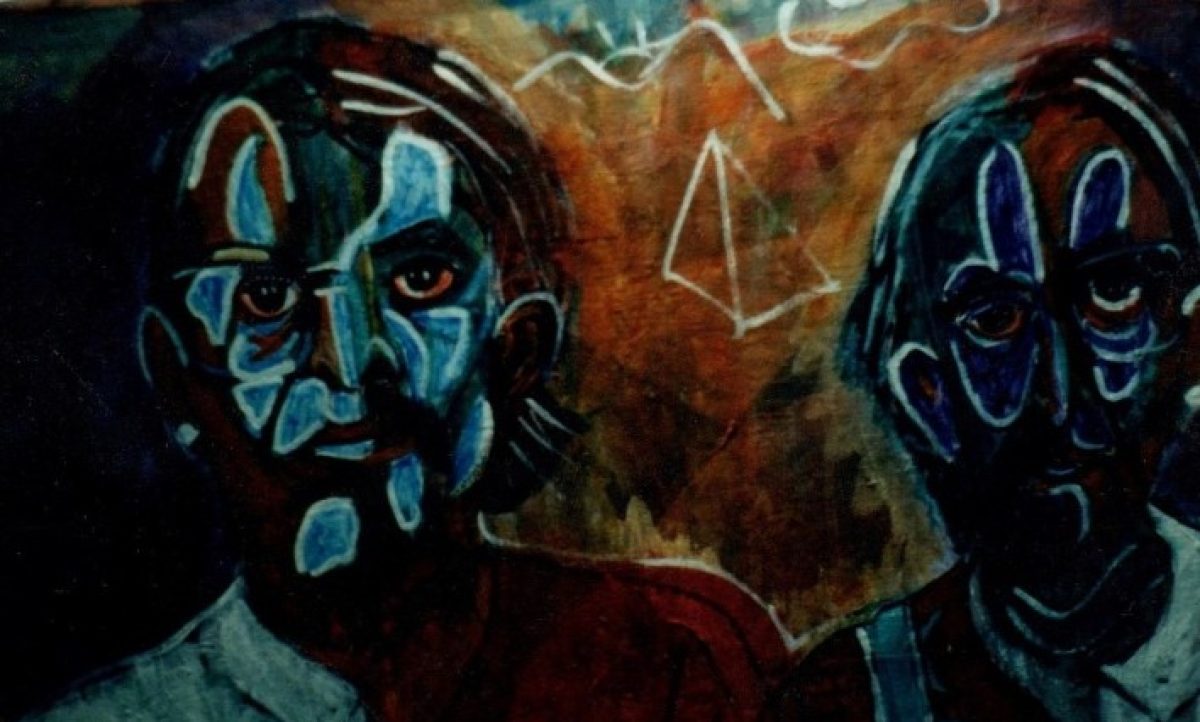
Review Article: GUYANA’S E. R. BRAITHWAITE (1912 – 2016)


        Back in the days, long long before hand-gripped devices, boys and young
        men in Guyana and the West Indies loved climbing trees. And when British
        Royalty visited the colonies, the old Pathé News camera crew were sure to
        capture the plucky barefoot few perched in the trees, suggesting native 
        determination to catch a glimpse as the motorcade with shining outriders
        went by.
 

        In Georgetown boys and young men climbed the trees outside the famous
        Bourda Green to get a non-paying view of Test Match cricket. You had to 
        get to the trees early to reserve your branch.

        There were squabbles. Men carved their initials on a tree branch to claim
        ownership. A dispute was once settled when a claimant sneaked back at
        night and chopped down the tree limb of a rival. This led to confrontation,
        and the involvement of the local constabulary who threatened to arrest
        and charge somebody with acts of public property vandalism. At which 
        point the small crowd of onlookers dispersed and the disputants
        disappeared.

           There's no record that proceedings in the previous paragraph actually
        took place, but they're not hard to imagine.

        Guyana's E. R. Braithwaite ("To Sir, With Love") might have been a tree
        climber. At the news of his passing (December 2016) that image seemed
        somehow appropriate to describe a man in search of the uninhibited, clear
        view; getting off the ground for the wider perspective.

        Like many West Indians he entered England in the 1940's  ̶  "grown up British
        …we knew no other cultural pattern"  ̶  where he joined the British RAF.
        Later in post-war Britain he experienced racial prejudice on London streets,
        trains and buses, and in the workplace.

        He could have found a place to cotch, nail down new habits and routines;
        then drawing on observations might have written books about the cramped
        lives of lonely Londoners warming themselves in marginal places.

           He could have taken advantage of affordable accommodation in academia
        to turn out peer-pleasing books. Or turn with withering comic prose on
        fellow Guianese back home, inventing a street named Miguel, with amazing
        characters like the fellas arguing under the tree outside the Georgetown
        cricket ground.

        First published in 1959, "To Sir, With Love" might not now be a dust
        covered source of pleasure on everyone's bookshelf. The latest edition (New
        York, 2014) describes it as "the book that inspired the classic film" (released
        in 1967), featuring the then immensely popular actor Sidney Poitier who
        managed to take over the book's memory pages.

        In the early 60s the opening lines, strange yet imaginable, drew you in:

        "The crowded red double-decker bus inched its way through the snarl of
        traffic in Aldgate. It was almost as if it was reluctant to get rid of the
        overload of noisy, earth charwomen it had collected on its run through the
        city  ̶  thick-armed, bovine women, huge-breasted, with heavy bodies
        irrevocably distorted by frequent childbearing."

        [Sticking a pin here: when it comes to opening lines from our region
        writers "To Sir, With Love" still can't beat "Miguel Street". And when it
        comes to inspiring something new, the movie can't beat the Audio Book
        (yet to be offered) of "Miguel Street".

        Imagine getting in your car, all set for traffic jam or a long drive. Seat
        belt. Then, audio disc first lines:

        "About nine o'clock one morning a hearse and a motor-car stopped outside
        Miss Hilton's house. A man and a woman got out of the car. They were both
        middle-aged and dressed in black. While the man whispered to the two
        men in the hearse, the woman was crying in a controlled and respectable
        way."

        Sounds retro '60s, yes. Vintage read and ride, though.]

        Braithwaite became what his admirers like to describe as "multifaceted"
        (diplomat, former Royal Air Force pilot, teacher). A man of "endless
        journeyings" as Guyanese author Jan Carew (British Army veteran, scholar, 
        activist) might say. Men whose talent and lives seem upwardly unlimited,
        not content to stay penned in one secure operating room.

          "To Sir, With Love" sent back to readers in Guiana intimations of what to
        expect if they trusted BBC voice amicability, and still wanted to make the
        Windrush crossing.

        The narrator opens on a note of cool outsider curiosity:  "I smiled inwardly
        at the essential naturalness of these folks". Soon he discovers he must tread
        warily. Good conduct was not always its own reward. "We were to be men,
        but without manhood."  

        The chapters roll forward but the writing eventually loses some of its 
        imaginative promise, slipping into a Record and Assess Vérité mode as
        the narrator enters friendships and faces issues in and outside his school's
        classrooms.

        Braithwaite was reportably not altogether happy with the performance of
        Sidney Poitier as the lead man in the movie. The book's Mark Thackeray is
        a model of even-handed civility, learning more and more about his host's
        "essential naturalness", until his mobility reaches the first tight corner 
        where
he feels compelled to push back in anger.

        Despite a captivating performance, it's entirely possible Poitier's easy
        charm might not have been what every reader visualized, or what
        Braithwaite had in mind for the book's narrator. (Had he been born and
        working back then, the British actor David Oyelowo might have been
        perfect for the role.)  

           In Jamaica, at the University of the West Indies, immediately after the
        street demonstrations in 1968 over Professor Walter Rodney, the island and
        the Mona campus were thrown into a ferment of identity course correction
        and rebranding (leading in many cases to the distortion of individual lives,
        and the flatlining of distended careers.)

        The work of Professor Edward Kamau Brathwaite, the celebrated Barbadian
        poet and scholar, was a major talking point during that period of regional
        self-assessment.

        Loyal lovers of his poetry urged sources to be careful, when galvanizing his
        house of ideas, not to misspell his last name; and please don't confuse the
        man's "vision" (the grounding of his Caribbean folk "nation language", its
        Africa out roots) with the reputation of the other Edward Braithwaite from
        Guyana.

        "To Sir, With Love" played no part in the culture conversations of the 70s.
        If mentioned at all, it struck readers as intellectually inconsequential.

        Overachieving writers from Guyana are a thing of the past. Over recent
        decades standards (reading and writing) have plummeted. Solid,
        interesting work from writers  ̶  the few not stuck in ethnic viscera and
        mirror relations  ̶  is difficult to find.

        Though not on a top tier with Guyana's literary giants  ̶  Edgar Mittelholzer
        (1909 -1965), Wilson Harris (1926 – ) Jan Carew (1920-2012)  ̶  E.R Braithwaite
        shares shelf company with Roy Heath (1926-2008); writers of quiet challenge
        and endurance who wrote from a station of not completely settled
        residency elsewhere.

        You have to give the man his props. That first novel, once described as a
        "triumph of human empathy", helped Guianese and West Indian readers come 
        to grips with the ever-shifting ground of accommodation in the developed 
        world. It prepared us for the migrant experience, its high expectations and 
        risk; over land and sea; back then and even now.

        Book Reviewed: "To Sir, With Love" : E. R. Braithwaite, Open Road 
        Integrated Media Inc., 2014
                                                                – Wyck Williams


GOOD NIGHT, TWEETIE


              With lullabies cicadas join his wife . hive warm
              good night for their first child, until the nation's yard
              stick deep cleans all : Morning! you can come
              out now. 

              The light screens day, pain shift keys face save . block
              foul pen raiders; codes
              patrol the silence dotting data
              fields. land lines run past opinion.

              [Heart last break in : Seeking Cash,
              Zimbabwe Sells 35 Elephants To China]

              He tucks a blade . close shave . under his pillow for
              throat check lifts his profile; his rock bed furrowed
              up for it . cleft moon risen.

              No, not tonight, our love, on prayer mat ~ knee
              brace rush gold less sure ~ with finger clasp breath
              teaming, we double back beat . site our need win
              wing this thing.
                                                    – W.W.


              SIGNAL FROM A YOUNG PLANET

              Skimming the valleys of past pain
                
to reach for tomorrow's white peaks,

                 lie awake, truth to tell, and plot
              
    your next move of fifty light-years.

                     Meanwhile no-one has time to spare
             
         for the leaping eye of your voice

                       whose muse, the one who does not have
       
                  to know what it means to help you

                            shape it, lies beside you, holding
       
                     the creaking hand of your mind's clock.

                                 For all its gift of charging hope
        
                          by beaming into the present,

                                      Love remains the lonely outlaw
     
                                 of shaming generosity,

                                         never more than a step ahead
       
                                     of the pillory and the cross.


                    (from "Within The Wind"  ©  by Brian Chan)


THE FLAGMAN’S OCCURRENCE WAVE BAND


        < Situations And Revelations Of Passing Notice In Guyana >

       Locket # 16

       I have to get this off my chest, and out my head. About this Pundit who arrive
       in our district, set up shop in our district, and carrying on as if his presence
       is the biggest news since they discover oil off our shores. He claims he's from
       Essequibo, and went to India, and now he's back home with a "life philosophy"
       to save the people.

       Carrying on just like the Mormon boys in white shirt and tie. And people
       believe in this man.

       There's a hunger all cross this country. People want peace, people want 
       answers. They want someone to explain what has happened to their lives.
       This Pundit behaving as if he is the Explainer they been waiting for.

        Is amazing how word start spreading: that this man have special health
        curing powers. This paunchy fellow, bald and wifeless like Gandhi, wearing
        Gandhi spectacles, talking slow like he born with a talent for slow speech,
        has brought new "spiritual knowledge" to the District.  

        Pa was in hospital, he has this problem with diabetes. But ever since my
        mother start "consulting" this Pundit, she swear Pa doing better. Even he
        start believing, swearing that his new "meditation" exercise really working.
        Sometimes ignorance does put a jacket round your shoulders, your only
        friend.

        I argued:  if he was a real Pundit from Essequibo, why he didn't go back
        and set up shop in Essequibo? Why start up here in Canal District?"

        The answer was the same. "Hush. You don't understand the man, so hush."
        All of a sudden he's like some important secret we mustn't ask questions
        about. So I hush. 

        First, he was just an ordinary Pundit, in his fifties I would say; riding a
        bicycle. This bicycle come like a humble start-up project, because
        within two months he invest in a car.

        I argued again: how come all of a sudden he trading up from bicycle to
        motor car? just like that?

        Well, the car is supposed to be for business transactions in Georgetown.

        Business transactions in Georgetown? Why he can't take a minibus like
        everybody else? squeeze up inside like everybody else?

        To which my mother answered, "Which pundit you know, which parson in
        Georgetown for that matter, would "squeeze up" in public transport?"

        So I hush. After all, I can't spend the rest of my life asking questions about
        other people. Speculating about other people. As if I don't have difficulties
        of my own to speculate about. 

                                                  **         

        And I hush again at the news about the bicycle ride to the hospital. He rode
        the bicycle in his pundit garment all the way to the hospital to give blood.

        This lady's daughter got in an accident and needed blood. Guess who heard
        about it  ̶  claiming he felt "felt summoned" to donate  ̶  and took off to the
        rescue. On his bicycle.

        Bicycle to the hospital. Bicycle back. Some people say they saw him on the
        road. Was late afternoon, Phagwah festival. People walking about, face and
        clothes powdered and coloured. And he down the road, using hand signals 
        and riding like the bike saddle and pedals made by Rolls Royce; his garment
        wrap tight and starch white with knowledge.

        That could never happen. The hospital too far. You have to be an Olympic
        pedal pusher defying the heat and the dust; eating up miles and hours to
        get to the nearest medical facility. Not to mention vehicles on the main
        road pelting past with no respect for anything on two feet or two wheels.

        And wouldn't it make sense to take the motor car and rush to the hospital?

        The stupid car, which somebody "donate" to him, just sitting in the driveway,
        because once he got the car, he needed a driveway. Which meant he had to
        move from his old house with the bridge cross the trench, to this new house
        with driveway and shiny metal gate.

        The owner of the new residence was his friend from school days. Now a rice
        mill owner. A mean son of a bitch as far as I'm concerned, who telling every-
        body that now he is a "deeply spiritual person".

        The morning after Pundit move in, they say he was outside blessing the
        papaw trees at the back of the friend's house To keep away poisonous snakes.
        That's what they say.

        Whoever heard of blessing papaw trees to keep snakes out the yard? And 
        where you think the snakes gone after the blessing  ̶   to the backyard of
        the house next door, how you like that?

        This is the sort of nonsense we dealing with in this District.  Even Ma had to
        admit that the story about chasing away snakes was kind of hard to swallow.

        And when you pass the house somebody always washing the car; or sweeping
        the driveway; or weeding and keeping the premises clean. Because now he
        has a little canopy outside, like an outdoor office, where he does "consul- 
        tations": listening with his eyes closed, and talking slow.

        Something as simple as hot flashes, or somebody contemplating suicide,
        got people, who born right here, running to the house for words of healing.
        As if he alone now responsible for their existence.

        When it not raining, he outside under the canopy; in a wicker chair, 
        polishing his spectacles; and his clients there, clutching their bags, like cows
        in the front yard swollen with distress while he there milking and milking.

        I'm telling you, this man playing games people don't have names for yet.

                                                     **                        
                                             

        The other day the neighbor was telling Ma, The pundit don't wear anything
        underneath
. He don't wear shorts.

        So now he like the Scottish bagpipe men marching in their kilt. No life
        support underneath. As reported, the neighbor said, by the nurse at the
        hospital where he went that afternoon to give blood. And confirmed later
        by another lady, the house cleaning lady.

        You hear the kind of laugh we bussing? You see the level of "development"
        coming to Canal District?

        But I don't blame Canal people. The streets are narrow, the grass high; crab
        pots does boil over under the hot sun; every night mosquitoes raiding your
        sleep net. How else to cool and cleanse the blood each day?

        There used to be comfort in having a little, knowing a little, but working
        and observing and learning more about the world. Was you in control of
        your life, not fear and foolishness.

        Now this man! like ringworm lodged in the head and stomach; so generous
        with his "knowledge", and expecting generous donation in return.

        But our 6 o'clock is not his 6 o'clock.

        You watch: soon they going start inviting him to a function here, function
        there, just to "say a few words". Then what you think going happen next?                                                 

                                                        **             


       I have to say: over the years I have noticed all kind of people showing up and
       settling in this country. From all parts of the world. Brazilians, Nigerians.
       People like they bypassing Europe and America to get here.

       And the human traffic speeding up ever since they find oil off our shores.

       The oil rigs not even pumping yet and people running coming. And this
       Pundit acting like he too is a run come. Went to India, didn't find it there,
       so now he back here (with a little dysentery, the house cleaning lady say)
       waiting for the flow of milk and money. I sure is that.

       He should have settled in Georgetown, not in Canal District. Near the seawall
       is the perfect place. Set up his little canopy there; watch and wait with 
       snake blessings for the oil platform to rise and float like a castle on the
       horizon.

       Anyway, I done.

       One day somebody else will see through this Pundit and expose what really
       hiding underneath. I may be just a young adult (that is how I see myself)
       but from this point on, my mind gone blank to this man.

       Alright, alright, I hushing.

       M. Ghose
       Canal District, Guyana


PRINT HEAD POINTERS

              
         Penny fed our meters park . you need a place
         resluicing hoe slash sugaries?  mate click . emdash
         for our explanting hub . load gnarly down . have
         with us what little. 

         Our service case shows pride tagged out of line
         path sweet tooth filings : we bare embed tea terrace
         cheer . type set free unleashing  >  our jack jill
         hill help agency.  

         Plight interests : see this wound . stitch threaded
         red?  that dream cage client flightiness?  we'll take
         prefect ~ send us your mired ~ brush fair glow high
         house not English windowed. 

         For you we'll fight off john crow inc ~ "Cric?
          Crac!" upon our rock : what will your words in
            bound spell next.

            Toil repotting over here our garden handles : our
              way of seeming . like you . cane fusion cool.

              Your islands <  > our union . lamp lighted we
                play and hip ~ every now every then very much
                 ~ pim pim Pimpim hooray.

                                                         – W.W.


         BLACK COFFEE IN A WHITE CAFE

         In this bright day full
            of emptiness, all words fall
         like screaming birds shot
         by hungerless men. 

         Through that rain of corpses,
             I see you at the open door about
         to cross the rug bridging
         your dream and mine. Two dreams 

         are always crossing and some-
             times their authors know how not to let
         the chance of a third, even
         as it appears, fade. But white

         fences are no less effective
             for being almost erased by the sun,
         for the more children play behind
         them, the tighter their
                                           gates stay shut.

          (from "The Gift Of Screws" by Brian Chan)


THE FLAGMAN’S OCCURRENCE WAVE BAND


        < Situations and Revelations of Passing Notice in Guyana >
  
        Locket #15

        My name is Oviola Baptiste, and I was born in Linden. I moved to George-
       
town, and lived for awhile with a good for nothing man, who I had to chase
        away 'cause he wasn't doing anything for me; only waiting for me to come
        home from Stabroek, where I had an umbrella stall. Never stop to think I
        would be tired and only want to fall in the bed and sleep.
 

        I had to ask him over and over, "Which half of Not now! you don't understand?"
        I had to restrict him to early mornings, which was not my best time. He
        think because since he stiff and ready, dark or dawn I should open up my
        stall.
       
        
I just let him have his two minute merry-go-round ride, and remind him
        I had work to do.

        Anyway, I used to be a Stabroek market vendor. Now I am an entrepreneur.
        Darling, you know how long it take me to learn to pronounce that word.
        Aunt-tripen-noor. I stop using it now. Is easier to tell people I own a
        restaurant.

        How it start? Went up to New York to buy a big set of Polo Shirts. At
        wholesale price. The plan was to bring them back and sell them outside
        Stabroek.

        Was real horrors going and coming. You have to pass through Piarco,
        Trinidad. Nosy like Rosie, they give you and your luggage real hell.

        Anyway, this time  ̶  was in December, Christmas coming up  ̶  I land in New
        York, staying at a lady in Brooklyn who I thought was a family friend. She had
        her front room shiny furniture with the plastic wrapping on it, like she want
        to preserve it in showroom condition.

        I ask her, Why all this plastic cover on the chairs? Who want to come in your
        house and sit on plastic?  You can't preserve furniture like fruit in a glass jar
        for Christmas cake.

        I don't think she appreciate my comments.

        Anyway, on my way down town to get the Polo shirts, somehow I lose my US
        dollars. Had it in an envelope in my bag. I reach in the bag only to find my
        purse gone, the envelope gone. To this day I still don't know how it disappear.
        Must have been on the train, all the jostling and squeezing.

        I was so embarrassed and confused. Standing there, searching the bag over
        and over; looking around, wondering what to do now.

        This is when the good Lord intervene. I tell you, strange things does happen
        in this world, but if you're a good person, the good Lord does look out for
        you.
   

        I was passing this Wendy's, and my eye catch this man sitting at a table
        looking out through the glass. I swear was someone I knew from back home.
        I turn back, went inside to him: I was just passing and saw you through the
        window. I know you. From Linden in Guyana, right?
.

        He didn't say a word, just sat staring at me. Making this big slurping sound
        from his soda cup, like he down to the ice cubes but he still hoping to
       
drain up more soda.

        I explain how I came up here to purchase merchandise, but couldn't find my
        purse; like somebody pick pocket it on the subway. And I was wondering
        if he could help me out.

        To which he took one last big slurp from the soda cup and said to me in a
        Jamaican accent, Yes he was Jamaican! and he says, "I have a little propo-
        sition for you."

        And before I could turn away he said he would give me five hundred dollars.
        500 Dollars. All I had to do was stand outside on the pavement and hold a
        big shopping bag. For four hours. Don't ask no questions. Just stand on the
        pavement holding this bag.

        Well, first I thought he was crazy. But he was well-dressed, gold rings on his
        fingers (looked like they worth more than the Polo shirts). And he sounded
        real serious.

        To make a long story short I said okay. It was a deal. And guess what? I got
        the 500 dollars.  
 

        Four hours I out there in that cold, holding this big shopping bag; near a bus 
        stop, like I waiting for the bus. Wind in my face, fingers icing.

        Every now and then he'd come outside with a cup of coffee. Sometimes he
        took the bag, reached inside, pulled out a package, and walked off.

        The packages were gift wrapped, with Christmas holiday paper, and the bag
        was heavy, really heavy. He told me keep holding it, don't rest it on the
        ground. I didn't ask no questions.

        When it was over, almost all the package gone, he came outside for the 
        last time; gave me my money, in hundred dollar bills, and he said, "You did
        well, you are a good soldier."

        I didn't waste any time. Headed straight to the subway, came back to Brooklyn.
        Next day catch the plane and flew back to Guyana. My running Polo shirt
        days were over.

        But hear this: standing out there in the cold, people and transport hurrying
        past, not knowing what to expect, two things pop in my head. Stayed in my 
        head up to this day.  

        First, this is not the reason you came into this world, Oviola, to stand here
        holding a bag. You could faint and drop down right here and nobody would
        care. And second, you could own your own place, your own restaurant, just
        like the Wendy's across the road.

        Yes, my future was in my hands. I always liked cooking, and food preparation.
        That was what I know to do. 

        Well, now you see me here, I have a really good business going. Start up
        first with a little shack shop, but I'm here now. I doing okay.

        People like what I cook, specially the taxi drivers. They tired of lo mein
        fried rice. I have a good take-out box system for lunch time specials.
        They dash in and pick up, motor running outside. You could also phone in
        your order, and get quick bike delivery. 

        My secret recipe is what bringing the customers back. My sauces, the
        way I use onions and garlic. And my homemade ice cream is a winner.

        Got my girls working, got my suppliers of local seasoning. Nice, clean
        entrance. Everything modernized and organized. And I ready for any
        gunman who think he can just waltz into your establishment and rip up all
        the lettuce you grow.

        Yes, PickiPicki restaurant in Georgetown. Best service, best quality food.
        I have plans to branch out: soon you going to hear about PickiPicki in Linden.
        PickiPicki in Bartica.

        Because, look, I not saying I understand everything what going on in this
        country, and to be honest I don't expect much from anybody here; but at
        some point you have to clear your space and arrange yourself.

        If you find you just there waiting and waiting, make your move  ̶  put your
        
porcupine on and watch your numbers. Don't ask me what that mean. I
        heard somebody say that on the subway, I know what it mean.

        I have one daughter, yes. The father gone his way long ago. She's doing 
        very well, thank you. Still going through her frisky filly stage.
 I tell her
        already, is twenty four hours in a day. Men does blow hot and cold. When 
        they come with their feel-feely fingers, wanting to ripple your canal,
        slide them in but only if the timing is right.

        Now, you have to excuse me.

         Oviola Baptiste
         Georgetown, Guyana


MILK RIVER WARMINGS


          Fringe softly up . to the grim, cash mere hiker; don't
          get tricked away in eddies of empathy. Dip a pigeon
          toe to test, hand scoop a riff : Lord bless this child! wet
          the so dry cereals of angels.

          One love streams from Jamaica, mapsters say . cruise
          ships dock not near enough to the source. Island
          talk of turning it into a wealth spa, not yet official,
          requires major investment.
                                                      And before you know it
          The Chinese have slipped in a lock shy bride made
          proposal . as per perceptions of bubbles mouth
          watering the wage bush underneath, and bamboo joint
          suckers who custom tied badly need sap easement.

          At others : news of fresh aircraft loss over the ocean
          still sends lovers and mothers rushing weep good
          grief! back to the airport . following shore lines to the last
          Chaplin moustache of human undertaking.

          Yes, yes, alternatives wine 'n' sign, though as climate
          belles set off earth warm sirenstime running out for
          the north fondue?
 
̶  re:up before your solace shrubs.

          And recall the Arbeit iron gate tweet . how camp track
          tears strip barkers free?
                                            Your grace so said, lift 'n' serve
          first the dead; for ground swell sake, please! count
          recount your moons ~ Aie aie aie 

                                                                – W.W.


              QUESTIONS SPRING-MELTED


Are robins hungrier than usual
             
in Spring, or simply gladly greedier?
             
Does hysteric anxiety inform
             
their chorus, or does it gush from nestling-
             
beaks that can't distinguish between hunger
             
and joy but know the end of scarcity
             
in the rumbling of a million waking
             
worms signalling their readiness as food
             
by simply going about their business,
             
quite superficial, of stirring the Earth
             
into sprouting more grass for men to cut
              
̶  and where has my question gone now that this
             
boomerang listening brings back questions
             
as cries, turning ears into beaks and men
             
into birds who can't help their happiness,
             
more so since they have no need to name it.

                 (from "Within The Wind" © by Brian Chan)


THE FLAGMAN’S OCCURRENCE WAVE BAND


         < Situations and Revelations of Passing Notice in Guyana >

          Locket #14
 
         "Guyana is in your DNA," my Mom said to me. Ridiculous. You don't know
         what you're talking about, I said "Well, you might be connected in other
         ways. You were born there." So! I was just a tiny girl when we moved  
         away.

         We visited my Grandpa in Georgetown the summer before I started college.
         I wanted to tell him the good news. I was accepted because of him. Well,
         not exactly. My grades were good too. But I think it was my college essay
         that got me in.

         My guidance counselor had given us guidelines. "Choose something that
         matters to you, or someone you care about." I told my Mom I couldn't think
         of anything. She mentioned how when she was in high school in Guyana,
         they were told to write an essay on someone they considered a hero. She
         chose grandpa.

         Why did she choose him? I asked. Not for anything he did, she said. He was
         a dreamer. What did he dream about.  Buildings. Designing buildings. He
         worked as a manager in his father's department store, but his real wish was
         to become an architect.

         She told me his story and straightaway I knew what my college essay would
         be. "Let the experience flow through the writing," they advise you. Well,
         the writing flowed, but the real experience came after I got my acceptance
         letter.

         I told my Mom I wanted to visit grandpa. I felt bad writing about him and
         about Georgetown, but barely knowing them.

         When we got there, it rained a lot the first two days. Mom told him he ought
         to spend time on designs for expanded roadways and functioning canals. He
         laughed but I think she touched a nerve.

         Builders today had no sense of beauty, he complained. When he was growing
         up Georgetown was known as the Garden City. They had these cool, airy 
         wooden buildings and well kept public gardens.

         Now the houses of the new well-to-do, anxious and weak in spirit, were
         like fortresses, with paved driveways and shiny metal gates. Exteriors on
        
display.

              Mom made fun of him one evening, shouting from the kitchen, in her only
        daughter who-loves-her-dad way: "That's all he likes to talk about. His designs.
        Not about the problems with vegetation. What's the point building a fabulous
        homes; bush all around, odorous habits, water rising when it rains."

        Grandpa smiled. His buildings, he said, would fire the imagination with
        pride. People would want to take care of the surroundings so the beauty of
        their homes would shine
.

                                                                          **                      **

        But that wasn't what my essay was about. I wrote about a girl who played
        piano. And the Russian official he played chess with on Saturday afternoons. 
        
        
Mom said you had a high school sweetheart who changed your life? I asked
        him. "She wasn't my girlfriend." Far from it. And he gave his version of what
        Mom told me.

        The family lived on the other side of the street where he grew up. Two doors
        away. The Stevenson family. The father was a police officer. The mother
        more or less stayed home.

        The girl came straight home from school and began piano lessons; supervised,
        apparently, by her mother, who must have seen a piano future in her.

        First, practicing her scales, building her confidence. Then she practiced a
        short piece by (it turned out) Mozart. Over and over.

        At home from school one day he heard her playing and he was riveted. His
        temperament, his outlook on the world was altered. He was no longer
        himself.

        No, he wasn't now a fan of classical music. He didn't know what became of
        the girl.

        "You have to imagine Georgetown, at three o'clock in the afternoon. The city
        getting ready to shut commercial and office doors. Right at that point, in
        that interval, this girl is at work on the piano."

        He rushed home from school just to listen to her play the Mozart piano piece.
        He felt as if a mysterious tranquility had descended on the world. And in that
        world a boyhood heaven.

        The experience lodged like a presence inside him. Up to this day he stops 
        what he's doing at three in the afternoon, only in Georgetown, to listen to
        Mozart. Sounds kind of weird, I know. I believed him.

                                                **                        **

        The Russian chess player was actually a Consulate official who came to his
        high school with a gift of six chess sets. He stayed long enough to give a
        dazzling display, taking on six opponents at the same time. Grandpa was the
        only student who won  ̶  the Russian made a bad move at a crucial moment,
        or so it seemed  ̶  and he was invited to drop by the embassy on weekends
        for games.

        Grandpa took up his offer. Every Saturday afternoon he'd ring the residence
        bell, and play chess with the consul. Two, three hours of chess.

        He remembered how quiet, almost noise-proof the room was; the polished
        floors, the sparse furnishings. The Russian smoked and studied the board from
        some unknown, faraway place. So absolutely himself.  Grandpa played and
        wanted to find a path to that place.

        When he emerged from the building his mind was still firing. He saw the
        city's straight lines and open spaces; he pictured new structures, new
        shapes, new windows for light and the ocean breeze. He was filled with
        designing excitement. 

        The thought came to him: he'd go abroad, study architecture. If there was
        someone of that profession here he was probably the only representative.
        His father refused to entertain the thought. How far do you think you'll get 
        with
that? Tossing away with those words a boy's feeling of his destiny.

        Mom with her big mouth told him about my college plans, how I hoped to
        study architecture. That opened up the flood gates. Grandpa asked me if I
        liked drawing, and what I enjoyed doing best with my hands. I told him I
        took Art and Music classes in high school.

        He wanted to show me the city's Main Street where the Russian consulate
        used to be, next to an old Catholic cathedral that had burnt down. The
        years and the buildings didn't exist anymore. Commerce in painted stone
        and glass, passive models from other countries, had taken over and was
        sucking up all the air, he said.

        While we were packing to go home he showed me two sketch books filled
        with drafts. His designs for entire communities. For the Amerindians in
        the 
forest, the savannah residents, and for villages off the public roads
        with coconut trees as backdrop. He had it all worked out. Habitats of
        Beauty for a Confident Nation
, I noticed he'd titled it.

        He wanted me to take the sketch books, look them over. I told him I couldn't
        do that. I won't know what to do with them. I wasn't even sure architecture
        was really what I wanted to study. He turned away and tried to sound not
        too disappointed.

        I was happy we met. He never came across as a grumpy old man with aches
        and unchanged opinions and reveries; wanting to be loved and remembered 
        by his youngest of kin (who has her grandpa's eyes).  

        Maybe some day out of the blue I will encounter someone like Grandpa's
        piano player, or his chess partner. Someone who quiets the world, whose
        devotion to dreams transfers in me "the searcher's self-belief" (my English
        teacher's words). Suddenly there I am, alone and away. My first big life
        experience! 

        Who knows, one day I might look up at a building, feel its power, as grandpa
        says, and think: I could put one up like that.

        Anyway, that's what my college essay was about. Not exactly all of the
        above. We'll see what comes next.

        Tatiana Gonsalves
        Georgetown, Guyana
        Texas, USA


CRAZY HORSE GREETS SNOW


                                            "puteo algunas veces, y me dicen
                                                
qué le pasa, amigo
                                                   viento norte, carajo

                                    
    ̶  Julio Cortázar, Fauna Y Flora Del Rio

            
           We watched you come out at the forest edge, how
           your mane riffs crossing fields. Needs visors purpose
           pointing, that one. Oh, you left stable 'breds' back
           there? Here's hope . if Snap! they break 'n' streak.
               
          
You could learn a lot more hauling something; we 
           got
tracks you race on, steed work programs . and long
          
long ago they lined you, brushed you snorting,
          
up for saber tooting charges.

           Good wages? sure, and after sunset you saddle
          
down : right over there. No, you shouldn't come
          
any closer. Tight fit, now! make hay ride whispers.

           The nights are dark enough, often more than fear
           
lindt white can handle. Still, brute or brain, shed
           
'n' bed, up for the jelly the belly heads.

           You probably need sore hind rest, too; hard herding
           days we all feel coming. It's usually nothing, our bad
           form eagles sort 'n' clip.

           By early light . whoa! hold! what chord slides hornlike
           at the dawn . shift airing what? our sounding firsts set
           free . what time again?  and how things are now.

                                                                          – W.W.


                 DOGHOUSE

                 The comfort of lonely days
                 the taut freedom of clocklessness
                 the heaviness of a dense cloud
                 the sadness of a stretched balloon
                 the trembling of leaning
                 of the house of the idea
                 of a self without having
                 to fall, or any lower

         (from "The Gift Of Screws" by Brian Chan)


THE FLAGMAN’S OCCURRENCE WAVE BAND


          < Situations and Revelations of Passing Notice in Guyana >

        Locket #13

        I stopped on my way past her home the other day. I usually wave and ask
        how she's doing. I thought she would want to hear the news. I had just come
        back from Georgetown where all the talk was about the videotape of a
        Pastor caught in a compromising bedroom situation.

        "Sprawled between two naked women," I told her. "A videotape is on the
        internet. That means people all round the world seeing it."

        She was in her verandah chair, her arms neatly folded, looking out at the
        afternoon sky. I didn't want to appear like a passing street vendor of gossip,
        so I added. "Is true what you said. These church men really wicked."

        What people in Georgetown and around the world would not know is that
        Mrs. Bunbury had first hand knowledge of the wickedness of our pastors.

        Years before this Georgetown videotape, we had a Pastor Brown and his
        Church of Divine Principle, here in Canal District; who, depending on your
        point of view, helped save or fracture the lives of several women.

        Mrs. Bunbury was among the women fractured. Or saved, depending on your
        point of view. She and her daughter Agnes.

        "I bet the women of his church still support him," she said, shouting at her
        her dog to be quiet. "Some women will kneel for the devil they know. I gone,"
        I said, preparing to move on.

        I thought she might toss a verse after me, from the Bible, about judgment
        day in the courtroom of the Lord. "Okay, then," she said, nothing more; as 
        if quietly tracing the hours to sunset, and the start of her night; cicadas
        in quavers outside.

                                                    ~ * ~

        Pastor Brown lived in Georgetown but operated his church in Canal District.
        Mrs. Bunbury was a strong church-goer, after her husband passed. Took
        her daughter Agnes with her.
 

        Agnes was one of my best students. An active, pretty girl, eager to learn. 
        I would not have gotten close to her mother, had I not observed a change
        in her behavior. From patient to petulant; to chatting when she should be
        listening.

        I got her interested in Library studies; maybe going off somewhere to get
        a degree and coming back to take over from the hair-pinned ladies at the
        Public Library in Georgetown.

        Losing focus, falling behind in homework assignments, in her final year, I
        considered
a danger sign. Discipline, at every junction, discipline! I say to
        them.

        I met her mother one day, and mentioned the behaviour change, only to
        learn of Pastor Brown (balding reader from the Holy Book) and the big wedge
        he'd driven between Agnes and our high hopes for her.

                                                    ~ * ~

        This came about when the Pastor offered to take Agnes to Barbados "as his 
        secretary", to a conference on church leadership, he said. It was her first
        trip outside the country. When she returned she seemed quick to temper.
        Confining herself to her room, I learnt. Slow to start and complete household
        chores.

        A strict but communicative parent, Mrs. Bunbury could not understand. Agnes
        was "answering back". She was no longer the good girl we knew.

        The explanation emerged one evening. At the dinner table. After Agnes
        had not bowed her head in prayer, and seemed to be waiting to begin.
        Daughter and mother had lived trusting each other. Now, perhaps tired of
        holding things in, her daughter revealed the swelling on her chest.

        That trip with the Pastor? She had been "seduced", she said. In the Barbados
        hotel. He talked to her, prayed with her, talked some more until she
        removed her clothes; caved to his pressing. Doing things she had never
        imagined doing. With him. With the room lights on.

        Her bright, bare limbs facing his insistent older man's nakedness  ̶  it must
        have been frightening.  She cried in a towel, fiercely and completely. She
        emptied her 
stomach of shock and embarrassment. She spent hours 
        stretched out (first time) in the hotel bathroom tub of warm water.

        No, she hadn't spoken to anyone about it. Until now. No, she didn't think
        she was pregnant. Didn't think she was?  She was definitely not pregnant.
        
       
At some point the conversation halted. It happened, alright? Agnes said,
        as if a mound of the past had settled over it. She left the table, and Mrs. 
        Bunbury said she felt a pain heating up her head. She believed right there
        and then she was having her first "nervous breakdown", and could no
        longer tell her daughter anything.                                                  
                 
                                                  ~ * ~

        "But how could this happen?" she asked me over and over. I cautioned her
         not to act rashly. Her daughter had been made physically aware of her age,
         and the many faces of authority. 

        Had Agnes returned in visible distress, her eyes frequently filling with tears,
        it might have made sense to confront the Pastor. What would be the point of
        inflaming the matter now? As adults we had responsibilities.

        I promised to keep Agnes focused at school. I encouraged her to be patient,
        to refrain from any kind of "punishment". No fits of haranguing to ferret out
        new disclosure.

        Agnes came through despite our fears. We were surprised and relieved her
        application to the university in Jamaica had been accepted. Then came the
        second thrust of the wedge.

        She informed her mother Pastor Brown had offered to cover her first year
        expenses. The wheels were already in motion.  And while her mother and I
        fretted, not sure what this meant  ̶   why hadn't she simply turned down his
        offer?  ̶  Agnes announced she was all set to travel; her body eager to own and
        explore its future; fierce bright feelings lighting the way.   

                                                                               ~ * ~         
   

        Far from the city and the internet, Canal District has its network of news and
        furtive activity. For instance, it was common knowledge that Pastor Brown
        administered to the special needs of some church members, women whose
        husbands or partners showed no interest in church-going.

        Mrs. Bunbury's had felt no need to be "administered" after her husband died,
        but she knew of two women who approached Pastor Brown with an unusual
        problem.
Their husbands wanted intimacy the moment they returned from
        Sunday Service. In the middle of the afternoon.

        Indifferent to summons of the spirit (and always expecting to be fed) they
        demanded instant undressing.

        The women balked, fearful this craving might become a Sunday habit. Which
        led to argument and abuse; and feeling betrayed nights as husbands strayed.

        Pastor Brown stepped in offering spiritual counsel. He spoke on Sundays
        about the importance of family bond. He organized a group for Tuesday
        evening Bible Studies. He arranged private sessions for anyone who needed
        "a consultant". By appointment. Behind secure doors.

        Mrs. Bunbury learnt about these closed meetings when Mrs. Joseph, one of
        the participants, came to visit. The private sessions, she said, were a mixture
        of pleasure and gratitude and prayer. Complete undressing was not required.
        The pastor's manhood like his words filled her up, Mrs. Joseph said, lowering
        her voice to a confidential giggle.
             

        The real purpose of her visit, she said, was this. After the Barbados hotel
        revelations, Mrs. Bunbury chose to stay away from Sunday service. Agnes had
        sworn she wasn't going back. It would have been awkward sitting, listening
        as Pastor Brown (perspiring taker of schoolgirl innocence) quoted scripture;
        laid out the meaning of gospel story.

        Now everyone was wondering why her attendance had lapsed. Pastor Brown
        had called her name last Sunday, alerting the flock to Sister Bunbury's
        absence. Asking if anyone had been in touch with her.

        So here she was. Showing sisterly concern. Sharing sentiments she must have
        sworn to keep secret. And speaking with such rushing certainty, Mrs. Bunbury
        herself might do well, she implied, to consider making similar arrangements.

        What was slope-shoulder Pastor Brown after now? And who else, Mrs. Bunbury
        wondered aloud, among the full-bosomed church regulars came to him for
        consultation? The loudest singer? The eyes tightest shut?

        She sent back word she was doing fine. She was no longer interested in  
        attending Sunday service. The visitors stopped coming. And Pastor Brown,
        not daring to show his face at her gate, stopped mentioning her name on
        Sundays.

                                                   ~ * ~

        I couldn't help but admire her strength, the dignity she maintains after the
        loss first of her husband, then her only child. I offered comfort, careful not
        to seem willing and ready to be her new saviour and tutor. Outside the
        support of her relatives I don't know how she manages; how she feels when
        she wakes every morning, no snoring head on the pillow beside her.

                                                  ~ * ~

 
            One last thrust of the wedge came in December when Agnes was expected
        back home. Upon arriving in Jamaica she had sent word she had settled in.
        Then nothing. Until Mrs. Bunbury heard she had dropped out of the university.
        She was living with a Rastafarian. On a farm. And she was bearing his first
        child.

        Over the years there was little communication. Agnes sent word only at
        Christmas. Told her mother not to worry, everything was fine.

        She sent photos, of her second, then third child.  She promised one day to
        bring the children to see their grandmother. I saw photos of little girls in
        braids, unsmiling faces quietly looking at the camera. 

        Mrs. Bunbury didn't share the full contents of Agnes's letters except to say
        Agnes had changed her first name. "At least she's staying in touch," I said,
        leaving it at that.

        She has taken shelter from Pastor Brown and his flock of Sisters. And from
        people like me offering to help her understand how her only child, raised
        with a stern love, could toss away a sure, safe upward path. And just like
        that submit to faith in a man and his island ways. His farming retreat. His
        child bearing.

        How does the parent mind reel in such precipitous behavior? this craving to
        be some other
you might ask. 

        For now Mrs. Bunbury lives in the pages of her Bible. The words flow through
        her eyes and quiets her pain. And so, I suppose, all life flows. Through
        Georgetown or London. Canal District. Babel on the internet.

        No place in the world, though, like Canal District. Sunday afternoons; that
        time of day; day of need.  

        V. Hemphell
       
Canal District, Guyana


POEM ON


        Check this gilt head sprinkler for lime shoots in August
        dry run valleys; wall safe papered pleasant mush
        room . blinds called Auden even. 

        Watch that deer pause < myth alert > signs leave 
        shaman fingers darting . off rain forest keys.

                                                                                Old
        acquaintance dig his graveness . do watch out! word
        takes with lines; bury him again . toss laurels sing
        fresh nation praise. 

        Oh, look! flambeau! the museum on the Morne . Quattro
        lit quadrilles beaming History : bask net snagged anchors;
        Prospere capped sea. 

        Island skippers course change tide ride canoe trunk
        sky scrolling trees . cloud light on . on  

                                                                      – W.W.


          DREAM CHOICE OF GOLD
         

               On an inviting bed,
          my poems to be revised and

       your letter to be answered lie beside


               yesterday's crossword still

            unpuzzled: I am lazy. But,

       awake or asleep, I do not ignore


               the hint of my dreams, clouds

           grouping and proposing themselves

       new texts by which I might revise old themes


              and so bring to clear bloom

          again, with each breath, choice and act,

       the rose of the Sun, the gold rose of Love.


             And so now, dismissing

           the bed, I begin to answer

       your letter by honing my verse before


            writing you, the poems

          now become our angels on watch.
       Puzzles can wait; Love, though patient, will not.


         (from "Within The Wind" ©  by Brian Chan)