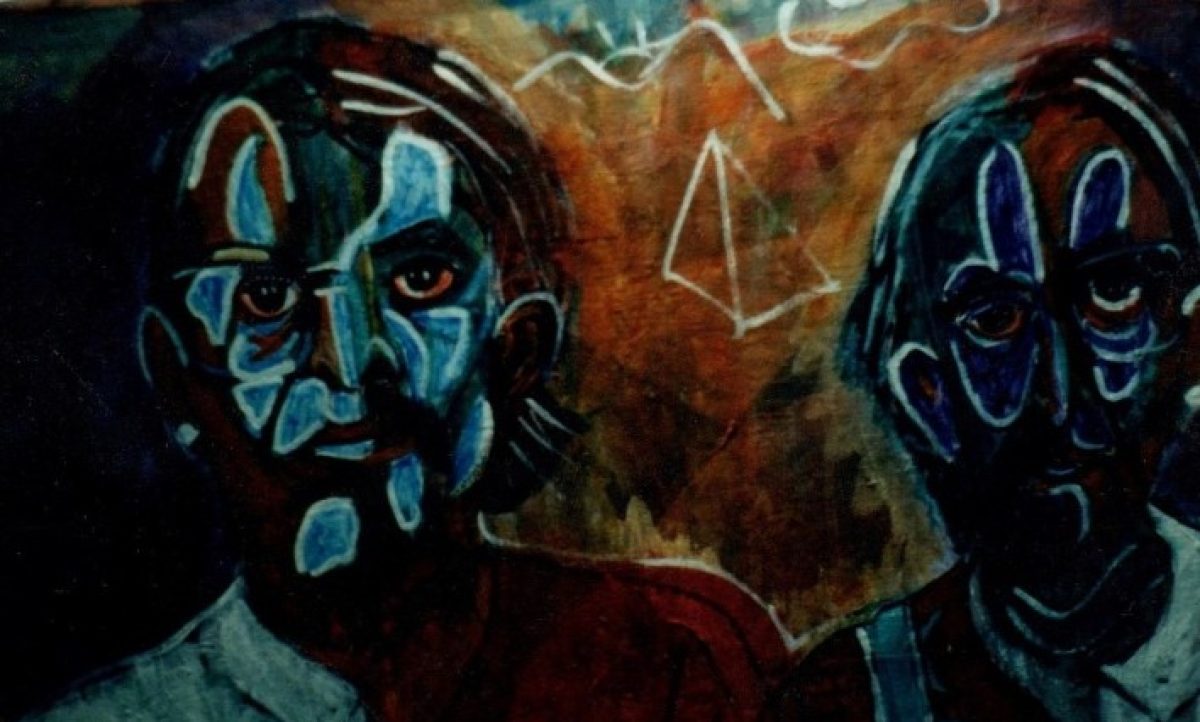
NY SLIDE 7.3: OTHELLO THE MOOR (Pt. 1)


                                                            Report on OTHELLO the MOOR
                                                    Written by William Shakespear
                                                       Prepared for Miss Wiener by
                                                     M. Xavier H. a.k.a. the X-Man

                     Well first of all, I was surprised to learn there were Moors in Venice who 
                     invaded Spain according to my teacher.
Seems like niggers were everywhere
                     in the world in those days. Just like they
everywhere in the world today. You
                     can't keep a good man down all the time. My
grandfather from Jamaica
                     would open his eyes in his grave if he heard I was in New York. Seems like
                     niggers is everywhere
fighting for respect.

                           Well, Othello, I have great respect for that dude, seeing as how he was a
                     soldier of fortune who offered his services to the Venetians to
fight the Turks.
                     Aint nothing wrong with that. A man's got to do something to
make a living in
                     this world.

                           So he far away from home fighting for these white people, you think he'd get
                     some respect. But no, there is Iago and Roderigo plotting
against him cause he
                     black. Calling him "old black ram" and
"thick lips". Not to his face. They won't
                     dare say it to his face. Othello would take them out quick
!!

                           Well, it seems they jealous of Othello cause of his big you know? White folks 
                     have a serious
problem with the big you know. Personally I don't see what the 
                     problem is. Make
no difference how big the nozzle once you get it in there 
                     and start filling her
up. But Iago and Roderigo, they go brontosaurus with 
                     jealousy.

                           People be quick to say it got nothing to do with race. But when he hook up
                     with Desdemona it's like, who's this nigger messing with a white woman?
                    
Making "the beast with two backs"? Bet the Venetians never heard of the 
                     beast with two backs till Othello rode into town. Takes a black man to show
                     some people a thing or two.

                    Well Othello, he wasn't going to run nowhere when Iago warn him the girl's
                     father looking for him. Cause running aint his style. "My title, my parts and
                     my perfect soul shall manifest me rightly." I say, go for it, nigger! Let them
                     show you respect. You got just as much right to a white woman as any man,
                     specially since there aint no black women around. I mean, what's a nigger to
                     do in Venice with no Moorish women around? Jerk off in the bathroom?

                     Now as for Desdemona, she knew what she wanted from the start. "She loved
                     me for the dangers I had passed."  She fall in love with a dangerous man,
                     cause she tired of being cooped up in her father's castle, bored out of her
                     skull, cause aint no good white boys around. Then this Othello come riding
                     into town and it's like Wow! Where you been? He been all over the world,
                     fighting cannibals and and all those weird anthropophagi people. This here
                     was one crazy nigger! "She loved me for the dangers I had passed."  Othello
                     got that right! Got all them white boys in Venice so spooked, they figure he
                     getting busy "twixt the sheets" with white chicks.

                     That Desdemona knew what she was doing. Only one way to get out of that 
                     no-life castle her father kept her in. She had to cross the tracks, get on the
                     wild side. Went all the way to Cyprus with her man. Knew what she was doing 
                     alright.

                     But check this, now Shakespear makes Othello say lines like "Rude am I of
                     speech", like he apologizing to the Venetian court cause he don't speak good
                     English. Aint nothing to apologize for. Let the man speak his own way. I'm
                     saying, some white folk got this thing about speaking proper, meaning their
                     roundabout chicken squeak way of saying things. Aint nothing rude about
                     being direct, saying what's on your mind.  (I'm sure you understand what I'm
                     saying, Miss Weiner, even if I forget to indent and stuff. By the way the spell 
                     check on this computer don't know some of my words!!!)

                     Then Shakespear make Othello fall down with epilepsy. Can't have a nigger 
                     who's strong and dangerous in his play. No, something got to be wrong with    
                     him. He talks "rude" English, he old and "declined into the vale of years", and
                     now he's got epilepsy. Make no sense. A dangerous nigger with epilepsy? How
                     come he a soldier, fighting all those Turks, and suffering from epilepsy? Falling
                     down in the middle of battle, shaking and frothing with epilepsy. Make no
                     sense. 

                           (from "Ah Mikhail, O Fidel!", a novel by N.D.Williams, 2001)


NY SLIDE 7.2: PROXIMITY AT WORK


                 For the parents' conference Radix was assigned to share the room with Judy
                 Weiner. She sat at her desk at one corner of the classroom,
while he pulled 
                 chairs together at the other and made himself accessible.

                     Judy Weiner gave herself completely to the duty of meeting parents. She had the 
                 kids design a WELCOME banner on the computers; she pinned
writing samples of
                 their work on the wall; the computer screens flickered in
readiness for student
                 demonstration of competence and grasp of the new
technology. At her desk her
                 mark book was open, with student folders and texts
nearby; and as the parents
                 walked in – nervous, uncertain or sometimes visibly
angry – she'd put them at
                 ease with a cheery "Hello!
nice of you to come ". She had no problem with the
                 Spanish-speaking
parents who studied her face and seemed to understand every
                 word she spoke.

                      All of which intrigued Radix who couldn't decide if Judy Weiner was a consum-
                 mate actress putting on a show for anxious parents, or a
true professional who
                 did what was expected of her; who followed the guidelines
set out by Principal
                 Wamp for these conferences: saying nothing that would
injure the self-esteem of
                 student and parent; reinforcing the positive;
projecting a future of accomplish-
                 ment and success for the child.

                 Because they shared duties and space he kept bumping into that other side of 
                 her, the vulnerable, anxiety-ridden side. Whenever this
happened she'd look
                 away, or busy herself with some desk-straightening task.      

                 Their joint "Special Education" classes were limited to a maximum of twelve
                 students. On good days they were lucky to see
six students, all of whom needed
                 individual attention. Then there were snow
days when no one showed up, and
                 there was not much to do but catch up on paper
work.

                       Not surprisingly there developed between them an awareness of each other,
                  silken threads that connected them, but which snapped the moment
their eyes
                  met. She would look away and the conversation trailed off as she scurried
                  back to her rabbit hutch of duties. Or so Radix imagined.

                  What was she afraid of? Was she seeing someone? How old was she, where did
                  she live, why was her face so blanched with worry while her body,
clad often in
                  tight trendy clothes, looked firm and youthful? And how to
explain those
                  mornings when she seemed affable, buoyant, on top of things, then
the next
                  day apprehensive, dogged by some hidden distress?

                       He couldn't bring himself to enquire about her; he didn't want to appear prurient
                  or "interested". Still he worked alongside
her, partners on task, aflame with
                  with curiosity.

                       As the weeks passed, the distance, the strangeness between them, seemed to
                  widen, then close, then widen again. They talked easily as
teachers, but he
                  had to be careful with that other sensitive side which surprised
him like cobweb
                  he'd walk into. Maybe she sensed his spirit hankering after
something, and not
                  wanting to be rude she'd let him approach but only so far;
then she'd let him  
                 
back off, peeling the cobweb from his face.        

                  So they sat at two corners of the room, waiting for parents, preoccupied and
                  apart. 

                  At the end of the evening, as they prepared to leave, she
took her time tidying
                  up, switching off the computers. And when Radix offered
to help she assured
                  him he
needn't worry. Besides, she was sure he wanted to get home. A smile
                  broke out on her face, and she said, "I was hoping to see Xavier's
mother. I
                  wanted to show her his book report. He wrote me a wonderful book
report."
                  Radix knew and understood her fondness for Xavier. "Would
you like to  a look at
                  it?" she
asked.
 
                      Radix hesitated. English Literature wasn't his field; and Xavier was a strange
                  moody student who liked Miss Weiner but steadfastly
ignored him. "You could
                  take it home with you, read it over the
weekend," she insisted. And because 
                  this was the first time she'd pressed
anything on him, because she was alone 
                  with her hidden passions, wanting him
now to share this one, he agreed to look
                  at it.

                      (From "Ah Mikhail, O Fidel!" a novel by N.D.Williams, 2001)


FIRST SUN HOME SET WORLDS APART


                On Dad's island, our meet your Grandpa trip, the village

                      bath ritual meant some down dip splashing; a shock to our
                      up reach chrome handling. Dad made me leave the camera
                      phone home. We'll walk and talk the trees the sea night creature
                      noise sun lime. Pan chippers like forest on road winding, catch 

                      sweat beads off breast bounce gleaming, my wish list.

                Grandpa's hand trembled pointing flood and land marks;
                      no patience with passwords, he prefers his walk man's inked
                      transactions. Comrades circuit short at corners, scratchy voice 
                      like Dad's vinyls, their dry season. Crossing streets his fingers
                      on shoulders felt bone grippy. This mobile generation, profile
                      glaze on pocket screens  ̶  who'll mind run save the nation?

                Visiting from London Grandpa's old friend observed 
                      from the verandah wickers: towns & villages here reassemble 
                      tempers caste in Delhi and Nairobi; sunsets dive fast through skin 
                      textures into same text estates; night shifts of snake beats suckle
                      wail.
Manners bypass service like retired diplomats. No bell ring
                      run from rape into the sea. You can watch rigged ships
                      harvesting at gated harbours.

                How's Samaroo doing, Grandpa's neighbor's son? came back
                      to play with his English girlfriend last Carnival. They heard
                      he'd smear Chinese dip sauce on her forehead, Sindoor
                      style, before they went to bed. Like he’s some Hindu
                      gangster, they clinked glass rims. Cool licks, my hit list.

                Dad's island home seems spared crowd Square death tolling. 
                      What difference did it make to you, Ma wondered. All that
                      we are is more or less returnable, he snapped. I told Grandpa

                      maybe I'll come back before his sun watch stops; richer
                      or poorer; faster, truth be told, up feeding blood
                      links, don't misunderstand me.
                                                                              W.W.


                                      TO THE EARTH OF INEVITABLE ASCENSION

 
                               I, your partial son, praise the whole of you
                            as I have praised some brother tree or man, and
                               hosts of sister grass-ears or bird-tongues, and
                               our one seed, your spouse, our father the Sun.

                               Now I admit and honour at last your
                            rich graveyard of compost and manure of birth,
                               and so encourage your slow pilgrimage
                               whose Mecca and Jerusalem will be

                               not only your own end of starhood but
                            also the willingness of men to allow 
                               in themselves the seeds of stars, seeds that will
                               sprout and pulse in harmony with Light's breath.

                               So now I plant such rhyming seed in you
                            and sense the receptive ripples of your womb,
                               and trust such innocent incest shall prove
                               new husbandry of all our shining fate.

                               (from "Within The Wind" © by Brian Chan)


NY SLIDE 7.1: MOOD INDIGO


                 "Be careful," Meier spoke up. "There's a patrol car behind us, if you're thinking of
                  going through another light."

                 "Well, whaddaya know! Bob, why don't you stick your head out the window, and
                  tell that officer he's going the wrong way. We're the good guys in the Bronx. The
                  bad guys are the other way."

                 "Speaking of which, did any of you teach Rosie Contreras…? graduated three or 
                  four years ago," Brebnor said.

                 "You're lucky to see anyone again once they graduate. It's adios amigos! and
                  they're gone," Lightbody said.

                 "Well, I was on my way home a week ago and this police cruiser tucks in behind
                  me. I changed lanes thinking he wants to pass. He tucks in behind me again.
                  Kept following me for miles. So I'm wondering: what does he want? Next thing I
                  know he pulls me over…May I see your license and registration?…So I ask,
                  what's the problem, officer?  The officer lifts her hat and she says to me, The
                  problem is you can't teach
!… Yes, Rosie Contreras! I couldn't believe it. That
                  girl always said she'd be a cop one day. So Rosie, I said, you finally made it. Yes,
                  she said, I was following you from way back in the Bronx. waiting for you to
                  make one mistake so I could arrest your ass."

                 "I think I know who you're talking about…short and feisty, with these big busts, 
                  well-harnessed and…" 

                 "No that's not Rosie Contreras."

                  At the Bravo piazza place Jaime Bravo waited at the entrance to greet his
                  teachers, wearing an apron, and making exaggerated gestures of readiness to
                  serve. Eventually his father came over to say hello.

                  The group concentrated on the pizza, chewing and sipping, listening and 
                  nodding respectfully to Mr. Bravo who hovered and said over and over that he
                  was not a college-educated man, that he knew what it took (he pointed to his
                  forehead with index finger) to make it in New York city. He waved his arms
                 
around his pizza place to indicate how hard and long he'd worked to build up his
                  business. W
hen it was time to leave Mr. Bravo, feeling topped up with fresh
                  self-regard, shook everyone's hand at the door.

                       Usually when they trooped back to the car it was in the rowdy spirit of sailors
                  who'd gone ashore, had a good time in the town and were
returning to the ship.
                  This time, the night cold and dark,  they could think only of getting back to
                  John Wayne
Cotter and its uncertain future; getting through the parent
                  meet with
little agitation, then going home.

                      "Does anyone know the trick of getting selected to go on the senior trip," Brebnor
                  said, breaking the silence in the car.

                      "Now there, Senator, is something worthy of a congressional hearing," Lightbody
                  perked
up. "You know, last year I submitted my name. They told me I couldn't
                  go.
They said it was up to the students; and apparently the students didn't want
                  me
along."

                      "So who gets to go?"

                      "That's what I want to know. And get this: certain teachers get to go every year.
                  Always the same people. And I've heard of all
sorts of… goings-on that… go on
                 
up there."

                 "What do you mean goings-on?"Brebnor said.

                      "Well, strange things do happen… certain liaisons, shall we say..? The students 
                  
talk when they get back."

                       "Aw, c'mon."

                         Lightbody was relieved, the bon vivant carpool mood was back. "Listen, you 
                   guys, there are
things happening in this school that, if word ever got out…" He 
                   wagged a
finger, and lowered his voice. "I know for a fact there's a tiny    
                   prostitution ring working in the school." Laughter, incredulous laughter.  "I'm
                   
telling you… it's a teacher's job to listen to what the kids say. "My sources…"
                   
More laughter.  "You see, everybody's so busy looking
out for the bad guys
                   with the beepers and the drugs and guns in schoolbags. Meanwhile, there's
                   this little cell
of…shall we say, forbidden pleasurerun by three Jamaican,
                   you might know them, the ones with the big earrings?
and jangling bracelets?
                  
always hanging out in the hallway? I hear they've got a little bordello business
                   going. They cut class, they go home, parents are at
work, they're open for 
                   business. You can even get a little marijuana on the
side if you like…it's
                   happening, guys!
…and
from all reports these girls are expensive."

                         "I think Mr. Lightbody is in the wrong profession," Mr. Ghansam said, amused 
                   but absorbing every word. "He'd
make an good undercover agent, don't you 
                   think?" 

                         Back outside the school, feeling reinforced by the pizza meal and the buddy
                   talk, they looked up at the building they worked in, massive
in the dark, all lit
                   up (they rarely saw it at night); and waiting now to
receive parents, students
                   and teachers, as it had over decades; seasons of
graduates streaming through
                   its doors, filing up on its auditorium stage in
caps and gowns, then pouring out
                   into the working world.

                         Out of nowhere something sparked and stirred inside Bob Meier, a sense there 
                   might be some purpose after all in his
profession. It stirred right at the 
                   moment they came through the main entrance,
mingling and shuffling forward 
                   with parents and students, some of whom smiled
and pointed him out to
                   mothers with grim
set faces.

                         And there were the seniors dressed formally in white and black, smiling at
                   everyone, handing out schedules and programs. A group from the
culinary
                   classes stood behind their display table in shiny aprons. Oh, Mr. Meier, you
                   have to buy something from us!

                         Yes! And no wonder we keep wanting to come here every day, Meier thought.
                   Never mind the hellish classrooms, the hair-whitening
grind; the fear that flays 
                   the spirit. John
Wayne Cotter, old stone quarry of a school. Welcome back.

                                  (from "Ah Mikhail, O Fidel", a novel by N.D.Williams, 2001)


NY SLIDE 7.0: STRIKING THE COLORS


                 Meet The Parents day was an event not too many teachers looked
                 forward to; nor could they escape or be excused from it. It required some
                
dressing for the part. At the end of the afternoon (or the evening, the
                 next day)
session, the question, "How many parents did you meet?", fell
                 from
everyone's lips. They hurried out the building thinking maybe it
                 wasn't worth
the effort, wearing that jacket and tie, or that black
                 dress.

                      Asst. Principal Bob Darling had tried once to implement an everyday dress code
                 for teachers, something within the bounds of the
college-professor look; at bare
                 minimum a jacket. It didn't catch on. It seemed
once they got tenure many
                 teachers didn't care much how they dressed.

                      Principal Wamp privately bemoaned the absence of uniting colors and a uniting
                 spirit at John Wayne Cotter H.S. Students for the most part
were more attentive
                 to fall and summer fashions (they had their 'Dress For Success'
day but only a
                 handful of seniors showed any enthusiasm for that); and her
staff looked on the 
                 profession as more akin to a job in a sprawling old stone
warehouse; a job that
                 demeaned them by requiring that they punch in a card on a
time clock. They
                 dressed in a way that provided at least some comfort, some
compensation for
                 the low salaries.

                      There were the usual mavericks in bizarre colors, jeans and sneakers; like Mrs.
                 Sciatti, responsible for school drama productions (last
year she mounted a huge
                 production of "Evita" in collaboration with
the music department, which went
                 down rather well). She favored braless ankle
dresses and beads, straight out of
                 the 1960s. And Mr. McNulty who believed his US
army fatigues would deter
                 trouble makers from starting anything on his floor;
and, of course, Mrs.
                 Haliburton.

                     The crew from Westchester – Meier, Lightbody, Brebnor and Ghansam – was
                 always nattily attired. They wore
jackets as a matter of course; it  looked
                 better leaving home for a job at a Bronx high school in a jacket and tie.

                 For the meeting with
parents the evening conference presented a problem. It
                 started at six thirty,
about four hours after the end of classes; which meant four
                 hours of doing
nothing; or finding something to do in the Bronx, since it made no
                 sense racing home to the suburbs and racing back.
                  

                 Luckily for them the father of one of the students, Jaime Bravo, owned a pizza
                 place in the Bronx. They
were welcome to hang out there, he assured them;
                 enjoy special service,
courtesy of Jaime, and special prices, courtesy of Jaime's
                 father. It became
their evening pre-conference ritual, going to the pizza place.
                 They reminded
each other about it, waited for each other at the school 
                  entrance.

                      Lightbody, the designated driver that evening, wore an elbow-padded jacket and
                 a tie designed with the Stars and Stripes.

                     "I see you're showing the flag tonight, Mr. Lightbody," Mr. Ghansam said, 
                 squeezing into the back seat.

                     "Damn right, I am. It's going to be a long night. I had six parents yesterday. Six 
                parents
.
With weather like this I don't expect many more. Yes, I'm striking the 
                colors
tonight."

                     "Hey, did any of you see Mr. Beltre yesterday? He's Jahmal Beltre's father," 
                 Brebnor said.

                     "I saw Mrs. Large…and I saw Mrs. Smalls…"

                     "This guy, they're from Jamaica, I feel really sorry for Jahmal, he's not going to 
                 pass my class, that's for sure. Anyway, there I was
trying to make it look like he 
                 might just
make it, if he got his act together. I mean, this guy is a pain in the 
                 ass; no
self-control, gives me no end of trouble. Anyway, there I was saying to 
                 his
father, Weell, he has a slim chance if he hands in the remaining assign- 
                 ments
. And Mr. Beltre's there, you know,
nodding and shaking his head like he 
                 understood what I was saying. Suddenly the
guy stands up and…smack…he 
                 lays a
right hand across Jahmal's face…he's got these big hands, like sledge 
                 hammer
swinging hands, and he goes…smackright across the face, sends 
                 Jahmal sprawling off his chair…"

                       "You're kidding me!" Lightbody turned in his seat.

                       "…and then he turns to me and says, See here, teacher, now you can't do that, 
                  cause
you not allowed to, but I can do that. Don't worry, I'm going to straighten 
                  this thing out."

                        "Probably went home and beat the manure out of the kid," Brebnor said.

                  "I sat there… I mean, I was stunned. I didn't know what to say."

                  "Well, fresh off the boat they keep coming, still
searching for the American 
                   dream…and bringing the old barbarous ways of
dealing with problems," 
                   Lightbody said.

                        "These days they're coming off planes, Mr. Lightbody, not boats anymore," Mr. 
                   Ghansam gave him a challenging grin.

                        "Well, now, thank you very much, Mr. Ghansam, for…shall we say… updating 
                   my metaphor. I presume in your day you came off the
boat."

                        "Mr. Lightbody, I'll have you know I arrived in this country by aircraft."

                             (from "Ah Mikhail, O Fidel", a novel by N.D.Williams, 2001)


HAND HARD CONTRACTS CHOICE THAT YIELDS


                                                                                            "…all the muttering kinship:
                                                                         Things with things, persons with objects,
                                                                         Ideas with people or ideas." 
                                                                                         - John Ashbery, "Vaucanson"

                                 I

                        A country boy's secret, a reason late to school:
                      his hand was squeezing smooth udders.
                                                                                    Early
                      rising he milked his father's cows, a little
                      business on the side which was fine once city
                      boys didn't find out; though in the lining of that chore
                      silver grains of shame heart beat fast grinding.

                           
                      After our Bunsen burn this parting sign  ̶  his secret 
                      safe, our gang of two  ̶  right hand raised, fingers squeezing
                      air fat  ̶  our way of forming futures unnamable, premises
                      of extraction we could count on to yield.              

                      Who's to say such gestures, muscling youth dream
                      fibres, don't shape the man?
                                                                   True, much depends
                      on where heads low at night, the man up poke rise
                      of you; the old money belt way hovering.

                            II

                           
                      Your nation at war or stand still, dehydrating under tents
                      and you not sure what to do with your hands?
                      which normally would signal to the pocket system
                      find paths to guns, or farm fruit picking;
                      dentistry, or palming off soccer balls. So country

                           
                      boy now sits in brooding khaki view of District
                      Security  ̶  a standpipe they go to for missions: search
                      and redress. His squad men donned in black,chase
                      raiders in braids like livestock loose in Chinese rice fields.                  

                      At a family dinner spread I shook his wife's pain
                      baking hands. Her body clothes pinned moist in mesh
                      veil packs full his pipe call frequency.  
                                                                        Those mornings squeezing
                      udders?  the school yard secret sign?  silent, active

                      like heart conditioning, sugar; like dust folk fables 
                      from radio days.

                            III

                           At times you lose interest in what's on the table.
                      You start wondering what holds in store for all assuming
                      all lies pieced together in a cloud somewhere. Oceans swell,
                      forests strip, things get done with them. Micro tears, worming
                      our chip based loves, secrete like enzymes  ̶  it's conceivable  ̶  
                    
 ideas we pursue fold rear; names we follow; that faith we grip
                      and breach and fuse as submissions serve or stall.  

                           Still waiting for updates, mounds golden
                      ripe per pound?  from nature improved
                      pods?  go ahead  ̶  click Enter  ̶  hope sun
                      seeds stream. Not before, not after, dare you
                      wash your hands who still can't help yourself. 
                                                                                        That
                      or, simple as this sounds, consider the cow.

                                                                                           -W.W.


                           TO THE CRYSTAL BALL IN MY HAND

         
                      May your body's cool purity temper my
                          body's fires as they
                      warm your wisdom, and your sphere-clear perfection
                          pierce the core of this
                      dull diamond and so seed it to a shining
                         of its inner sun,
                      so that, when I zigzag through the world tilting
                         between night and dawn
                      and noon, this presence of my bones loose among
                          my fellow future
                      cadavers shall be in lightening service
                         to dense shadows and
                      dark masks that signal a running from the night's
                         certain returning
                      fall – which you survive simply by swallowing
                        its dark into your
                      belly's limitless memory of dawn's light.

                     (from "Within The Wind" ©  by Brian Chan)


NY SLIDE 6.9: THE DEATHING OF AN AMERICAN GIRL


                 The teams came back from the lunch break at different times, so for awhile
                 there was little team work; just one or two teamsters slogging
through the
                 paper
pile, disgruntled, looking at their watches, wondering where everyone
                 else was; and thinking of calling it quits for the day.

                      Bilicki made no objection whenever his team suggested they call it quits. One
                 afternoon Amanda explained she had a dental appointment; and
Bilicki himself
                 muttered he had business to take care of. The following morning the team
                 assembled but
Mimi Agulnick was late. This incensed him. Mimi didn't have a
                 sense of fair
play.

                      And Mimi came up with the most banal explanations for lateness. Always some
                 pathetic little story. This time it was her boyfriend. In
her mid-thirties, frizzy-
                 haired, always touching the mole near her left
nostril, Mimi talked with a
                 student's agitation about her boyfriend. She had no
scruples baring intimate
                 details. This was part of the free spirit image she liked to impress everyone
                 with: the teacher
who, when she wasn't teaching, could be naughty, could be
                 downright dissolute.

                 Yesterday morning she gave an account of her trip last summer to Jamaica
                 with the boyfriend. They'd stayed at a place called Ecstasy, where all expenses
                 were pre-paid, and everything
imaginable was catered for. All told to a gasping 
                 Amanda, their voices lowered,
the giggles muffled, while Mimi stood bent over,
                 her elbows on the desk, her
bosoms – my God given boobs! – bulging for world
                 acknowledgment; and her fat rump, unruly flesh stuffed and barely
contained in
                 blue jeans, stuck out in free spirited readiness.

                      Ignore, Ignore! Bilicki clenched and grit, irritation bursting his seams.

                      She walked in an hour late this morning, a little puffed face. She gasped and
                 seemed
frantic about something and apologized. To Amanda's What happened?
                 she launched into an explanation involving the boyfriend. He'd lost
his job,
                 poor thing; he was depressed; he was unhappy with their situation, with
having
                 to depend on her; she'd tried to cheer him up, and had left the house late;
and
                 then the traffic and everything.

                 Bilicki didn't know what to make of these revelations, and what looked like 
                 another display of shameless histrionics. In any event, despite the heaving of
                 her overburdened breasts, Mimi was ready and eager to pitch into
the piles
                 now that she'd arrived, so he said nothing.

                     At some point the chatter broke loose.

                     "This essay is doomed from the start…doomed." "Who's the kid?" "Sandy
               
Quinones …know him?" "Oh, Sandy…he's in my class. Fancies himself a lady-
                killer. He does little work and he thinks
he's God's gift to the girls." "And the
                girls go flip for him."
"Well, one thing's for sure, he can't write." "I've been telling
               
him that all semester. The other day I said to him, Sandy, you're going to need
                more than good
looks if you hope to graduate on time. He tells me, Don't worry
                about it. I've got the juice. I've got the juice
!"
"Well, this composition has no 
                
juice whatsoever… "The Deathing of an American Girl". I think he meant "The
                Dating of an
American Girl"! With some of these scripts, you read the first
                paragraph,
the last paragraph, you get a pretty good idea whether it passes." 

                     At this point Bilicki, his voice controlled but quivering with displeasure,
                intervened: "I'm sure Sandy's
mother would want us to give her son a fair
                hearing."

                    "You mean, give her son a fair reading," Mimi said.

                "Well, my dear tax-paying team captain," Amanda scraped back her chair,
                 turning a few
heads in the room, "You're welcome to read this script…in all
                 holistic
fairness… there you go." She grabbed her bag. "Now if you'll excuse
                 
me, I have to go to the bathroom."

                     "Oh, let me come with you," Mimi said. "I left my bathroom key at home."

                      Bilicki sighed; he knelt at the pew of his soul; he prayed (for Mimi Agulnick) that
                 a sudden cancerous affliction would require the immediate
removal of one of
                 her boobs; he prayed (for Amanda) that horrible-looking
varicose veins would
                 show up and spread one morning as she lotioned her legs.

                      Mrs. Balancharia, whose accent at that moment sounded wonderfully soothing,
                 exclaimed, "We're almost done anyway, aren't we,
Brendan?"

                      It certainly looked that way. Just the Sandy Quinones script, then the totals,
                 and they were done. Bilicki picked up the Quinones'
script and he read it.


                                           The Deathing Of An American Girl

                The deathing of a girl come's from meathing a girl. Eather in school or on the
                road and you and her begin to talk. You maybey would say, yo! Can I bring your
                bag for you if she have a bag. Maybey she would say eather Yes or no. If she say
                yes, you would take the bag from her and you would bring it for her. then you
                would ask her, What is you name and she would tell you her name if she want to
                but! I not shure she would want to. Then you would say my name is Sandy or
                anything you want to say. Then you would ask her if you can foller her to her
                hous. If she want to she would say to you yes, but if not she would say no. You
                may ask her for her phone number. Maybe she would give it to you and the two
                of you would exchange numbers. You may invite her to come to your hous and if
                she want to come she would say yes. About two week's later you would ask her
                if she would like to go out on a death with you. If she is in love with you, she
                going to say yes. But if she don't love you she going to say no. but if she say yes!
                you and her will plan a day or night and a place to go. When you go there the
                two of you would share some ideas and eat some food if you want to. Then you
                can do anything you want with her. Anyhow you want with her. That is what a
                death is.

                                                                                    THE END


NY SLIDE 6.8: TEAM LEADER, BRENDAN BILICKI


                 For the marking and grading of the State Regents exam Pete Plimpler organized
                 his department into teams, selected, he said, smiling ruefully, on the basis of
                 their congruent personalities. He appointed captains to solve problems and
                 disputes that
might arise.

                      Bilicki was the captain of his team. He winced when he read the names of his 
                 team
members: Agulnick, Ballancharia, Blitch. What congruence was Pete
                 talking about. He'd simply arranged the
department alphabetically, the lazy
                 fop! Mrs.Ballancharia, always careful not
to offend, laughed at everything that
                 was said. Amanda and Mimi Agulnick, the
drama teacher, acted as if they hadn't
                 seen each other in ages.

                     Sporting a bowtie, and a brand new shirt he'd evidently cracked open for the
                 marking session first day, Pete Plimpler made a short
speech about responsi-
                 bilities; he reminded everyone the room was off limits to
inquiring students;
                 papers should remain in the room at all times, which meant
that Bilicki couldn't
                 disappear
somewhere quiet once the chatter started; and lunch break should
                 not exceed the
stipulated one hour.

                     Most everyone was dressed in blue jeans, or something suitably informal;
                 except Bilicki, who showed up dressed for just another day
at the office, and
                 was told to relax when he complained about the noise level
affecting his
                 concentration.

                 Captains had not much power; they assigned tasks and coordinated activities.
                 Bilicki knew he had to be careful. Each teacher was in
a sense a captain of his
                 or her classroom once the doors closed; they didn't
take it kindly when spoken
                 to about grading; they became edgy and
defensive if a colleague questioned
                 their judgment, no matter how subtle the
questioning.

                      They were expected to follow the criteria for measurement set out by the
                 State, but as the hours slipped by, and the pile of brown
envelopes still looked
                 formidable, fatigue set in, the eye glazed over from
repeating the same task;
                 and grading sometimes became a snap response.

                      Situations would arise and swell and consume everyone with cross-talk:

                      "Has anyone heard of Deliverance?" "Heard of what?" "This kid is using as his
                 reference a novel titled Deliverance."
"Wait, I think I've heard of… isn't that by
                 that writer, what's her
name?" "Judith Cranston." "Riiight… doesn't she write
                 those torrid romance novels?"
"That she does." "Okay, but is that literature?"
                 "Well, the question did say, Choose two
works from the literature you have
                 read
."
"Right, not necessarily the literature we have taught." "Right, so I
                 suppose we should
accept this book." "Yes, but does anyone know this book,
                 Deliverance?"  "Deliverance was written by James
Dickey." "Judith Cranston
                 writes these trashy novels about sex and
betrayal and handsome cruel men…"
                 "What am I to do with this
essay?" "Wasn't there a movie with that name?" "Oh,
                 that's
a different Deliverance." "About four guys in canoes and the Cajun
                 people?" "I think I
saw that movie." "No, that was something completely
                 different."

                 "What am I to do with this essay?" "Amanda…Amanda… I just told you who
                 the writer was. You're not listening to me."
"Just mark it. I mean, does it sound
                 credible? Does it try to
answer the question?" "Yes, but suppose the kid made
                 it all up." 
"Oh, I don't know, ask Pete." "Who's the kid?"  "…Jennifer Eliely?" 
                 "Oh, I had her once. She's a good
kid." "She's not going to be here next
                 semester." "What do
you mean?" "I hear she's moving out of state… she's trans-
                 ferring." 
"Why would she do that?"  "Apparently, she saw something dangerous."
                 "Saw something dangerous?"  "That's what I heard. She. Saw. Something
                 dangerous.
In her building. So her parents are shipping her out." "What a
                 shame.
She's such a  sweet kid." "I still don't understand. What could she
                
possibly see that was  dangerous?" "Brendan, could you help me with this? I
                 don't know what to do with this."

                 "I just wish you'd all shut up. And get on with marking," Brendan's brow was
                 creased and grim. He'd been stuck on one
paragraph, reading it over and over,
                 unable to block out completely the talk
that seemed always too loud. "We've
                 still got piles and piles of
envelopes, and the tallies to do, and then…"

                     "Whoa, Brendan, Brendan, you really must learn to relax, "Amanda said.

                     "Yes, you need a time out, lighten up," John Benkovitz shouted from across the
                room."

                     "What you really need is to see your barber… no kidding… this time of year, a
                 haircut would do wonders for your state of
mind."

                              (from "Ah Mikhail, O Fidel!" a novel by N.D.Williams 2001)


POEMS FOR OLD MEN CHECK HOP SKIP LIGHT ON


                    Looked at papi (90+ the other day) and wondered:
                    what sun beams – spirit, gene or grund  – 
                    through tree leaves track my trail.
                    His hair has thinned but he enjoys the prayer mode
                    console of the barber chair, the valet snip snip of scissors.

                    His brother, back in the islands, had the holy grey beard
                    of the village healer; full facial hair to signify wisdom,
                    scruffy importance, or mystic herb manhood; he'd rub
                    his finger rings for luck, trace routes for repatriation.

                    His brother, tooled for harvest like no one else, strip bladed
                    cane limbs found off citrus lanes; then as his fires waned
                    turned Baptist preacher, still believing he could make
                    hips sway mouths moan
while the children
                    fidgeted on hard benches.

                       More taciturn, papi’s a shortwave man; falls asleep to World
                    News Today
.  Among his found new habits: a moving bowel
                    scan; hot cold good morning! shower; baseball homers, collard
                    lasagna; head bobbing to Armstrong’s “Dream A Little Dream”;
                    old math skills once thought worth less; & his blood truce
                    with our wriggling ancestors.

                       He had two wives; the first one left, the second died;
                    he's walked brick towered over, shoved subway platform lines.
                    When time check lights, he figures, despite filed office white
                    teeth, wide east west numbered streets of strangers
                    not all kind, he’s had a good life here.

                       For heaven's sake, don’t pause and brood, 
                       or perch like Rodin's man props chin,
                       on toilet seats, he warns, the expert now.  

                                                                                                  -W.W.


                                            CLOSE-UP & FADE:

                                     This old man is a mist's or cloud's blur
                                  that, focusing itself, dissolves
                                       without raining or snowing.
                                       In the depth of his dark field,
                                  he frames you mirroring his fate
                                  of appearing and having to fade,
                                  and he climbs back to his vision's sleep
                                     disturbed to no issue but this
                                        shadow of your youth passing

                                          close, and too late.

                                    (from “Within The Wind" © Brian Chan)


Review Article: GUIANA 1823: BLOOD SEX AND ANGST


                1823 might one day come to be regarded as a hinge year in Guyana’s historical
                development, outsignifying
other years and events, like 1834 in Essequibo,
or
                1763 in Berbice. And who knows, some good day, when our nation is brimming
                with prosperity, and can boast a film studio and film-making talent, someone
                might
secure the financing to make a movie or documentary based on events of
                that year.

                    1823 saw the uprising of slaves on the Demerara plantations
in what has been
                described as “one of the most massive slave rebellions in the
history of the
                Western Hemisphere”.

                     It has inspired several books, the most acclaimed so far
“Crowns of Glory, Tears
                of Blood” ( 1997) by the Brazilian professor
(History/Yale) Emilia Viotti da Costa.
                This
book is recognized as a serious work of reconstruction, well researched,
                careful
with facts and the nuances of relations among the many power players.
                But long
before the publication of that scholarly work there was Ratoon (1962),
               
a novel by
Christopher Nicole.

                     Based on events of the same year, Ratoon takes fearless liberties with the
                historical record. In an
author’s note Nicole states that incidents described in his
                book were “based on
eyewitness accounts of what actually took place”; but the
                main characters were
invented.

                The novelist like the professor attempts a multi-angled
chronicle of events,
                though for his staging Nicole inflates the number of
slaves involved in the
                uprising from the estimated 12,000 to a potential cast
of 20,000. Nicole’s fiction
                covers those history-altering days in prose that
feels "modern", if at times
                unmoved by (to borrow language from author George Lamming) the
profound
                implications of that human tragedy.

                    The focus of the novel is the Elisabeth Plantation House. It
stands in an almost
                exotic setting, “in
the centre of a carefully created paradise of soft green
                lawns, deep flower
beds brilliant with multi-coloured zinnias, and borders of
                heavenly scented
jasmine and spreading oleander bushes.” 
Beyond
it, the slave
                compound, a vegetable patch; then the chimney of the boiling
house, the
                canefields and irrigation ditches.

                Readers get a sense of what life was like for slaves and
slaveholders in East
                Demerara villages, stripped now (though not completely) of
their colonised
                character – Plantation Nabacalis, Plantation Le Ressouvenir, Le
Reduit,
                Vryheid’s Lust, Mahaica, Felicity, Success – and reconfigured today as
numbered
                “Regions”, as if the places never existed.

                    Nicole allows access to the August meeting of the Demerara Racing
Club in Kitty,
                “a teeming, brilliantly coloured
ant-heap, winning and losing, drinking and
                sweating, betting and gossiping
”.
At Camp House, the Governor’s Residence
                “overlooking
the silt-discoloured estuary of the Demerara River”
, we listen
                as Governor Murray and Captain Bonning argue over what to do about rumours of
                slave insurrection, and how to deal with the rebels. We’re curious as a
young
                English missionary John Smith passes by “astride an emaciated mule, proceeding
                slowly up the coast.”

                     Nicole seems very much attuned to the speech rhythms of the ruling
white
                oligarchy (“Ah, Bonning,” Murray called. “Resting
your men. Good. And this is 
                Packwood?  Come inside with me, my man.”)
He is
on less certain ground with
                his “invented” creole-slave talk (“She done sleeping. And it time. She going
feel
                them blows for she life.”
) which often sounds invented, and might dismay
                regional linguists; though no one can be sure what creole voices sounded like
in
                1823.

                                                      ______
≈ ↨ ≈ _______      


                    The central characters in Ratoon were born in Guiana: Joan Dart, daughter        
                of a plantation
owner Peter Dart, but not “representative” of Demerara white
                women of the time.  Unmarried (at twenty six) she had spent all
her life in
                Guiana and had come to view
Plantation Elisabeth as “home”. Then, Jackey
                Reed, “a young negro, tall and slim”, drawn to the crusading ideas and energy

                of the white missionary John Smith. He adopts Christianity and joins the
                movement
plotting the slave revolt.

                    Their contrasting plantation-creole identities converge one
fateful day. Jackey
                Reed makes a break for freedom but is pursued, captured and
placed in the
                stocks by Peter Dart who, multiple heartbeats later, collapses and
dies. In that
                instant his daughter must assume owner responsibilities.

                  Joan Dart had kept her father’s books; she’d helped him run
the plantation after 
               his wife died. But at the moment when she must give the
order for the branding
               and flogging of a runaway, she hesitates.

               It is a mind-altering moment. With responsibility suddenly
thrust upon her, Joan
               Dart begins to weigh issues of ownership, belonging (“Sugar and heat and mud
               were in her blood”
),
the moral welfare of slaves; and the plantation as “home”.
               Later with the leadership
role thrust upon him, Jackey Reed, too, is forced to
               grapple with complex emotions: duty
to his race, the unchristian values of his
              “Congo” brothers who indulge “their Damballas and their cane rum”;
and an
               eruptive desire for Joan Dart whose white body “behind the thin muslin” stood
               six feet away from him in the stocks.

                   After the first 100 pages – of Dart family dispute, slave
restlessness, gathering
               clouds and screaming kiskadees – the weighty issues blur
into background, and
               the August 17, 1823 revolt gets under way.

                   With firm command of his material Nicole switches reader attention back and
               forth between the clashing
forces, tracking the shift in fortunes with movie-
               making craft. There are set pieces done in graphic detail of violence and battle
               and rape. The slaves win
an encounter, but celebrate prematurely, settling
               scores and drinking freed rum. Slave-General
Jackey Reed, with the numbers
               favouring a one-sided overrun of the plantation, finds his hopes for victory with
               few casualties quickly dashed.
He argues with his co-conspirators (Gladstone,
               Obadiah, Quamina, Cato of
Felicity, Paris of Good Hope) over tactics; he is
               alarmed at how quickly the slave
will to fight evaporates after sudden reversals.            

               At the height of the insurrection, Nicole shifts the focus away from confusion and
               bloodletting. Taking a page
from old Hollywood movies – where amidst exploding
               ordnance or circling Indians the
hero takes time out to cradle the head of a dying
               man, and share dying seconds
of reflection – he asks readers to follow his
               conflicted couple as they slip away to share moments in the canefields. At
               issue, whether they should commit fornication.

                    Joan Dart, fighting back a “spasm of shudders” in her thighs, reminds Jackey
                Reed that he is
six years younger; in her eyes still a boy, and for all intents and
                purposes still
a slave. He reveals the lust he harbours for her, and the Christian
                faith that has
kept these feelings prudently locked away. In any case, he reminds
                her, he’s in control now
of the plantation.

                They argue and agonize for several pages, sorting through
fears and desire, until
                Nicole’s pen breezily steps in to decide the issue: “Her arms moved of their own
                volition wrapping themselves round his neck in a paroxysm of delicious agony”.

                                                    _______ ≈ ↨ ≈ ________      


                    If there’s a governing principle in Nicole's “explosive
bestseller” novel, it
                frames issues of intercultural curiosity and biophysical
play, evolving identity
                and individual freedom (albeit at an unformed, ratoon stage)
that engage the
                two natives of Plantation Guiana; and how easily an eruptive interest
in “the
                other” can be swept up in the tide of “events”. This will not come as
news to
                tribe-wary Guyanese who observe each other’s ways and means with averted
                post-plantation eyes and ship sinking feelings.

                    First published in 1962, round about the time a self-ruling
Guyana was teetering
                toward those overseas-engineered “racial disturbances”, Ratoon is usually 
                mention (if at all,
and in a lowered volume of appreciation) – as among the best-
                known published works of
Guyanese fiction. For some readers its consumerist
                treatment of grave historical matters might seem inappropriate. Christopher
                Nicole, its 1930 Guiana-born white author, no doubt had his reasons for inventing
                and inserting characters in the maelstrom
of that pivotal year.   

                To bring lyrical closure to the predictable course of events
Nicole serves up a
                coda to remind readers his novel is not just about a doomed uprising
and an
                impossible romance.

                    Captured and held hostage for awhile, weary and disheveled from
lovemaking in
                the cane fields, Joan Dart is rescued by a Colonel Leahy (“How long have you
                been like this…? Anderson get a carriage… Damnation.
Have a litter made, then,
                and I want four of your strongest men.”
) But in
the very next minute, on receipt
                of “an express from Mahaica Post” delivered by
a horse militiaman, the Colonel
                places her under arrest for “consorting with
the enemy”.

                    Readers interested in how the colonial justice system dealt
with white
                women and their unconventional choices must get through the last
30 pages
                to see how that turns out, if Joan Dart wins forgiveness and goes home again.

                    Those pages might also set in motion the kind of discourse
on ‘broader issues’
                that regional academics find pleasure in – “the whole
question of the role and
                responsibility of native white proprietorship in modern
C/bean society. Though
                not a few would
argue that Ratoon's sensational account, its blood flow,
author
                liberties and subsidiary lust, is not a useful place to start this inquiry.

                    Book Reviewed: Ratoon:
Christopher Nicole: Bantam Books/St Martin’s Press:
                New York, 1962, 246 pages. A version of this
article was posted elsewhere in
                2008.