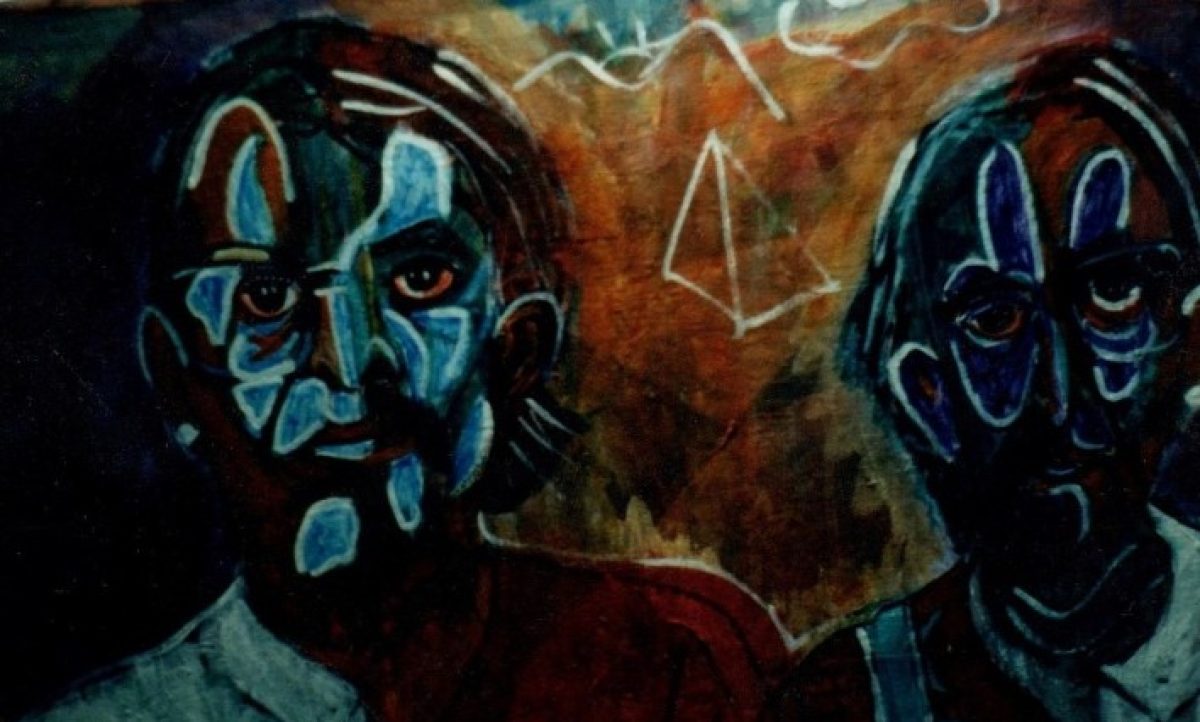
NY SLIDE XLVIII: PROMOTION ISSUES


      Anthony D'Arizon came to the school from Puerto Rico with enormous basketball talent. He seemed  destined for the NBA, everyone said, and a scholarship was already waiting for him to pick up at Florida State U. The only problem was his low scholastic scores.
     It seemed a shame, his coach agreed, that such a promising athlete should be held back, a great career threatened by persistently low scores in Math and English. Something had to be worked out. For English he was placed in Mr. Bilicki's elective.
     One thing Bilicki would not compromise on was the school's habit of coddling and protecting basketball players. "We worry more about their ability to play ball and win trophies for the school, and less about their education," he protested. His position did not sit well with everyone, certainly not with the prinicipal who was a school basketball fan.
     In his final year, still early and months away from graduation and that scholarship at Florida State, D'Arizon seemed on track to fail Mr. Bilicki's English class. Asked to account for this Bilicki pointed to a pattern of absenteeism. Told by his supervisor that a student could not be "failed" solely on his attendance record, Bilicki held his ground.
     He was approached by Mrs. Angrisani (Guidance) who in the presence of a subdued D'Arizon – towering over his teachers in snazzy sweat suit and bright sneakers – argued passionately that Anthony's circumstances were rather special.
     Okay, he'd missed many classes, everyone knew that; but surely Bilicki could be sensitive to a student's need to put classes second to the interests of his family. The interests of his family? Yes, Anthony had a part-time job; he went to work before and after classes to bring money in for his mother and younger brother. It was something he didn't want made public. Some students had no choice but to work their way through high school. Bilicki refused to give in. Anthony D'Arizon was one day mysteriously yanked from his elective.
     Bilicki stormed into his supervisor's office demanding an explanation. Pete Plimpler, always ready with fluent answers, raised a matter he said had just come to his attention, concerning a "race issue" between teacher and student. Bilicki was apoplectic.
                 (from "Ah Mikhail, O Fidel!" a novel by N.D.Williams, 2001)


t

NY SLIDE XLVII: INSTALLED


     For the announcement of her appointment by the Principal at the next faculty meeting Mrs. Haliburton wore a business-style jacket and skirt (not the pants outfit she favoured); and a tiny African hat and a kente cloth strip gracing her left shoulder. When she stood up, bowed, smiled and waved off the applause, the kente cloth and the hat caught everyone's eye.
     So much had happened so quickly - the changes, the rise to new responsibility involving colleagues they'd known and worked with all these years – most teachers hadn't time to make the required adjustments. Few even suspected Mrs. Haliburton carried inside her a quirky ethnic pride. 
     Colleagues in her department were nevertheless determined to maintain the spirit of old connections. They came forward and touched the kente strip, "Lovely piece of material"; and they kissed Mrs. Haliburton on the cheek.
     Her office received some renovation. Mrs. Haliburton decided to make 'heroes' of students who'd fallen victim to street violence; she asked the computer department to print out a poster – Victims of Violence /Memorial Wall – which was displayed outside her room. Student friends of the injured were invited to submit poems and artwork to embellish the poster.
     The computer department was asked, next, to print out a colored banner – It Takes A Whole Village To Raise A Child: African Proverb. This was stretched above her office door. The problem of students loitering outside Rm. 217 she solved by insisting that students come to her office only when summoned.
     Bright new notices appeared around the building, posted with Mrs. Haliburton's
authorizing signature. They reminded everyone to bring to her attention any acts of bias or racial discrimination. These notices replaced the old ones which had faded over the years, and enough of which Mrs. Ossinoff had apparently not posted in conspicuous places during her tenure.
     As for her critics, the cynics – teachers who strolled into her office and saw no students, saw nothing happening; saw Mrs. Haliburton frowning as she leaned over papers on her desk, or spoke on the phone – and the teachers she felt sure resented her appointment after Mrs. Ossinoff, Mrs. Haliburton would shake her head, amused and saddened. "I mean, what else would you expect?" she'd say.
     She let it be known, however, that she was hard at work never mind how things looked. Much of her work was done outside the building: visiting the homes of truants, talking with mothers she bumped into at the local supermarket and on the streets of the community.
     She was not always forthcoming with information; in fact, she seemed distrustful, belligerent at times. Say what you like but make no mistake, Mrs. Haliburton was hard at work.
                          (from "Ah Mikhail, O Fidel!" a novel by N.D.Williams, 2001)

POEMS FOR OLD SCHOOL TIES (& LIVES UNBINDING)


             Rajiv would catch the train, morning dew through country cane;
             ferry 'cross the brown river; find walk ways
             through the big market square & squall into a clearing:
             our school (pate bald Jesuit Fathers chalking,
             amo amas & ferulas hawking) his classsmates:
             our treasure isle so far from home; far ago as hic et nunc.

             That afternoon (circa '64) breaking city riots tapped shoulders
             hunched over the Cyclops; a part of him between breaths jumped
             to the window sill searching Ulysses-like for home.

             Smoke in the sky, furies undoing, on stand by grave shovels - 
             noise in such tearing hurry we all assumed our parents'
             patience
with stilts and mud had snapped again, estate
             racked hands called out again; though
             Rajiv's eyes kept parsing
             fear and his heart whirred like whishing rotor blades.

             We watched him take off for in dangered streets, the plank walk
             ferry; his train, what station names?
             stuff of bold adventure!              

             He stopped at the corner, looked both ways; he looked
             back, pulled a smile like lotus or a boy scout knife
             from pockets we knew nothing about. We waved
             and cycled home.

             Next day he didn't show up. The day after he seemed
             quieter, well templed – as if from now on
             laugh or talk in class
             so close to city fiends was Brahmin-like forbidden;
             he'd done his homework; found what rules.

             We've kept in touch 'cross fabled cities around the globe.
             Back then we owned no iShare wires, no tongue
             to tweet "r-u-ok?"
             Students of old cracked worlds, bright
             suns from town & village, we just assumed.
                                                                      – W.W. 


                  L'ANGOISSE DE LA PRAIRIE
                           iv: Sketch

                  Not only the sky and wind but nothing
                  can be drawn save this becoming, something
                           always only beginning
                           to know itself. The rest is
                        the grotesques of a blind man switching
                        on and off his face his own hand's light.
                      (from "Gift Of Screws" by Brian Chan)


NY SLIDE XLVI: TURNING POINT


    The turning point in her campaign for change came after an incident in the parking
lot near the school one day. A skinny Hispanic student on his way home was surrounded,
pushed and shoved and urged to fight by a chubby black student. Frightened, his head
lowered, he walked away; then he started running. He was chased into the parking lot where – to the delight of a swollen pack of onlookers, howling for action, and jumping on parked cars for a better view – he turned suddenly and fought back. With swift ferocity.
    Pulling a knife from his bag he went after his tormentor, plunging the knife within an
inch of the lungs.
    The incident raised a furor. The city tabloids, at the time running opinion pieces on the proposal to ask city employees to take up residency in the city, sent in reporters.
Television vans with channel numbers boldly identified parked around the school the
following morning. Reporters waited on the sidewalk to interview teachers hurrying in.
    Many teachers stopped long enough to express distress at the damage done to cars
when students jumped on them. Mrs. Viola Haliburton was stopped and she agreed to
give a lengthy interview before hand held microphones.
    On the evening news she was allowed only thirty seconds of exposure; she complained
bitterly about this to everyone who saw her on TV. She'd said much more, a lot more, than was actually shown; they'd edited out important words. Still, thirty seconds of edited
television exposure added up to thirty seconds of recorded fame.
    One reporter made mention of the racial imbalance at the school ("a staff overwhelm-
ingly white in a district predominantly black".) She observed that Mrs. Haliburton was one of few black teachers at the school "trying to make a difference".
    The interview, while raising her profile as a community spokesperson, incensed many
in the building whose cars had, or had not, suffered damage. (Mr. Lightbody was beside
himself with rage; he hadn't heard one spoken word about damaged teacher cars.) Many kept up their good-humoured relations with her, though privately they considered Mrs. Haliburton's television interview unfair and divisive.
    Days later, disturbed by the adverse publicity the school had received, the District
Superintendent paid a visit. She noticed students lounging outside Mrs. Ossinoff's office
on the second floor and demanded to know why they were not in classrooms receiving
instruction. The explanation she was given did not please her. Near the end of the
spring term Mrs. Ossinoff was suddenly relieved of her post.
    They didn't have to look very far for her replacement – someone with impressive credentials and status (a recent TV interviewee), who lived in the community and felt impelled to "give back" to the community. As the new program coordinator Mrs. Haliburton was considered just right for the job.
                             (from "Ah Mikhail O Fidel!", a novel by N.D.Williams, 2001)


NY SLIDE XLV: REVOLUTIONARY MOVES


    Nothing short of a revolution was needed at the school, so Mrs. Haliburton believed.
Serious with intent she armed herself with grim statistics to make her point: the violent
behaviour, the truancy and dropout rates, teenage pregnancy issues. Things were not
just bad, she meant to imply; they were unacceptable.
   Her first moveable target was Mrs. Ossinoff, a program coordinator, whose duties were
to provide counseling to students referred to her office: students with "problems" at home, in the classroom, with abusive boyfriends, drugs. Her office was usually crowded.
Students wanting to talk to Mrs. Ossinoff stayed away from classes; they loitered outside
her door; they played cards in her office as they waited their turn.
    Mrs. Ossinoff had been a student at Berkeley in the 60s. On Fridays, when teachers
dressed down and looked forward to a relaxed funfilled weekend, she wore flowers in her
hair and blue jeans and tie-dyed T shirts; her crinkly hair with its first strands of grey
hung down her rounded shoulders.
    Students loved her. They encouraged her to talk about the 60s when smoking
marijuana was a harmless if socially unacceptable indulgence; they claimed she understood their problems, spoke their language; she was "always there" when they needed help.
    There was, however, a loitering problem outside her office. Mrs. Haliburton made
this the first issue of her campaign for change.
    "You walk past Rm. 217…at any given time, on any given day…what do you see?
Students hanging out. Just hanging out. Nobody's in control," she observed, adding good-
naturedly in reference to Mrs. Ossinoff: "She's doing the best she can, I don't deny that,
but I don't think she's able to relate to these kids on a meaningful level."
    She began cutting out newspaper articles carrying the latest high school violence
statistics. John Wayne Cotter H.S. was usually high on the list. She made photocopies
of columns – the borders and capitals severe with printer ink – and she pinned them up     
on the notice board in the main office.
                               (from "Ah, Mikhail, O Fidel!" a novel by N.D.Williams, 2001)


POEMS FOR LAND ENCRYPT (& NEW UPDATES)

 
                                                                      "…earth and water – the solid present and the fluid 
                                                                        past - left him still gasping…unsure whether the act of
                                                                       breathing was not an instinctual form of breathlessness
                                                                       as well."    - Wilson Harris, "Heartland"

       
                Still hard at work the grass here, our grass scythes
                put away since Independence. And the measure of a man
                after stilts & logie tenure? the coop or ville unfinished.
                What happening there, Bogart?

                Where once bookstores thrived supermarts shelf
                price shivers, shop window oxygen. You feel much
                older standing on the steps of our public library.

                As for tongues no longer ocean linked our sentences
                scramble through dense poverties; profiles & pet dogs
                leg lifting on the page; waxers on the ear. Immune to truth
                wigged carrion heads poll pick feed.

                Elsewhere change resets with red blue bells. Here generations
                could chill entombed, inhaling crypt air, until someone shifts
                the boulders, slips in plates of sky. Knock wood we don't clear
                brush for fresh hacked limbs horreur! and mass beds.

                How we live now? in the forensics of travelers' imaginary; or
                as trade meisters lunch like parrot toe waiters; fussed over
                for our forest trees > new Real Estate! auctioned these days
                in climates of billions! ̶  barely clothed; just standing there.

                Power cuts route hot days back to plantation nights shut tight 
                rumplings and run away schemes. What diminuends you mean?
                O, that crack creeping noise?
                                                                           Well, after Marx
                our shaved Denims (not cut for green fatigues) pledge to pay
                back the long imperium of others with termites at their turn:
                service town ships bridges streams < blood rusting grinding sleep. 
               
(Mind you, that noise could also be broomstick ethics worming
                up the anus; phantom waves overtopping.) 

                If only we could unlink one rattling habit.
                Yes, I know the moon does go deranging
                in dark places. For now turn on your side, mate;
                calibrate your breathing; curl in until.
                                                                              -W.W.


                        THE MAN WHO SELDOM SLEEPS
                        BUT IS

                        always preparing his bed will
                        leap between moons ignored in our
                        time but fathered and fed by suns
                        to ours bridged by the glue of light,
                        the link of love. In his spare time
                        he laughs more than he is seen to
                        and smiles less, as he wonders when
                        his next moon, and how his last bed.

                             (from "Fabula Rasa" by Brian Chan


NY SLIDE XLIV: ISSUES AND IDENTITY


     On the occasions they met – in the hallway, the teachers' cafeteria – Mrs. Haliburton,
with folders and computer printouts in hand, always seemed in a hurry to get somewhere.
She stopped long enough to drop remarks that left Radix puzzled about her role.
    For instance, she told him one day she was on her way to the principal's office. What
about? The asbestos threat. Radix had no idea there was an asbestos threat. W
here was
the threat? Mrs. Haliburton looked at him half amused, half amazed. She explained that
some time ago a teacher from the Foreign Language department, Mrs. Battershield, had died of cancer. Exactly two years ago, to be precise. Now she'd just got word that a second teacher, who had been on a mysterious long leave of absence, was receiving treatment for cancer.
    So what was the connection, Radix asked. Was the teaching of foreign languages
somehow hazardous to teacher health. Couldn't it be simply coincidence?
    The connection, Mrs. Haliburton said, her lips drawing close to his face, for this was
no trifling matter, the connection had to do with that section of the building where the
foreign languages department was located. The school administration and the Board of
Ed. were not willing to acknowledge there was an asbestos problem there.
    She walked away shaking her head affirmatively, her lips pursed with conviction. Radix
looked after her open-mouthed. What should he make of this? Had Mrs. Haliburton, now an investigative reporter, stumbled on some closely guarded school secret?
    It was possible she was deceiving herself; maybe she'd developed an inflated sense of
her own importance; maybe there was some truth to the gossip in his department that
she was just another office seeker, a player in the school's identity politics.
    One morning he walked in her office, closed the door, and ignoring her distant manner
told her he had some important news. "I was speaking with the Chapter Chairman, about  that business of the asbestos…? He says there's nothing to worry about." She looked up, clearly taken aback. (Just takes a little "news" to switch her on, Radix thought.)
    "I'm not surprised he said that. The Chapter Chairman doesn't care who lives or who dies in this building. He's looking out for his own interests."
    "He says the Board of Education sent in a team last summer to examine the situation. They reported the building was safe."
    "I know about that report. There is a serious problem with asbestos in this building
and nobody's doing anything about it. And by the way, the next time you talk to Steve
Kite, our beloved Chapter chairperson, you ask him what's he doing about the money
for the swimming pool."
    "Money for the swimming pool?"
    "That's what I said…Money. That was supposed to be spent. On facilities. For Swimming in this school. Where did it go? You ask him why he isn't raising a stink about that." She tugged the collar of her jacket as if to suggest her assertions were as neat and correct as the fit of her clothes.
    Though Radix hadn't meant to sound adversarial it seemed now he had crossed a line;
he had gone over to the other side seeking truth; he'd returned to question the integrity
of someone from the community.
    Mrs. Haliburton sighed and looked away from him as if the view from her window offered solace, helped her deal with people new to the country, astonishing in their
naivete.
            (from "Ah Mikhail, O Fidel!" a novel by N.D.Williams, 2001)


HORN SCHOOL COOL AND WHAT THE SURVEY SAYS


                                                                                   So what?
          play through meteor showers, the piano man said; they're
          throwing moth balls on the stage? that's Ok
          grip the surge and lift, up next a Mozart crew?
          Another round search engine eyes will grope - whose place?
          whose swollen softs? - however quick to do. Someone
          will wipe the tables. Night ravens wanting altitudes fade blue.

          Space debris everywhere these days, looks like; constituencies
          of bare shelves and bottoms spinning 'cross the globe;
          though the video about miners found alive
          in coal bowels of the earth could planetize resurrections (Yo, 
          show you can endure the thorns, they'll kneel you from the groin.)

          Hey, we still have choice: stay inside – your cabin
          wired for cable & glazed skin pixels? – and watch
          the swept up help!fight swim or swarm to freedom
          squares climate ringed. Or fly the tribe like kite or alibi:
          veils congealing loyalties, need salving through the prayers (Yo,
          snake oil men sell apple cheeks from gardens in the red desert.)

          You the orbit man…?  "La Dolce Vita" …Arriight!
          O sure, the world's a plasma melon sweeter than grits
          of yesterday and who knows?         

          We could be airborne on bikes tomorrow unless Dios mio!
          the bearded levelers bombast more old bald faiths &
          bargain shoppers and body parts fly; but – excuse me –
          my fingers come in here on the horn.
                                                             Tout a l'heure, baby!

                                                                                -W.W.


                      INSOMNIAC PIANIST

                
                      The notes I play are points  
                      of my being, a geometry
                      of moons floating within
                      but beyond the fat silence linking
                      planets rutted with sleep.

                      With threads of sound I stitch
                      my moons into a mask by which blank
                      meaninglessness translates
                      its urge to be meaning into this
                      needling of the night's wall,

                      until through its punctures
                      promises of a prodigal sun
                      stretch their firm arms of light
                      and this room expands as music draws
                      a universe anew.

                 (from "Scratches On Air" by Brian Chan)


NY SLIDE XLIII: THIS CHINUA PERSON


     For her part Mrs. Haliburton had heard of the exciting things Mr. Bilicki was doing and
she was impressed. She saw him as an old trooper willing to move with the times, to fight
the powers for change; though she never missed an opportunity to chide him about the
absence of black males from his class.
   "I don't get it," she said to him. "Help me here, Brendan. We start off with overcrowded
classrooms in the ninth grade, everybody complaining about the registers, and by the 
time they get to you in their senior year, the numbers are what?…15,16 students? Where do they go? And what is it about you that apparently turns off some students, particularly
black male students…? I mean, I see all these pretty Hispanic girls in your class, but no black males. What's going on here, Brendan?" 
   And Brendan who liked her combative spirit, who knew she didn't mean to hold him
accountable for student attrition over the years, who was neverthless wary of the razor
of anger he sensed hidden within the folds of her humor, changed the subject and spoke
of innovations he had tried to introduce to the department; and the obstacles placed in
his way by "reactionary" people like Pete Plimpler.
    Bilicki's interest in Chinua Achebe – the African connection, as he put it – really impressed her. Mrs. Haliburton was an avid reader; it was part of her book club image to walk the hallways with a hard cover edition of a famous author clasped to her breast. Stop her to enquire what she was reading, you found Alice Walker, Toni Morrison and (though not very often) Danielle Steele. If anyone said they'd never heard of these authors, an expression of dismay and censure came over Mrs. Haliburton's face.
    She spoke to Noreen at the Board of Ed about Chinua Achebe, how Bilicki had asked
his students to write a book report on her work. She was smacked with chagrin when she
learned that this Chinua was a male, not a female person. "You mean all this time…"
disbelieving laughter "..you know, I was on the phone to a book store last weekend, and
the woman was telling me she had no idea who this Chinua person was."
             (from "Ah Mikhail, O Fidel!" a novel by N.D.Williams, 2001)


NY SLIDE XLII: EVERYBODY LOVED MR. BILICKI


     You couldn't ask for a more committed teacher at John Wayne Cotter H.S. than
Brendan Bilicki (English) even if he didn't live in the Bronx. He hardly missed a day; he was
rarely if ever late. On the other hand he had a reputation for storming out of department
meetings or faculty meetings, declaring his dissatisfaction with some point of procedure.
    Bilicki had already done nineteen years in the system; he had secured tenure; he was
respected and reviled as a curmudgeon.
    Primary among the targets of his loathing were the supervisors, the oldsters in jackets
and ties who ran the school; he called them "the good ole boys" and he joked often that they sat in the principal's office "drinking whiskey and rye", formulating procedures that
so far had failed to turn the school around. He had it in for his assistant principal, Pete
Plimpler, whom he considered a perfect example of what was wrong with the running of
the school.
     In the morning, he'd observed, Pete Plimpler was viperish until he'd had his cup of
coffee. No point running to him with problems at the start of the day. You'd find only a
cranky old man sitting at his desk, watching his coffee maker bubble, while his radio
played low-volume classical music in the background.
    Pete Plimpler was also part of the white establishment which refused to embrace the
need to revise the curricula in the light of demographic shifts in the city. Bilicki, who was
white but always at pains to remind everyone of his Irish-Jewish roots, became
contentious at department meetings, pointing to the outdated reading lists, the books assigned to students over the years, many of which ended up lost or unreturned or "found" later on the lawns outside, wet and unusable.  
    And why were there no African-American authors, no Hispanic authors on the lists?
"Wake up and smell the coffee," he'd shout at Pete Plimpler, who sighed, wearied but unbowed, and tried to move the meeting on to the next item on the agenda.
   (Later in a deft move, and in deference to the general mood of unhappiness in the
department, Pete Plimpler offered the electives program to Bilicki; this pacified him for
awhile. He introduced his seniors to James Baldwin and Gabriel Garcia Marquez; and he
vigorously suggested that money be set aside to order at least one class set of Chinua
Achebe's "Things Fall Apart".)
    Mr. Bilicki was loved by his graduating seniors. He was the only teacher who greeted
students with a chaste kiss on both cheeks. Some of them had had Mr. Bilicki in their
junior year when they read "Streetcar Named Desire" so they signed up for his elective.
    Pass any room where his class was in session, you couldn't fail to notice a pony-tailed
teacher like an aging rocker in blue jeans sitting on his desk, the class leaning forward
in rapt attention. They liked the the "free form" tempo of his classes ("free form", a
phrase from the 60s took on fresh meaning for his students); they listened enthralled
to accounts of his college days, to his casual confession one day that he'd smoked
marijuana. ("You did drugs, Mr. Bilicki?" the class gasped.)
     When he revealed, looking out the window and stroking his beard, that he'd married
too young, that he had a teenage daughter and was divorced from his wife, they shook
their heads in shock and disbelief.
     They wanted detail, postmarital insights. Mr. Bilicki waved the matter aside. He
explained that he and his wife were very good friends. Which prompted someone in the
class to declare, "Marriage sucks."
             (from "Ah Mikhail, O Fidel!" a novel by N.D.Williams, 2001)