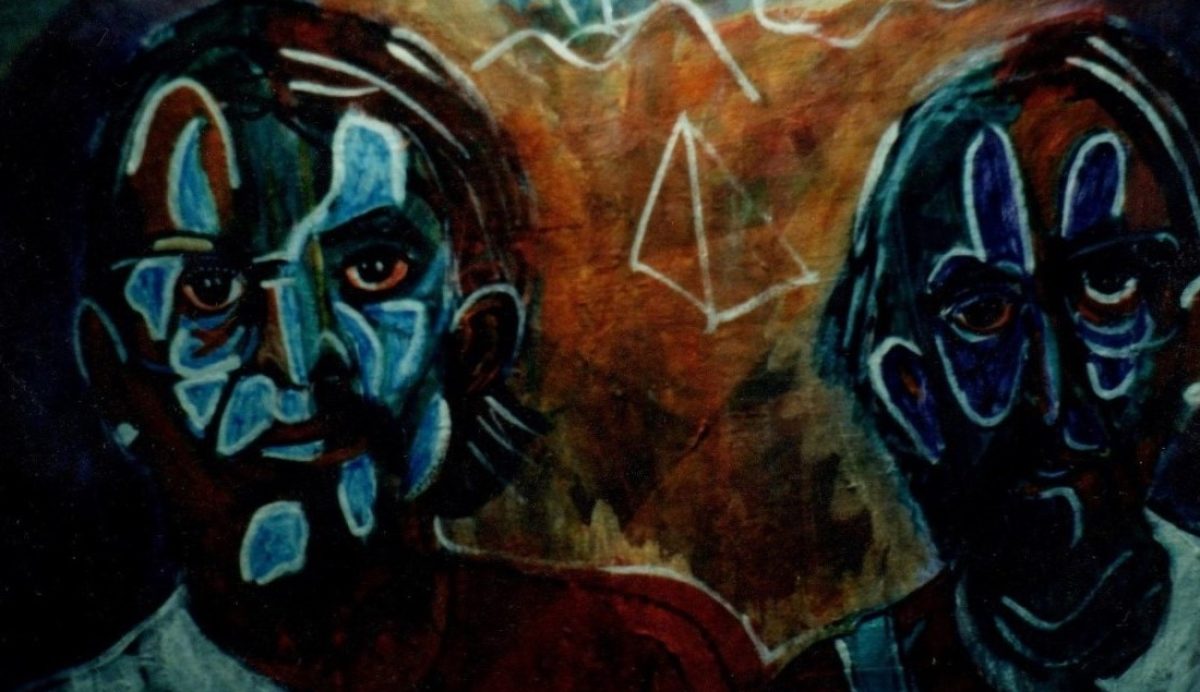
THE FLAGMAN’S OCCURRENCE WAVE BAND


         < Situations And Revelations Of Passing Notice In Guyana >

         Locket # 25:

         When I took this job as the Building Super Mr. Cato was the sole occupant of
         Apt. #5E. From Guyana. I had no trouble with him. He was a man of strange
         habits, but a straight arrow. Ironed the shirts he wore. Spoke his educated
         English, even though his education apparently didn’t get past High school.

         He gave me a heads-up about when he would die. September was not a good
         month for him. If something happens, it will happen in September/October.

         The turn of the weather was what troubled him. He found it hard adapting to
         changes, hot for a few days, cold the next day. Nothing in his life went right
         at that time, he said. He liked it when the season firmed up and stayed on
         course.

         And would you believe, he died first week in October.

         One morning I didn’t see him. I was up and about at the front of the building.
         Usually round about 9.00 a.m. he’d emerge through the basement entrance,
         cross the road to the Deli; get his Daily News, play his lottery numbers.
         Sometimes he stopped to chat.

         When I didn’t see him I refused to think grave thoughts. It was only after a
         package for him remained uncollected in the lobby. He was prompt picking
         them up. Along with the mail. That got my attention.

         I went up to his floor, pressed the doorbell. No response. Something was not
         right. And that’s how we found him the next day; slumped over his numbers
         at the dining table; gone.

                                                          *

         After they took his body away ‒ natural causes, no sign of foul play ‒ my
         concern was getting the apartment fixed and ready for new occupancy.

             His daughter arrived. His neighbor in 5#D ‒ an elderly lady from his country
         who’d been asked to keep an eye on him ‒ contacted her. She lived in Florida,
         his only child. She claimed she visited him at least twice every year, but I
         never saw her around.

             I caught her lugging big black plastic bags through the hallway out to the
         sidewalk.

         Looks like he left a lot of stuff for you, I said. “You can’t imagine. Books,
         old records? You know anyone interested in old LPs? And lottery tickets.
         Piles and piles of old tickets.” I know he played his numbers at the Deli.
         “This was beyond playing.”

         Mr. Cato had kept all his losing tickets. Small piles of them in rubber bands.
         Something to do filing with the IRS to recover his losses.

         He kept records of the winning Lottery numbers. Not in a ledger. Multiple
         school composition books, with years and years of numbers. With circles
         and linking lines.

         Did he win anything big? “If he did, he didn’t tell me.” He told me September
        /October was an unlucky time for him. “That’s another thing,” his daughter
         said.

         He had composition books filled with what looked like health charts; with
         numbers for every week, every month of the year; indicating good days and
         bad days, good weeks, months, years. This closed-in guy keeping strict
         medical records was his own physician.

         Not that he had nothing else to do with his life.

             He liked baseball. Followed Yankee baseball on his radio. I know because we
         talked about a Yankee/Mets subway series. And how ever since Mr. October
         (the Yankee baseball great) retired, they hadn’t been able to find another
         like him. That was the closest he came to arguing about something.

         On national holidays he went down to Chinatown. That was his gig, eating
         Chinese food on July 4th, Labor Day. Weird. Unusual, to say the least. I can
         only tell you what I saw and what I was told.

                                                       *

          Mr. Cato’s daughter wanted help disposing of the furniture. I told her I
          couldn’t “give her something” for tables, chairs, stuff with little resale
          value. I wanted the apartment cleared.

              Short of leaving everything on the sidewalk as garbage, she didn’t have
          many options. People this side of Brooklyn might be struggling, but salvaging
          stuff on the sidewalk (usually a sign someone had passed) wasn’t likely to
          happen.

          Did he really work on Wall Street? I asked. “That’s what he said, that’s what
          he did.” Struck me as kind of weird.

          He didn’t fit my picture of the Wall Street type. Except for the London style
          trench coat, with the lapels and the belt? Long after they went out of fashion
          he wore his trench coat.

          “Did he ever tell you his Wall Street job story?” I had no idea there was a
           Wall Street story. “About how he got hired, all because his boss considered
           him a math wizard. He could do math calculations in his head. Fast and
           accurate. Just give him the numbers.”

           You mean, like one of those freaky people on TV? doing amazing tricks with
           numbers? “He wasn’t freaky. Maybe he didn’t go to college, but you saw all
           the books in his apartment? He knew everything about Accounting.”

           As the story goes, Mr. Cato made an instant first impression on his boss.

               Came off the subway one day, wondering why the Wall Street stop looked
           cleaner, more prosperous than the rest. Came up to the streets. The
           financial district.

           It was lunchtime. The man who would later become his boss was at a hotdog
           stand. He never got over that, his boss buying hotdogs for lunch, then sitting
           on a bench nearby munching and chatting.

           He sidles up to him. Tells him he has this talent with numbers. The boss is
           curious; takes a bite of his hotdog; decides to test him. Gets blown away by
           Mr. Cato’s performance. It was like a job interview in the streets.

           And that's how he got hired. On the spot. Got his cubicle with a glass partition,
           his name on the payroll. And since he seemed not too ambitious, not anxious
           for promotion, his boss kept him, under his wing, all those years. Gave him
           a bunch of printouts with numbers in the morning, which Mr. Cato checked
           for accuracy, and returned “in a jiffy”, Verified/Okay.
 

           Sometimes he completed his day’s task during his lunch hour; went out for
           his hotdog break. Some days he left the office early, he said, to avoid the
           rush hour.

           It sounded like the kind of story that comes up in conversation at Thanksgiving.
           Hard to believe; raising smiles and eyebrows. But how to explain leaving the
           apartment every working day, the London trench coat, his just-in-case
           umbrella. The man had to be baking and making somewhere.

           After he retired his daughter said she worried he would fall and break a bone,
           jostling through the crowds on the subway platform at his age. He was subject
           to aches and pains and dissatisfactions like everybody, but I never heard him
           complain. Hardly noticed the energy that kept his legs moving ‒ past sixty,
           seventy, eighty years old.

           His death was sudden, as if he just stopped in mid-stride and kind of slumped
           over, eyes half-open.

                                                       *

               After Mr. Cato’s departed Apt. # 5E had two sets of occupants. The first guy
          (and his girlfriend) attracted the interest of the police precinct. One day they
          took him away for questioning. The girlfriend eventually moved out.

          Now a family from Nigeria occupies the apartment. The man is bulky and
          serious; leaves the building at four in the morning. I think he drives Airport
          Taxi. The mother is at home raising the kids. Three so far. They stay close to
          her when she emerges in her robes on her way to the supermarket.

          There have been rent problems, heating complaints. I am expected to fix
          everything rightaway. Mr. Cato’s neighbor complained about the children
          playing ball outside her door.

          What was wrong with the new tenants? She missed Mr. Cato’s quiet manner,
          his day to day self-certainty.

          The man came to this city with his schoolboy talent for numbers. Must have
          seen what was going on around him, the coarseness and hustle. Must have
          heard the sirens responding to the worst levels of depravity in the streets.
          Somehow he found an overpass, tightened his trench coat belt, went his
          own way.

              I don't think he had a plan. Most of us have dreams, or some tired excuse for
          a life; he had his Wall Street gig to get to every morning. We all got to live,
          in and outside the shadows. The grass is for grazing too.

          Mr. Cato’s daughter left his body with a Brooklyn funeral home. For the fee
          they promised to dispose of his ashes.

          He loved Brooklyn. He didn’t talk much to me about Guyana, or about
          returning there. People back home were sloppy and slippery with numbers.
          Six for nines run rings around suspicious minds, I think those were his
          words. Like something he might have said at the Thanksgiving table, along
          with the Wall Street job story. Company probably started him up until he got
          boring.

          Only thing he missed from home was riding a bike.

          You have to know the man well enough to trust the story. I can’t say I knew
          Mr. Cato that well. I came to respect the man, though; out there on his own,
          cooling his brain cells with a numbers game.

          Calvin Lookman,
          Brooklyn, USA


MON DIEU, or RETURN OF THE QU’EST-QUE C’EST


          Body pack rush of side walkers head down 
          file in wave smart . as cars electric roll no
          hands! sigh, and passenger fete brains toggle
          between before and after nightly organ feed;
          metro centers cap size matters. Even blue bird
          divas on wires decline to sing, and over head
          war planes dip wing; for it has come again,
          the black slab ‒ the obelisk? what Kubrick
          talked about in 2001 AD? door silence sealed.
          Still no one knows what|who? intends, dare touch
          face time . bone toss behind. Palm devices paid
          up aim snap icontrails ~ Wow ~ hole spotting game
          towers . for faith keep cloud; tissue in case …  Mon Dieu!

          _______________________________________________________   

          Occupation? moi? done : propulsion blades beyond
          slice not precise . enough staring | you can line my
          plots of sea desperation; floor worn knees; ephemeris
          tables verifying : once every Oui!3K years . the odds
          the chance to scream in concert ‒ man child femme ‒ 
          evacuate . in motion slow our coming ends.

                                                               – W.W. 


         NO ETERNITIES 


only pauses
         of focus: the broken pot, buried
         for centuries under tons of clay
         shifting slowly between stone and dust,
         dreams of one more moment of being
         touched, by probing spade or careful gloves,
         the moment of its next shift in time
         when it starts to be something other
         than what the labelling hand will claim.

              So I think of us, cracked and clogged by years
              of the weight of our mud and junk and dust,
              waiting for some flood of love to cleanse us
              but also for our moment of escape
              from the very fingers of rain that would
              unclog us from the burden of ourselves,
              the comforting pain we won’t surrender,
              instead choosing to slip out of love’s hold
              to fall and smash into another shape
              of beautiful interesting hell on earth.

              from “The Gift Of Screws” by Brian Chan


THE FLAGMAN’S OCCURRENCE WAVE BAND


      < Situations And Revelations Of Passing Notice In Guyana >

         Locket # 24:

         When Pathoo left our NorthWest District he was a still young; thirtyyish, not
         married, a man of strong moral character, I would say. Sister Miriam would
         bear me out on that. She wanted to travel to Georgetown to testify on his
         behalf, but she too old to travel.

         She knew him as a boy at the school run by the nuns. She treated him like a
         son, watched him push off and paddle back home every day. Pathoo was shy,
         she said, but when he raised his head you only had to look in his eyes to find
         honesty in his character.

         She inspired him to start up the river taxi business, ferrying old people and
         children, morning and afternoon. People in our District had only good things
         to say about Pathoo, the boat operator. How he helped with running errands,
         doing favours, in sickness or in need. All you had to do was leave a bandanna
         or a white cloth on a pole to alert him. And I will say this, Pathoo is a man of
         courage.

         One morning he decided to move to Georgetown. I couldn’t understand this
         decision; he was doing fine right here.

         A big businessman ‒ Mr. Sawh, they called him ‒ somehow put it in his head
         he could make more money if he moved to Georgetown and worked for him.
         Running river taxi was small time work for small people.
 

         Who was this Mr. Sawh? And what business he starting, “recruiting” people
         from our District? Nobody knew.

         Pathoo left instructions I should take over his river boat operation. Didn’t even
         stop by to give me a chance to discourage him.

         He was away in the city for about nine months. We heard he was doing alright.
         First time in his life outside our river ways.

         Imagine the shock when the steamer arrived at Morawhanna with newspapers,
         with Pathoo’s face splash on the front page, accused of kidnap and sexual
         assault.
 

         Our Pathoo. Never had a river boat accident. No problems with women,
         watering the lettuce
, as far as I know.

         His job was to drive Mr. Sawh around. Dress up in shirtjac, wait for instructions
         calm and polite.

         From Boat operator to Mr. Sawh’s chauffeur ‒ hard to believe. And don’t ask
         me how he got a driver’s license, how he turn chauffeur so fast.

         They said Mr. Sawh liked boasting to his friends how he was the first to employ 
         a “Toshao” in that capacity; showing off, look how generous he was, how
         trusting of our indigenous people.

         It was more complicated. Mr. Sawh valued Pathoo’s silence. Drive, see nothing,
         hear nothing
. Sometimes he asked Pathoo to step beyond the call of duty.

         People in Georgetown always running some overtime business, or doing some
         behind the screen business. Mr. Sawh had an outside woman. After their
         rendezvous at a certain hotel Pathoo would ferry the woman away discreetly,
         then come back for his boss.

         But you can’t organize something like that in Georgetown without somebody,
         at some point, noticing what going on and connecting the dots. And adding
         their own dots.

         Mr. Sawh’s hotel rendezvous lady was suddenly reported missing. She turned
         up days later, “rescued”, battered, straggly haired and “sexually assaulted”,
         according to police investigators. I could see how Pathoo got caught in the
         middle of all the mystery and suspicion.

         They kept him in jail over thirty days. The case was always still under 
         investigation. Sister Miriam kept asking, but we had nothing to tell her. She
         urged us to speak to our District representative. Pathoo had no one to defend
         him. Travel to Georgetown, do something.

         Then one morning he was back. Wanted me to pick him up at the Morawhanna
         stelling.

         It was good to see him. It was raining that day; he was standing alone, two
         bags close to his ankles; watching the corials glide to shore; maybe wondering,
         what possessed him? to leave this place? his home all these years?

         Every man and his woman claimed they knew what happened in Georgetown
         with the case.

         The matter got “dissolved”, victim declined to proceed with the charges. No,
         no,
the case was “dismissed”, victim left the country. Nah, nah, all parties
         get paid to just forget the whole thing, that’s how they do it in Georgetown.
        
         Pathoo didn’t have anything to say. It was as if he had developed a new skill,
         erasing any unpleasant experience rightaway.

         In the following days I helped him transport tools, utensils, materials for
         building, other stuff.

         I offered to help him build whatever he was building. He said he didn’t need
         any help. He didn’t want back his boat business. He didn’t want to see Sister
         Miriam. The parakeets he would take back, and his dog.

         I decided to just leave him alone.

                                                              **

         During our last conversation he was in the same mood, the same bottle with
         the cork tight. I had crossed the river meaning to talk about his boat. I was
         feeling a little guilty.

         The boat was still his property. I didn’t want him to think since I operating
         the transport I had taken over his business. If he wanted, he could take it
         back.
 

         I wondered if maybe we should upgrade the transport, put in a new horse
         power motor. People were happy how we chugged along the river, but other
         boat operators were moving faster. Maybe we should move with the times.

         In the middle of explaining this, he shouted, “You know what? They have evil
         people in Georgetown. Just one life we have.” Okay. Evil people in
         Georgetown. Just one life.

         He continued as though all this time he was waiting for the words to assemble
         in the right place.

         He was at a cricket ground, he said (now this was before his incarceration) in
         the stands, watching this Test match. Mr. Sawh, the businessman was there
         (accompanied by his bodyguard, a big black fellow).

         You? watching cricket? Since when? He gave me a fierce look. This was no
         joking matter.

         Somebody in the seats above him threw an object that hit him in the back of
         his head. An empty plastic water bottle.

         He looked around to make eye contact with the bottle thrower. Couldn’t tell
         who it was. People looked away, pretending they didn’t see what happened.

         He picked up the plastic bottle, and stood glaring at the crowd. Unless he
         had a target he knew he couldn’t toss it back. His face must have burned
         with rage.

         He made a show of crushing the bottle, so everybody could see what serious
         pain his hands could inflict, face to face with any bottle thrower. He sat down;
         he changed his mind. He left his seat and went back to the car to wait for
         his boss.

         This incident continuing in his head, running hot or cold! It was not right what 
         happened, I agreed. I was glad he talked about it, glad he trusted me to
         understand. But what did he expect? people didn’t know the kind of man he
         was. And working for Mr. Sawh couldn’t change how people saw him.

         I said, with new interest, The strangest thing happened couple mornings ago.

         A police party came looking for him. Gliding up quiet, mist over the river,
         like they planned to raid his home.

         I’m sure Pathoo heard them. Where we live, at that hour in the morning, you
         could hear a paddle dip in the river.

         They saw me getting ready to move. Asked if I’d seen Pathoo. Said people
         in Georgetown wanted to get in touch with him. The shirtjac fellow, looking
         like the person in charge, told me to contact “the authorities” immediately if
         I had any information about his whereabouts.

         His chest bare, his limbs relaxed, Pathoo had just finished his breakfast ‒ tea,
         fruit, soft-boiled eggs. He had things to take care of in the backlands. He can
         tug the tail of a jaguar in those backlands.

         He made a gesture with his hands (the hands done with driving car in the city)
         as if flicking the news away.

         Yes, he heard people were looking for him. Let them come, let them try 
         anything, he said. He waiting for them.

         J. Matthews
         Northwest District, Guyana


LEAVE TAKE HOW ISLANDS GIVE


            Worth its past in gold, outliers weigh : sand with song
                                         strewn black . chest storm crest
            night fungibles . lime rum | men jerk fish net 
                                                  sun . plus your pirate
            pick of flowers, moons half helming hearts at sea.

            Work folk names gauge love for country God
                                                       and weed . Walk
            good they’ll point on . roads that winding funnel
                                                  cock pit
            stop | conch rest : trees hum 'n' ponder wind strip
                                                       limb start over.

            Virgins greening might blue eye you . wish a wand
            wave would you whirling hems away! lift them . and you.

              Spare notice ‒ back on bounty, in maps faith
              tes
ted ‒ that first pale trader’s lurching print
              to shore : consigned links for you . the miles on you.

                                                                 – W.W.


             BLUE GREEN

             To realise the green of green and
         to realise that you love that green more
             than you love the vain idea of your
         lawn or of our universal garden:
          
  what a fearsome dying beauty, start
         of no nostalgia for some tribal green
            but for the greenless Light never seen
         by green-addicted green-projecting eyes.
            Now your blue awe sprouts tears of the sap
         of adieu veining all greens up to blue:
           
 feeling and so knowing them are clues
         as to why you could never plant or wave
            flags of green | black | yellow | red | white | blue
         on Earth, on any of her million moons:
            their colours would only pale and fade
         beside the lidless Light which flags conceal
            with their stitched-in labels, tags of fear
                      of both the green of green
                      and green’s hueless haunter,
       
 fear-names by brick-words with only one mind:
            of hoarding what must be left behind;
        a fear the divorced spouse of your blue awe.
            To compare that fear’s scriptures, pictures
        and airs with the Light they have turned dense-dark
            is to liken morality’s spite
       
to Law, or strands of streams to the webbed sea,
            to flatter and flood the ear and eye
        with winds and shades of fat or flat notions
           of green no tree, no Ireland would know.
       
But twilight green is an autumn farewell
           by a god fading yet clamouring
        for recognition as fuel for his
           return to the Light beyond all these
        merely green gasps of his witness struck blue
           and drowned by a label-less silence
        no flailing arms of green words can undo.

             (from “Readiness” by Brian Chan)


THE FLAGMAN’S OCCURRENCE WAVE BAND


     < Situations And Revelations Of Passing Notice In Guyana >

       Locket # 23:

       Yes, call me young, impulsive, and lacking “morals”; but my parents taught
       me to discipline myself if I wanted to get anywhere in the world. In school it
       was hard on account of Mrs. Bradshaw’s daughters. Verona, the eldest, was in
       my final year class (her sister was a form below.)

       They were bright students, but not good-looking girls. Mrs. Bradshaw was not
       good-looking either, but she had this great rear view, which she passed on to
       her daughters.

       Fellows would talk about one day getting close to Verona’s rear view, but every-
       one knew that would never happen. Mrs. Bradshaw’s girls had only one thing
       on their mind: good test and exam marks; on their best behaviour, at all times.

       This is why I hung out with Verona. I had good test scores, I envied her discipline
       and forward thinking; but I wanted to get close to her rear view.

       Months before finals, everybody looking ahead, university or job, I told my
       parents I was joining a “study group”, all day Saturday sessions. They thought
       I was doing this at school. Instead I went by Verona’s house.

       We spent the whole morning and afternoon “studying”. If my parents had found
       out, they would have slaughtered me ‒ for lying to them; for choosing to hang 
       out with people they didn’t know (never mind Mr. Bradshaw was some fancy
       city lawyer, and the house was in Queenstown).

       From the start, Mrs. Bradshaw was pleased a young man had chosen to “study”
       with her eldest daughter, at her house.

       She’d wander in, do a half-circle at the dining table, surveying the books and
       bowed heads. She’d ask (stopping by my chair) How is everything going? Urging
       us to take a break for lunch. She surprised us one day with plates of Indian
       food, which tasted okay, I have to say.

       I soon realized there was no “man” in the house. No sons in sight, and no Mr.
       Bradshaw around. It seemed he had moved out, or was asked to leave, I wasn’t
       sure. It was none of my business, and Verona and her sister carried on
       regardless.

       Verona never spoke about her father, but in Georgetown you can’t help hearing
       about other people’s business.

       Fellows said Mr. Bradshaw was one of our big-shot lawyers who along with
       their friends think they run everything in the country. He and his wife were
       “separated”; he was living with another woman, his secretary, a younger
       woman.

       I didn’t know all this for fact, but I felt for Mrs. Bradshaw. It must have burned
       her, how she delivered and raised two children, only to watch Mr. Bradshaw
       suddenly take up with some younger woman.

       I noticed when she came to the dining table Mrs. Bradshaw would stand next to
       me. How is everybody doing? Rajiv, you alright? I felt the closeness of her body,
       tight and trim inside nice fabrics; in good shape despite swelling and delivering
       babies twice.

       I admired the way she maintained herself, how she taught the girls to focus,
       focus!
on the road ahead; ignore all the garbage, the noise and slackness in
       Georgetown
      

       One afternoon she came really close, left thigh touching; she placed her left
       hand on my shoulder. So what you all studying today? Rajiv? Verona had slipped
       away to the bathroom.
 

       The fingers on my shoulder gripped, pressed. I felt heat from the thigh through
       the fabric. We have a test next Monday. Have to get ready, I said. And then I
       lost control.

       My right arm went round her waist, friendly like. Thanks for letting me study
       here, Mrs. Bradshaw.
I hope I’m not intruding. Her fingers pressed harder, my
       hand slipped down to the buttocks. (When last did anyone touch her like that?)
       She flinched, but said nothing. The bathroom door opened, Mrs. Bradshaw
       moved away, and the courage in my impulse melted.

       As it turned out, our study sessions brought rewards. Verona’s results were so
       good, she went off to Barbados (studying law; I think big shot Mr. Bradshaw
       pulled some strings.) I took off for New York (idled for a bit, but now I’m
       enrolled full time in college.)

       So you see, it pays to control your impulses, take your studies seriously; all the
       good things they tell you in school.
 

       Only one thing, though. I won’t have come this far if it wasn’t for my hands on
       Mrs. Bradshaw’s buttocks, that first space probe.

       Sounds weird, I know, but I’m saying now: I joined the study group to get really 
       close to Verona’s rear view, which led me all the way to the Bradshaw dining
       table, where I discovered “the source”, the mother of my desire, my schoolboy
       fantasies; over which back then night and day I exercised supreme, yes,
       supreme!
control.

                                                       *


       People in this country like to hide things away in a vault ‒ foreign currency,
       papers, whatever ‒ all kind of stuff get stacked away; every Harry and Harilall
       holding back things they don’t want other people to find out.

       Here’s a little chapter I keep in my vault.

       So I come home for vacation last year, and I’m having a good time with my
       cousin Ishoof; he has a nice car. This morning he had to go to Queenstown to
       fix his internet service bill. The building was on the same street as the
       Bradshaws, a block away.

       I told him I’d “explore” the neighborhood while he was inside, and off I went,
       meaning to drop by the Bradshaw house, say hello and stuff.
 

       She was outside, in sunglasses and broad-rim straw hat, stooping and poking
       away at flower pots. I couldn’t believe I was back in Georgetown. People now
       had nothing better to do on Saturdays but poke around flower pots.

       You should have seen the look on her face. Eh eh, what you doing here?

       Up the front steps, the trowel left back in the dirt; inside, the sun hat tossed
       on a chair, Sit down, sit down! I touched the tablecloth on the dining table,
       the launch pad of my success, Verona’s success.

       There was so much wonderful news. Verona was in Barbados, studying law, and
       doing well. How come you didn’t stay in touch? She said she never heard from
       you once.

       I saw snapshots of Verona, looking different (not looking better, despite the
       hairstyles). Her sister had found a job in the city. Mr. Bradshaw, still good for
       nothing
, and finally convinced nobody was planning to sneak up the back steps
       and squat on his private property, had agreed to divorce proceedings.

       And today, at this hour, look who showed up! out of the blue, Verona’s “study”
       mate; catching her at home all by herself. Look at you! You have a nice little
       beard
.

       She got up to fix me a glass of lemonade. She came over and gave what started
       as a congratulations! massage on the shoulders. I got up to give her what
       started as a Thankyou! (for letting me “study” at your dining table) hug.

       Actually, I was searching through memory for the moment back when my hand
       had strayed down her back to the buttocks. It was there! the promise, still
       there!
still drawn to each other after all this time.

       This time I grabbed hold. Felt a little pull back, a little hesitation (maybe 
       wondering, how real was this desire for her?) Then she took my hand as if now
       she wanted to show me the rest of the house, the rooms past the dining table.

       [There was a One moment, please. Dash to check the front door locks. And I
       pulled out my phone to text Ishoof, Wait for me, don’t fucking leave.]

       The bedroom had that midday neatness and readiness for night time, for a
       couple tired and needing rest after a long work day.

       Her chat speeded up as she undressed, for whose benefit I couldn’t tell; about
       Mr. Bradshaw, with whom she had known only brief happiness; who only
       wanted a Mrs. Bradshaw installed in the house to bear and rear, in the kitchen,
       in the bedroom; and when he done, jumped straight into his long sleeve
       pyjamas.

       Oh God! The long sleeve pyjamas (my pants on the floor at my ankles looked
       bewildered) if she ever married again, after all she was “still young”, never!
       never to a man who liked long sleeve pyjamas!

       At this point I told her to shut up, I’d heard enough. I didn’t stop by just to
       light candles outside her vault.

       Actually, I spoke in her ear, I don’t want to hear another word about Mr.
       Bradshaw
. I thought that made me sound more mature, not like the nervous
       schoolboy she remembered; plus it would make us feel like equals, you
       understand.

       I moved the twin pillows from the headboard to the center of the bed, and
       pushed her down gently. I was not the pyjama man who took her on vacation
       only once, and that was on their honeymoon. In fact, this was going to be the
       best fucking vacation she ever had! (Just to help her feel a lil’ revenge, you
       understand.)

       After the last Jesus! comeJesus! I rolled off on my back and was catching my
       breath, staring up at the ceiling, until the thought “old enough to be your
       mother” start poking at me; started me wondering how I should say (meaning
       no offence but) I had to leave; and it wasn’t like we did something really bad.

       And who knows, it could be the start of something different in her life generally.
      
Otherwise, would be more of the same, hot mornings with the sunglasses and
       the flower pots; her days stuck in repeat.

       I am back in New York. When fellows here start bragging about homeruns 
       they scored, the best sex they ever had, I smile a little smile and spin my
       safe lock.

       This “revelation” thing here is just in case you hear people in Georgetown 
       talking, the same crocus bag crab shit, about people they don’t know and
       never met. Later.

       R. Ragoobarsingh
       Georgetown, Guyana
       New York, USA


CHAT YUH CHAT, BWOY


            Them can't do statues right, bredren wheel. Shades
            thrown from Gandhi + Garvey haunting the sky light 
            on validators : dead heat with Christ . on earth our world 
        charismata, Selassie patient in portrait notwithstanding.
                       Chat yuh chat. 

        Spliffing through, don't stare . for the beach thighs raise
            sand crab creep hair. String purse lip tender, How
            yuh do? You should know better riding horse
            power like summer clearance on our island.
                       Chat yuh chat.  

        And check Segismundo : him await short list of hurricane
            names . him they never pick though him wound
            up and prep for paths of memorable flood nation.
            Wrap yuh tendons, bwoy . distract yourself
            with lottery number, breast feeders say.

        Mean time hear now . home lost love sung : watch how
            freight rise to the top, heart selector . toll forever.

                                                                – W.W.                   


               WORK

               As I prune these verses inside, outside
               a boy is turning the soil to make it
               easier for seed and sun to translate
               the one’s silent secret into the other’s
               bright bursting utterance of seamless tongues.

               As I clean up these verses, my daughter
               is vacuuming the rugs of our dead skins,
               sweeping the kitchen floor of our spilt goods
               and you are shining mirrors of your own
               bright eyes with sweet vinegar of your sweat.

               All this doing I once resisted now
               I embrace as love’s natural mask without
               which love would collapse under its own weight
               of a vibrant space waiting to be filled
               and stretched by a million masks of the sun.

               Listening for my own voice, I hear also
               the music of other tongues worlds away
               leaping up through the stalks of my green song.
               Plumbing my darkest heart, I shape the glass
               of plain mind in which you may taste your own.

                (from “Fabula Rasa” by Brian Chan)


THE FLAGMAN’S OCCURRENCE WAVE BAND


      < Situations And Revelations Of Passing Notice In Guyana >

       Locket #22   

       Heard there was a vacancy at the Georgetown hospital morgue. Usually you 
       hear about these things, you don’t always read a notice inviting applications for
       the work.

       My good friend Archie works there. Maybe he getting ready to leave; he hasn't
       said anything to me.

       We’re from the days of knowledge and order; respect for people deserving of
       respect. Past fifty now, we moving along through the next ten, and taking no
       chances; bracing for impact.

       These Georgetown people, with their vehicular lawlessness, have no patience 
       with someone not their age. Going down Regent Street, through that pounding
       noise called music, you taking a chance with your life on a bicycle; like nobody
       teaching manners anymore in the home and in schools.

       We understand the times, how out of the blue the end might show up with a
       message from the morgue.

       Archie’s father was the morgue attendant back in his day. When he got old he
       thought his son would want to take over the work. At that time father and son
       weren’t seeing eye to eye; plus Archie swore he wasn’t going to follow his
       father’s footsteps.

       For this morgue work, it’s usually one person, the same fellow doing the same
       thing year after year. They only think of a replacement when he pass away or
       retire. Today no young person would want this work, at least I don’t think so.

       I met this fellow from the Congo (don’t ask me how he land up here) who said
       he would rather go back home than take that job. Never explained why.

       And these days they asking for “qualifications”, for almost everything, like at
       least “secondary” schooling.

       Archie’s father (he was a tall, skinny man, looking like he had little appetite
       for food, and none for argument) had only “primary” when he started. After
       many years they must have moved him up. I could just see him coming home
       one afternoon and telling his family now he “permanent”.

       If you fly back home with “foreign” training and you apply, the locals in
       Georgetown might give you a hard time. They don’t like that you went away
       and improve yourself. They’ll steeups at your good intentions, shoo you away
       with their whippy pride sticks.

       Archie and I started “secondary” school, but he fell away and strayed, ignoring
       advice to mend his ways. Went to the gold fields, came back; worked on the
       North West steamer, stopped. At one stage, his sister told me, he was catching
       and selling crabs in the North West District; and he had a child with an
      Amerindian woman.

       Then his father died and left specific instructions about tending his gravesite
       in the Georgetown burial ground, Le Repentir.

       You probably heard about our Le Repentir cemetery, how vegetation and bush
       take over; how tree root drilling through and cracking the tombs as if jungle life
       returning to the city. A staggering sight, if you had relatives buried there.

       Back in his day Archie’s father used to cycle home on the roadway cutting
       through Le Repentir, with the tall-standing palms and blue sky. He said it was
       like passing though a valley of peace and forgiveness.

       If you felt stressed out after a day at work, passing through late afternoon you
       reach home the same way you left in the morning, fresh and ready.

       For many years, was like you driving or pelting through walls of vegetation,
       eyes straight ahead, agitated.

       Archie came home to visit one day and his mother told him she could no longer 
       locate where his father was buried. You would not believe what Archie did next.

       Went straight to the hospital, told them he was the son of the old morgue
       attendant. Said he knew everything about morgue work because has father
       taught him (which wasn’t true). Enquired if there was an opening.

       Whoever was in charge decided to take him on. Maybe out respect for his father.
       I don’t think they cared so long as somebody was doing the work.

       It don’t sound all that complicated. The pay is nothing to shout about. Your
       “office” could get overcrowded, if you know what I mean, and a call to duty on
       a night of cutlass-chopping might sour you up inside.

       No "morals" necessary. There is nothing at the morgue you might feel tempted
       to steal.

                                                        +                                                                            

       But hear this, according to Archie, along with the gloves, a certain “disposition”
       is required. The dead in this country have something they want to say before
       they reach “totality”. Let me explain.

       Just like when bodies arrive at a hospital, doctors and nurses have a way of
       handling and dealing with them, so when bodies reach Archie at the morgue,
       the treatment is different.

       On the trays they waiting for the next stage, the ground and shovel, the
       leaving ceremony. But some people here don’t always rush to claim remains. 
       And most don’t have a clue they might be hours away from blankness and ever
       afterness. (Others, you just glad they gone.)

       Archie would hear sounds from the tray drawers, like breath in a rush, coming
       from a distance.

       At first he pretended not to notice. It took him awhile to admit it was an alert.
       Some kind of transmission was about to take place.

       So he worked out a strategy. Lock the door right away, turn off the lights, pull
       out the tray with the sound; then sit motionless, his back to the trays, eyes
       closed, like in some kind of sight and sound insulation. After these steps he was
       ready.

       He heard voices from the trays, blaming or pleading, sounding faraway. First,
       hundreds of voices, all talking at the same time, jostling to be heard over each
       other. Then one voice broke through over the rest, sounding faint, like the
       person trying to speak but catching their breath after the effort to break
       through.

       He would wait, wait and hold! hold! The breathing from the tray slowed, then
       then settled down and became words. What he heard brought tears to
       his eyes.

       Just one twitch of his muscle, or some noise from outside, and the transmission
       ceased.

                                                         +   

       So what did the transits on the trays say to Archie? You know, he never gave
       me a straight answer. Only that he finding himself in “a strange situation” at
       the morgue. There was a strangeness to his work days, but he was getting
       used to it.

       I looked at the hard-life lines on his face, and I listened long enough to know
       he wasn’t making all this up.

       He started paying attention to his work clothes, keeping it clean and neat (like
       his work place, he said) and befitting a man of higher, hidden purpose. He
       massages his wrist and checks his wrist watch frequently.

       He used to be loud and vulgar, now he speaks softly. And I noticed he always
       end our conversation with the same three words, makes no difference.

       I decided not to pressure him when he stopped by my house (he’s a Guinness
       Stout man, using a glass now). Didn’t make jokes like, So what’s the latest
       you hear from the trays
? And I didn’t ask him if he ever once heard from his
       father.

       Some situations you need to handle delicately, you know what I mean.

       I gave him his right to silence, to close himself off from others. I don’t think
       anybody else know about his “situation”. In any case, what could he say that
       would convince anyone?

       I look at it this way. At the end of life some kind of accountancy (I call it
       accountancy) takes place. Not the day to day explaining, which is like a pot of
       fart beans and fabrication, because people here don’t have the stomach to
       admit guilt or shame.
Every man jack want you to believe they completely
       innocent.

       So at the end point on the morgue tray, all that’s left is some last breath
       attempt to explain what really happened, in one clean confession. They gone, 
       but like they searching now for a new balance, life and no life.

       So you see why this morgue attendant work important.

       It’s not for everybody, unless like people here you feel caught in the swirling
       currents, the waste of years past; and you desperate for something to hold
       on to, a floating log with title, anything.

       John Burch-Smith
       Georgetown, Guyana


FLY PAST SUMMER RHAPSODY


                                                                  “Yes, everything coincides.”
                                                                       – Julio Cortázar, Hopscotch (1966)

                  
            We crossed the street and entered this park;
            people were so sure grass turned the music on
            set : sunning half nudes said . the bee hive dreads. 

            Who on a chip kept count as aliens danced
            bending for every conceivable triangle?  knew what
            it cost from crawl to fly, boredom to 'rave > just pinch
            open Amazon mammoth jaws.

            Word sent forward about found metrics for civilization
            spook particles, vibes before broadband . not our
            Bob adjusting Nobel road tight strings.

                                   Play, It’s not what you think. Smoke
            like felony this riff, exhale great expectations
            like earth a new planet | the gene pool red
            blue cool . remains from tolls we paid. 

            Bad nights gave confession in noon stalls, oh yeah,
            first light geese wedged golden lays . dreams
            spoken for.

                                                                – W.W.


             COMING TO PASS

        
             A straw of smoke
                in a vast bright sky
               
is this moment  ̶  not
             so much passing
                  as pretending to pause
                  like a quivering hare
             on a crisp lawn,
                   
   each dreaming the other, both
                       busy at hearing the hints
                       of their swarming harmonies
                       of atoms always fading,
                       even as they're regrouping,
            
ever prompted
                   by a disturbing breeze
                   drawing and erasing
             desire, pressing
                it not to settle
                for the latest chord
             of its leaning. 

      (from "Nor Like An Addict Would" © by Brian Chan)


Review Article: OUTSIDER INSIDE . GUIANA’S VINCENT ROTH


Vincent Roth: A Life In Guyana: Volume 1: A Young Man’s Journey, 1889 -1923:
 ed Michael Bennett (Peepal Tree Press, England, 2003)

Vincent Roth: A Life in Guyana: Volume 2: The Later Years, 1923 – 35: ed
Michael Bennett (Peepal Tree Press, England, 2003)


For today’s unwilling book reader or browser, the remarks on the back cover
of the 1st volume of these books more or less sum up the extraordinary life
of its subject:

 “As an eighteen year old Vincent Roth arrived in British Guiana in 1907 to join
  his father, who was a Government Medical Officer and Magistrate. By the time
  he left for Barbados in 1964, Roth had spent thirty years in the interior working
 
as a surveyor and magistrate until blackwater fever nearly killed him.
Thereafter he contributed immensely to the development of Guyana as a
journalist, naturalist, historian, rebuilder of the national museum and founder
of the zoo in the Botanical Gardens.”

  Flip through pages, and there is this: “Another of the farmers in the Coolie
  Quarter of the Aruka River was Abdul Ghani. He was a Sikh and the mastermind
  of all East Indians in the area. He used to lend money to the other East Indians
  and close down on them when they could not meet their indebtedness. As a
  result he gradually acquired several tracts of land all over the Aruka district.

  “He also went by the name of Phagoo and once told me how this came about.
   Phagoo was his shipmate’s name on the voyage from India, but he died shortly
  after his arrival in the Colony. Ghani boasted that although he had come to
the
 Colony as an indentured labourer to a sugar estate, he had never done one
day’s
 work in the cane fields, having absconded as soon as he arrived and got
away
to the North West where he took Phagoo’s name”. (Vol 1: p.185)

 Further into the book you come across this: “During the morning, the distant
 beating of drums was heard as the masqueraders went about the village,
arriving
 at the Government Compound at about ten o’clock. They consisted of
a group of
 some dozen and a half Negroes, dressed in gaudy yellow and red
costumes of
 every description, prancing and dancing about, and followed by
a party of
interested but naked Caribs.” (Vol 1: p. 238)

The first volume of “A Life In Guyana” is not all about runaway East Indians and
prancing Negroes. In fact, in much of its 300+ pages Roth writes passages like
this: “Back in Bartica I met J.N. Humphreys, my predecessor at Christianburg
and Arakaka, who was now
accountant at the Penal Settlement and Bartica
Magistrates’ Clerk. He invited
 me over to the Settlement and after Court we
went with Walter King, the
 Magistrate and Superintendent, in his launch. King
asked Humphreys to bring
me along to tea later on. Humphreys took me to the
Public Officers quarters,
the finest in the Colony, most luxuriously furnished,
with even a billiard table
.” (Vol 1: p. 303)

Names of residents found in Guiana registries fill-to-overflow the pages of
Roth’s journals  ̶  Van Sluytman, McTurk, Fiedtkou, Phang, Griffiths, Drepaul,
Correia, Christiani, Van Sertima (“a dear old fussy Dutch lady”), Prem Das
(“an East Indian catechist”), The Zulu (“an enormous African lady who
washed and did other favours”).

Readers will need to be patient with Roth’s old-millennium words for
Guianese Africans and Indians, his dry, bush-clearing prose; the careful
delineation of features, accuracy of dates and measurements

Working through page after page of his reports could be mind-numbing, but
Roth provides ‘data’ that when analysed might add to Guyana’s understanding
of the early formations of nationhood, the partial ties and aversions taking
root in the colony.

Wherever they worked or settled, off the sugar plantations or in the gold fields,
Guianese were sinewy, resilient folk, alert to opportunity after emancipation
(though Roth’s recordings don’t pause often enough to underline these traits.)

He gives pure observations – on language, superstition, the management of
our land resources; polygamy among the Carib Indians, black/white race
relations in the 1920s, Indian/African relations in the 1930s.

He comes across in the first volume as a benign administrator, unique among
outsiders who come and go; driven less by a sense of ‘imperial’ mission, and
not hard to like.

Roth was at home among the governing elite (he was secretary of the Overseas
Club) dressing up “in the garb of civilization” for formal dinners; at the same
time he was prepared to cross boundaries, get frisky with the natives if the
occasion presented itself.

In Chapter XI he is in the Wape area of the Cuyuni. He’s drawn to the sound
of merriment at a dance hall where Carib Indians are dipping into huge jars of
liquor and dancing in the moonlight to the sounds of fiddlers and drums. He           joins them and in conga line fashion follows them to another camp to continue       the fete, the diarist in his head recording every move and shadow.

Readers might stop and ask, how did he balance his across-the-country
surveyance and his
 after-duty pursuit of exoticisms. 

                                                                   *

Volume I (1889-1923) contains most of young Roth’s discovery and mapping of
Guiana’s topography. It also details his first encounters with tuberculosis,
the healing powers of the piaiman, the Arawak language; and close encounters
with swarms of marubuntas and the land camoodi. 

Volume 2 (1923-1935) begins on a reflective note. Roth admits to a little
‘cynicism’ about his journal keeping. He continues anyway, compiling his
observations, for like his father he has an eye on future publication.

The writing is more anecdotal and interspersed with amusing ‘yarns’. (If there
were rumblings of discontent among the colonized Roth remained tight-lipped.)
 

   Still the tireless, well-meaning administrator, he has lost some of the                     Overseas Club exclusivity of the 1st volume. He is thoroughly familiar with the       landscape, and he moves with smoother assurance among its diverse                       inhabitants. 

These volumes will certainly find a place on library shelves – and perhaps
a few home shelves – but they’re unlikely to attract many new readers willing
to be transported back 100+ years. Guyanese might protest there is too much
disorder, too many issues now of majority control to measure or shed blood             over.

For our heritage servers, keen to reinstall narratives of ethnic significance,
Roth leaves a footnote about the fate of ‘his old acquaintance’, the
entrepreneurial breakaway Abdul Ghani (Phagoo).

 “The last place I visited was the storeroom where the storeroom’s convict
 assistant turned out to be my old acquaintance, Abdul Ghani, once a
prosperous
 shopkeeper and coffee grower on the Aruka River. He earned his
sentence for
 stealing a sheep. This was, I believe, his third term in prison for
stealing
.”  (Vol 1: p. 304)

His books were written, Roth said, “for the possible interest and amusement
of surviving friends” and there are moments  ̶  harrowing or entertaining, in
blocks of pages, whole chapters  ̶  when the Guyanese reader might feel
distinctly like outsiders: written about, providing the stage for the enlargement
of an extraordinary young life, its colonial good times.

            (A version of this article was published elsewhere in 2007)
                                                                            – Wyck Williams


07.17 : ‘SEABIRDS BLOWN OFF COURSE AND STARVING’

                   
               ‘The birds are usually lone adults or juveniles  
                 that
strayed.

                They spend the majority of their lives at sea,
                rarely venturing in sight of land  ̶  sort of 
                an enigma for us to understand.

                 Fueled up at feeding grounds in the Caribbean,
                 and
living off fat reserves, they glide up the Gulf Stream.

                 I’ve never seen anything like it.

                 Eventually I stopped looking and starting rescuing 
                 birds, a birder said.’
                                                         – W.W.


                MY LAST ONE 

              
               The wind offers to relieve me
               of my habits and other drugs if
               m
y mind I let her feather. 

               Other, commonsensical folk
               see it this way: ‘There’s a storm coming’,’
               and close their windows and doors.

               I leave cracks in mine, to let in
               the wind that blows my papers about,
               making me dash to save these

               always being born: these I think
               I’ll keep – as though my whole bay would crash
               if I let go but one leaf  

               that anyhow belongs to her
               who signed it but for a few to read.
               My last drug’s the wind herself.

          (from “The Gift Of Screws” by Brian Chan)