"I grow coarser; and more modern" – Rosemary Tonks, "The Sofas, Fogs, and Cinemas"
When she came along ̶ pink moon petals from rock bare out source East; not shielding difference with head light deer freeze dart ̶ I tell you, she was good. Night fevers she'd distill pale morning accounts, whatever this folder wanted with her.
Always the smile ̶ you'd think she'd closed the filing cabinet just in time [ In the State of Rayuela : * She had smiled at him, as if she were trying to understand.* ]
In the vault ̶ our breath thrust rushed up zipping end of day ̶ no past time keys to parse whether she preferred the desk top. All season fingers changed the code made sure whatever happened our game off grid bird feathered up the nest.
Transfer years forward ̶ dark sides zebra crossing ̶ she'd grown cherub wings ̶ Still single? watching profits grow? ̶ main frame no longer corporate testing ̶ nonrecharging blue the red tomato slicing appétit!
I was left dictate standing down sure no more what floating pain the future would send in ̶ company boss hardly beloved, intern diversifying stock, the thirst fund slaking taking all for granted.
Others saving for the after life defer the big game hunger: how and where and still we crouch scent trade self definitions; app raise the rear view wrong sometimes with only dragged cross hair loss sluggish stream to show for it. Your undone so ̶ "Good morning" ̶̶ unlinked one. Believe we must I guess some logging synergy continues long on. Fire the joyas burn again head lift; not smiling much though.
– W.W.
NOW
The only future that calls to me is the one that is no longer one. The promising golden sun of dawn gives way to a crystal purity that in turn becomes the blaze of noon.
There is a Chinese clock that shows time neither linear nor circular but an ever-unfolding flower always shifting, remaining the same, a figure beyond hope-or-despair.
And yet, and yet, running up the stairs of lust for the sun of my own soul, I meet your rising full moon and fall back down the cave where the lone wolf hears tomorrow's moans matching now his call.
England's Queen Elizabeth II visited the colony of British Guiana in 1966. The visit, recorded for storage by a British film crew, went according to plan and protocol: with lines of local dignitaries extending gloved hands; bouquets and dance presentations, the exchange of proprieties; crowds lining the streets, some breaking to run with the motorcade. In its own way an official visit packed with the orchestrated expectations of its time.
The "progressive" forces of the day, exhibiting what might be considered a passive defensive (and turf patrolling) mindset, had called on the populace to boycott the occasion; perhaps fearing any display of public enthusiasm for royal visits might distract from the ideological march to anywhere, coast clear of colonial markers.
British Guiana became Guyana in the following year, and for a short period after that the nation witnessed an upheaval of cultural expression. John Agard was part of a creative movement which culmi- nated in the showcase of regional talent during the seminal "Carifesta" event in 1972.
He moved to England in the 1970s and has lived there ever since, publishing poetry collections for children, garnering awards; and performing "hit" poems on tour to delight and applause.
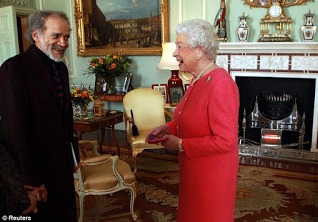
One crowning moment must have been his visit with Queen Elizabeth in 2012 to receive the Queen's Gold Medal for Poetry (an achievement, it bears pointing out, that was grounded in those formative years in Georgetown.)
Agard's development as a poet started with his youthful involvement in the theatre arts. It bypassed the customary path through University so that text and author have found a "voice" unaffected by the bland duty that sometimes tasks language; as might seem the case with, say, Guyanese professors Mark McWatt and David Dabydeen whose poems, happy to revisit and review the passage of human suffering and time's dust, accomplish much with collegial ado but feel safer sticking to the home office grid.
[Poet John Agard shares a laugh with Queen Elizabeth II]
In the 1990s a stint as Writer in Residence at London's South Bank Centre cast Agard as that weirdly successful "Bard at the Beeb" whose words became suddenly available to beebish listeners. In his latest collection, "Travel Light Travel Dark" he pokes around the baggage of imperial geographics for truths undeclared: "Is that the blood/ of the Gambia/ flowing under a Thames aria?" "What light can your green darkness, Atlantic,/ shed on a traffic that has scarred your waters?"
He assembles teams of celebrated players for a friendly (pre-season like) game of questioning assumptions and probing paradoxes. There are star performers like Prospero, Caliban, Jimi Hendrix & Handel (from "Water Music"), Sussex, Chelsea, Georgetown (from Guyana), Mayfair (from London), cane fields & horn pipes, King Lear & the Moor , Christopher Columbus, Michael Holding.
Some readers might cavil: this manoeuvre, set apart from modern-day spikes of street tension, creates space for high culture cruising. And the word play (the "hoodie in the hood", "the ship in citizenship") makes nice rap moves, quickly taken, but seem designed to titillate receding commonwealth sensibilities.
His metaphors might strike others as too easily summoned and put to work. Take his "Colour Poems", for instance, in which colours ring out fresh (and not so fresh) twists of meaning: red, he writes, "makes an art of bleeding slowly"; and green "thrives on a single leaf's trans- figuration".
In the wider Caribbean context, Agard's poetry calls to mind the ground-raking "folk aesthetics" work of the Barbadian scholar-poet Kamau Brathwaite (minus the shouter fonts, the return-home sense of "mission".) You'll note the effort to disrupt patterns of thinking, the shift towards new centres of creative energy; and the poet's not-fully preparedness to embrace the literary legacy passed down through the English tradition and old colonial schools.
"Travel Light Travel Dark" seems more like a contemporary dance between the Queen's language and its creole relation; carried off here with the level of clarity and responsible revelation you find first in the poetry of Guyana's Martin Carter.
Agard might have sensed that circumstances were perhaps right to trigger a new conversation among not quite equals, across language borders, in a new interdependent framework ̶ "I'm here to navigate -/not flagellate/ with a whip of the past." ̶ putting aside the recent history of patronage or indifference; even as the issue of "reparations" with its long memory surfaces, and transAtlantic souls buckle up for unfinished business.
"Travel Light Travel Dark" with its readiness to "engage" raises again the possibility of open new gates for otherness. If you follow closely when the poems are read ̶ and Agard brings a weathery charm on stage for his readings ̶ you'll discover his roguish wit; thought loading when he pauses; intensity as the old angst searches for new outlets, and today's sea-crossing survivors attempt to wire a new connectedness.
It's a stimulating collection in its own way, far in front of the one-eyed unrelenting banality of "progressive" thinking and practice in his native land. It offers versions and conceits that might well sparkle on the coffee table of England's now older monarch. - Wyck Williams
Book Reviewed: "Travel Light Travel Dark", John Agard, BloodAxe Books Ltd, (UK, 2013), 95 pgs.
Those enclosed lamp lights in windows alert to passing ship offers of first mate ̶̶ you'd wake and grace the morning yearn the keys to cabin closets; the farthering stern boil not yet under way. That half moon need to know how hearts on deck grasp grip at wanting grounding sheets of wave; first gush first outcry breaking sea weed dream to day.
How else could you have felt the tide take floats of innocence trembling, while conch shells raise ̶ what wind? what change in webbed bird step whose unswept shore?
The bare foot years the wish for paths for choice full blooming styles; for moves past screamingMadre mía! playing that teacher out for touch, the taxi drivers rear view cue; hot lid nails made cool with shadow polish.
Stitch by stitch, decorum easing pleats for peeks, that lust mote wedge at the corner of eyes, young men on line on hold importing sweets.
The bark of dogs ̶ the gates you dared! stretch beats of wing ̶̶ line curve in air.
From lies the sting you didn't expect in the Admin's bite left neck memos. Thank the stars no Toyota blood pack swirling terror dust blade upswing testing how far fast you run before the tumble pins you down ̶̶ goat foraging not far from grasses past when loins ate hair; brush close to scarf rules cheeks bright tight for after calls to prayer.
Vida de mi vida ̶ your lighthouse radiant beam through storm so sure ̶ long before tattoos were vogue, our high seas etched high marks ̶ how you've grown, wave girl, now you're known.
– W.W.
OBSERVANT
If innocence is impulse without lust, it is your guileless grace that I desire. If tenderness is a rose's cool musk, it is the perfume of your fresh petals that touches, angels me, a faithful cloud that will outlive my seedings of its rain. If caution is a flower of value, it is the bud of your care I would keep. If watchfulness is an eager eagle of vulnerability on the hunt for a chance to bridge the nearest abyss between this need for real food and that want of warm wine, then I long to become one alert feather of your generous wings.
"Fu tru a libi faya / "Truly, life must be f ' wi masra Gado" / tough for the Lord." ̶ Johanna Schouten-Elsenhout, "Virtue"
Vowed they would fix it, the flat tired nation, with memory wound stitched, fiefdom pulp beats. Now fine tempers bruise under their skin pecking orders, timers for youth oven access; the belt loose No, please! shielding. No lift tools, stems wait wilt. What foot stool custom helped them up there, coin chests saddled upon you? Dot titles sharpening names, blade fall, the old imperial drum role; things that matter less or more ̶ brace to jump the track rust of grail service. The wage estate's in shambles. Strip gangs burn cane reeds tender on strike dates. I run with you I clear ash swirling air strips for you.
Their frog throats swell, low copy high swallow. Here's a path for unexploded shells: spear tip the crab fist pounding up through mud; seize the scuttled shore before the tide plays out and longing dried in the sand holds, in the belly pincers.
Through thread veins, breath not ceding, run our conspiracy file ̶ did the barrels shipped back make it past the organ swellers? inside you tossed on beds of river weeping? Paddle, glide like Amerindian; take for your parting prow this hand, our midnight chart through forest quiet.
I sing paint dream you ̶ You there, stay the course! ̶ I follow ways you stream, you swat the Admin's crevice fingers. I wait with ointments, with oxygen tent, Enter keys. On heart shelves, our expectations lined up, I reach and dust spines of raptures chiming; not a grain slips by, Oh those glassed hours. -W.W.
ATTRACTING A BRIGHT ANGEL
with the hint of a horn to a quiet song, I know you at once, your body all wings of light lifted by its own music's waves of sure breathing, yet hovering between magnets of recognition and routine, desire and duty, ah-yes! and oh-well, your smile a mask of baffled power, of your admission of now-or-never, a chance you first deny through the exit to never, before turning back to charge our one heart's battery, your eyes' light over- flowing its chalice towards my hunger to be graced by the wingtips of your breath.
Characters in Edgar Mittelholzer's novel, Shadows Move Among Them, would have given considerable thought to the suggestion that ghosts or "jumbies" __________________________ as experienced in a forest environment were little more than "electrical misfirings" of the brain. This SHADOWS MOVE AMONG THEM viewpoint was put forward by scientists writing in by an issue of the journal Nature. Human agents, they Edgar Mittelholzer claim, by sending electrical impulses to the brain, could induce anyone to think "duppies" are real Peepal Tree Press, entities. England, 2010, 358 pgs
In Shadows Mittelholzer's folk had their own theory __________________________ of ghosts and spirits. When asked to explain sometimes bizarre behavior in the jungle, one character described it as “myth pleasure”. This, he says, is when people exercise their creative imagination and amuse themselves in concordance with a code of make believe. “We here create our myths and conventions day by day and discard them as easily as we create them”. Seen in such playful, rational terms and robbed of its ancient mystery and fears, life without spirit visitations could be managed with greater confidence even if futures remain indeterminable.
Myth and innerworldly behavior have been central to the fiction of Wilson Harris. A cozy scholarly complex has built up around his books. The sequence of novels that comprise "The Guyana Quartet" was published between 1960 and1964. Using difficult prose Harris has argued (in "Tradition, the Writer and Society", 1967) against “realism”, asserting its “inadequacy” as a writer’s tool for exploring complexities in Caribbean history and peoples.
Shadows was recognized in Time magazine as one of the significant works of fiction published in 1951, a “hard to classify novel.” It could be read today as a comic parallel to Harris’ hyper-articulate folk taking off on metaphor-laden boat rides up the Canje river, finding at the very top the fabulous connectedness they want to find in "The Guyana Quartet". The humour and inventiveness in Shadows, the “mad slant” Mittelholzer brings to the Guyana landscape would appeal to many in the Caribbean, like folk in Trinidad, not disposed to “brood”.
Europeans as anthropologists, Governors, missionaries, adventurers have been drawn to Guiana with its exploitable Interiors and underrepresented tribes. From Schomburgh to the Roths these very serious men have left us museums and maps and musty volumes of fadingly important information. In Shadows Mittelholzer employs emblematic Europeans as central characters and it is tempting to view the novel as a satirical commentary on those explorers who came before, and the dream merchants who came after.
Reverend Harmston, the central character, is unlike those early serious men. Educated at Oxford he brings his family to British Guiana in 1937 and takes them 100 miles up the Berbice River. There he assumes the responsibilities of coroner, registrar and protector of Amerindian rights. Once settled he starts thinking, maybe he could build his own cross-cultural civilization amidst the splendour of rivers and vegetation, “the gruff roar of baboons” and those gentle residents of the forest, the Amerindians, whose lives seem astonishingly in harmony with nature.
It’s the imperial settler’s dream, after the search for Eldorado; and since he is miles away from official Georgetown scrutiny Harmston wastes no time establishing (what years later in 1960s North American argot would come to be known as) “a hippie commune”.
The location is an exotic-sounding place called Berkelhoost, an old plantation once owned by a Dutch family with an exotic name, the Schoonlusts. In 1763 the well-documented slave revolt took place. As events of that revolt unfold in Mittelholzer’s novel, the white family members were slaughtered, but strangely their 17 year old daughter, Mevrouw Adriana Schoonlust, did not resist when threatened with sexual assault. Her life was spared and she became a servant of the slave leader, Cuffy, attending to his sexual needs, and doing secretarial chores since leader Cuffy couldn’t read or write.
He forbids the consumption of alcohol at Berkelhoost, it’s against the settlement’s health code. He installs the core values of “hard work, frank love and wholesome play”. Order at the forest settlement is maintained with balata whips. Malefactors are generously granted three chances to mend their ways. A fourth offence would lead to their “elimination” as incurably bad folk. Throughout all this Harmston’s autocratic style is never challenged.
The Harmston development model is a basically simple one: shared responsibilities, plus a blending of European enlightenment and the “local influences”. His forest- dwellers are not entirely free to run around, having fun, half-naked in pursuit of interests and pleasures. Depending on their aptitudes the children are separated into “squads”, the Book squad, Drama squad, Labour Squad. Conditions are spartan but life though regimented is far from beholden to the Ten Commandments.
Harmston sets up his own education system which requires immersion in the Best of European Culture: Chopin, “Aida”, Shakespeare, "The Ride of the Valkyries”; and reading US "Time" magazine.
The European through whose interrogatory eyes we wander around the settlement is a tormented young man named Gregory. He arrives with a raft of personal “issues” that spring from crumpled nerves and marriage memories he can’t seem to erase. A psychiatrist had suggested a change of environment (the exotic climbs & discoveries in the Guianas) as a cure for these “issues”. Harmston considers him a refugee from an “over-civilized Europe”.
Slowly he is drawn into the weirdness of the Harmston experiment and he begins to display weird, trancelike behaviours of his own. In time he becomes the love interest of the Harmston girls – a precocious 14 year old who sends him notes (“My Flat Chest Burns For You”) written in her blood; and 19 year old, sexed-up Mabel Harmston who wants to give up her free loving way with Amerindian boys and settle down.
The problem for Gregory is, should he give up the securities of England (its night clubs, restaurants and banking system) and commit years of his life to a forestrial haven of corials, hairy spiders and those erotically-charged Harmston girls.
Events in the novel are not all outlandishly funny. Mittelholzer manages to keep a thread of 1930s colonial credibility running through the pages. Lightning and thunder, torrential rains and the full moon intervene at hallucinatory moments of self- discovery; and though the benabs aren’t built with creaking doors things manage to go bump on the forest floor amidst all the insect and bird noise. His Europeans might come across as cartoony inventions, but the unambivalent depiction of the Berbice wilds is a measure of the author’s imaginative of the Guiana landscape, from city to forest and savannah.
But where, you might ask, are the Guianese men and women in Shadows? Aside from the Amerindians who represent “the local influences”, they are miles away in George- town. These are the 1930s, remember. The brightest local minds, unrepresented in the in the novel, are probably preparing to set out for Oxford U., LSE and other hatcheries of new world ideas. Years later they would return and, like Reverend Harmston, begin to commission their own earth-moving rigidities, be it “socialism” or “cooperative republicanism”, or the ethnic chauvinisim that still grips the land.
With its European settler themes and characters Shadows Move Among Them – first published in 1951, and reissued in 2010 with an escorting Introduction by Peepal Tree Press – could be read as Mittelholzer’s cautionary tale for our unsettled nation, starved for notice of any kind. In the jungle, he might be saying, be wary of white elephants and European dream-builders; and new mobile entrepreneurs, their seed bags bulging with capital and big ideas. Like recurring omens they come to Guyana in many postures and disguises. Some may not even speak in European tongues. A few might well be shape-shifting Guyanese.
Grant them a wish, concessions, tracts of green virgin land anywhere, you never know what they’ll do next – the grand schemes they’ll devise, the human cost and waste if these grand schemes misfire.
Book Reviewed: “Shadows Move Among Them”: Edgar Mittelholzer, Peepal Tree Press, England, 2010, 358 pages. (A version of this article appeared in 2007)
Requiem aeternam dona eis, Domine, et lux perpetua luceat eis.” – Requiem Mass
Mujeres in migraine storm, occupy a morgue, naming, wanting the bodies of loved ones struck numb in a prison fire.
Fear borne refugees cross burnt fields away from villages ravaged by soldiers; drop infants too heavy to carry, leave bones not keeping up.
Memo declassified: from men upright in blue suits: to men with chest medal drawers: Our future is in your hands. Burn their library.
Island school youth sentenced five years for stealing spice mango sleeps back to the window – fearing his bed – watching the door.
God shrilling warriors hurl stones, ferry open coffins of comrades shot up check scarf streets; gather again fresh, stone fresh.
Sun waxed plants stored away by squirrels thirty two thousand years ago see, disbelieving, skies of spring again, cheer scientists.
Days of glory, nights of stars – what, from nothing fallen, buried for that first tribe stare touch word? what something? whose voices of release? – W.W.
PLAINER AND PLAINER
my confusion of voice and eye, nothing left to prove or improve: a plain peace
sculpting certain ghosts drifting in and out of time, the wind caught by an ancient curtain:
sketches of essences, graphs of a stare whose centre is any, whose aim is all.
Old folk will tell you the sound of death approaching, as gunmen traffic up yours, is like potow pow-pow on our island; while elsewhere boosh you hear as death's pointy face, next up & piqued, leaves a hot then warm bed chamber.
According to my source gun down you don't that way; straight up I'm saying: when death moves in, usually unalloyed, no Aloha you hear, no Jehovah vending door smile; though just before the decresend –
souls standing (fates in waiting?) in white light; your life so far exploding stars blowing by in meteor swoosh or keynotes flashing –
the au revoiree falls, or staggers clutching, climbing. Now by chance if near the exit ramp you en passant are willing to lend assistance, be prepared to listen for time up syllables red spread refusing, like mama mia, mai; or moeder, muddafucker
still breathing? then make a cradle of one arm while with free fingers 112 speed dial ("Stay with me", till you find out mainframe's unplugged); and thank your Krishna the Lord for cellphones, there you go, there. you. go.
Meanwhile moments of silence give even bell strokes pause: crescent tumor flood bitches sons – what train we didn't hear coming?
-W.W.
BUSINESS AS USUAL
In night's grave beyond my floor one more motor throbs like Poe's heart, a gaping door's slammed shut and another ghost moves on to his latest rock of smoke.
I who know no rest must feel such stabs of proof that other hearts will refuse to stay put as edged mirrors of my own pursuit of nothing but breath
so that when some other knife of night splits my heart enough to make this dream of blood burst, I will have been well rehearsed in both leaving and never.
Got one virgin banana fo' you, gyal, the taxi driver through road grind heat tried, braking for a straggle of cows sun stroked reneging; a cigarette like fare scout behind his right ear. Thighs chafe.
He come home last night late; not one word; gone out again, her mardi gras cleavage cried; wetting the plants in her nightie, the shaggy dog on the patio panting paying she no mind. Sinus caverns next.
In Japan Ministers does bow & resign for cracking bad jokes, which reminds me – Lexi, schedule a press briefing; and where the whip? I go show these mokos who they playing with here. Jumbie rider.
House hush up, he does want to kneel over my face with it, belly like pumpkin blooming, finger grip for hand cuff. I does turn mih head. And vex so if curry shrimp and choka not ready. stuffing in. you wait.
I don't want to sound political in terms of statistics per se power pointing the authenticity of narco white whale identifiers – yes, pass by me nah - Wahab, the Lighthouse man – coast guardian of the nation.
For Lexi a towel wrap round like sarong after bath up dates her heritage East; plus flights to Japan for banker boyfriend noodle slurping dragon breath ocean tonnage high rise. In working order, her parachute; inside the zaboca, her home.
After noon high blue on our island – like from 3 to 6? – the long way home from schoolhouse, impulse and restraint; that bad mind in khaki, eyes following we – ay aay aaay! – stop phone and listen: hell's cross road sweet vendors. – W.W.
VERSE LYRIC
Sometimes, it's possible, all of it, to feel one has actually lived, has actually had a life, has – even as it's slipping away into the cracks of other lives, other worlds as they are slipping down the throat of one's own
Sometimes I don't even have to talk like that, don't have to think, can simply lean at the top of invisible stairs in a house of sleep and entertain my bloodstream and my breath and the routine stabs and groans off the wall of time
Sometimes I can kiss your mouth and that's enough or enough the wanting only, the waiting for desire to take its own sweet shape without our having to manipulate a moment into some puffy proof of our rock of love
Sometimes as now when there is nothing to say I can open my mouth or a book and sing or read my life of love, no less, in the most artificial lyrics of liars long dead and such magic outlives a million amens
When they returned like seamen from trawler toil – with Hons. tales of head winds cold, tastes acquired (for excellent wines, say) – a village heart just had to have one. Indra snagged hers the night he spilled his drink; she fussed with napkins, touched a purple stain, jamoon desire. (Estranging logic strings our castnets and dreams, shaghopper.)
Dry walls and ankle bells could mute nightie passion, sheets smiling. Indra learned to furrow the plough place lips up loading the plough man – Flag? what easy virtue honour shame? when a girl bone sensors high alert! moves out wants in for the pound?
After the first child she tired, wait nah, he picked on her house care 'not geisha', politique oblige leaving her out; for each shed tear a name. Rivuleting through hot irons heart blisters she'd gather down stream from his singlet & silence; bhaji boil, done.
II
Indra shaped out the day the alter hero sailed in – an ecofriendly Canadian on assignment, mast head stiffened by how the races seemed to get along; proof of which he took back. (Love conquers, the wharf dwarfs the ship; take a cruise, you'll see, bloghopper.)
In his suburb docked away seems now she's doing just fine; a second child's come along plus wardrobe for seasons leaf raking the attic and Omigod! headlights on deer. Ok, flag wavers, prance: bare navel gaming the other; the tribe betrayed; cow shedding all along.
Up wining wings expecting gyurl with braids? grip comfort while you wait. World traveled miles make nest ballooning news; for canefield stems chic fodder, Vedic kokers embittering fuse. Incoming over soon, packed camel heart. – W.W.
WE MEET,
embrace and then I can but lean in silence towards you like a bough full of fruits listening for the voice of the earth- locked roots that feed it: you and I are of the same tree of disinterested passion, ardour well-behaved 'as a guide or mode of hope' that will not call its name for fear of so slackening the rope of balance taut between not enough and too much, the path of light above the circus-sand sprouting dry grooved totems to the gods of routine that promise plastic fruits and cowards' nets of if for when (as we fear, so we must) we fall.
"Overnight, pardner, a corbeau drop one on yuh boy brand new (dhal colour) cruise; and now watch him driving to work, no time to stop and car wash; at the traffic light, in the three lane crawl is work that drop working on the car paint."
"I know the feeling. That does hurt, boy."
GRATITUDE
"When de Minista find them a big work they so excited, 1st paycheck they bring a mango fo' he."
"That could cause problems fo' de Minista."
"Nah, once the mango below 2000 yuh clear." Over 2000 you might have something to declare."
HARDSHIP
"Is why you walking so slow? like you in turtle speed."
"Is tired I tired, hear nah: last week was pain no gain at the airport. Mon. I had three wheelchair. Tue. I had four wheelchair. Wed. I had five wheelchair. I had was to call in sick the next day. Is strain & drain pushing dem old people, boy."
GONE ARE THE DAYS
Sign on the front gate: Beware Of The Dog. Fella in yuh yard, he bust through the back fence, he looking plum & mango – "And I talk to him about it" – gone are the days.
Your pit (maul pampered, not Johnson & Johnson) ketch him red rump like agouti, you proud of the moment. Medic pronounce him blood lost on arrival, fellas in white overalls cart him away.
Yuh pit name Caesar, all who jump the fence must render unto Caesar – gone are the days. Is eyepassing, right? what he doing in yuh yard? the laws of the tall grass; is sad, one less.
Some dogs dangerous, some fellas gone baddest; temperament shots some dogs and fellas need. Hosing down the scene, still proud of the moment? for plum and mango? – gone are the days.
Wave something andgoodbye- ripped souls beg comprehension, old wounds refresh unseen; easy to bed time night lime, pretend your hands wash clean. Oi, down the road I gone, boy; that bass and steel drum play mean. -W.W.

 FARJOURNEY CARIBBEAN