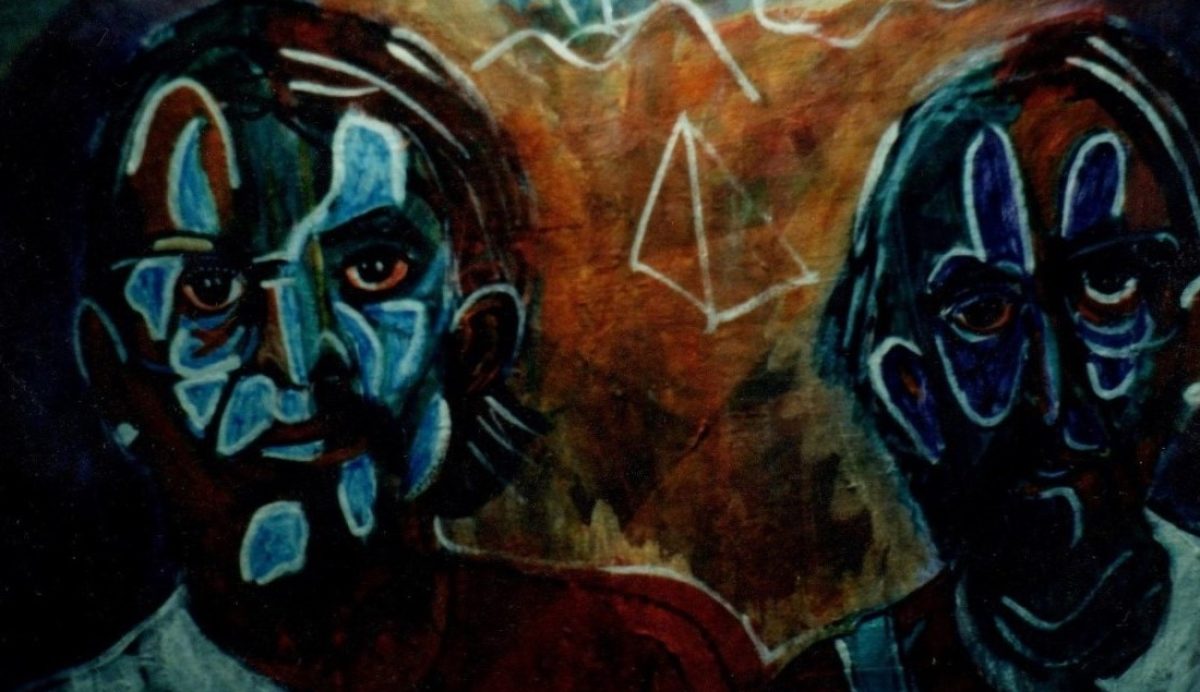
Published before (1955) in Great Britain, "My Bones And My Flute" (2015) was
meant to be an entertaining work of fiction, "a ghost story in the old fashioned
manner". Which might tempt old-fashioned readers to anticipate haunted houses,
cobwebs and creaking doors. In the hands of Guianese readers back then, it was
a boldly invented tale that scared the living daylights out of many.
In (pre-television) 1950s Guiana, reading habits were more empowering than what
passes as functional literacy today. Local folklore was filled with "jumbie" (ghost)
stories of headless horsemen, and unseen tormenting spirits just waiting for city
residents to step into the Guiana forest with its Amerindian guardian myths.
Pioneer Guianese poets and writers turned ________________________________
to the coastal and forest interiors for
phantasmagorical material and metaphors. MY BONES and MY FLUTE
Human mysteries were solvable and literary by
detectives like Sherlock Holmes and Watson
were the preferred gentlemen of reason on Edgar Mittelholzer
the job. (Mittelholzer's characters make
reference to the fiction of Edgar Allan Poe.) Peepal Tree Press Ltd.
England, 2015, 236 pgs
_________________________________
In preparing his manuscript Mittelholzer must have felt he had a winning formula
for overseas publishers: a Guianese ghost story with original genre elements: a
flute, a toxic "parchment", disoriented locals and a haunting colonial memory.
Something editors had probably never seen before.
The flute interrupts the daily routines of his main characters, the Nevinson
family whose leisure habits included listening to Debussy's "L'apres-midi d'un
faune" on a portable gramophone. It intrudes on the soirée small talk of Mrs.
Nevinson and her church folk, and the conversation of her adolescent daughter;
all of whom, the narrator notes, should remind readers of the pride and prejudice
"characters in a Jane Austen novel".
He explains that at first it sounded "as if someone were practicing a Debussy
scale and weren't getting it right." Later with widening appreciation he
identifies the sound as "a tuneless, wandering trickle of treble notes coming
out of the trees that stood so still in the night". A vagrant flute, then; baffling
but bearable; no great cause for concern.
But there's the "parchment". It belonged to an old Dutch planter, Mynheer
Voormans, who committed suicide after the insurrection in 1793 during which
he suffered "persecution" at the hands of rampaging "black wretches" once
under his plantation control.
To show he wasn't quite done, that plantation power (and its European source)
would not go away quietly for good, Mynheer Voorsman placed an avenging curse
on a parchment left behind. Touch it ̶ as a curious Mr. Nevinson did, preparing
to read ̶ and disharmonies would fall upon the rest of your sleep and waking life.
Mr. Nevinson, who manages the Berbice Timber and Balata Company, invites the
narrator, Milton Woodsley, to join his team of investigators (his wife and
daughter) as a kind of 'paranormal consultant'.
Readers get a sense of what in Mittelholzer's work would become a major theme
or pathology: skin colour and colonial privilege. The Nevinsons' near-white skin in
those days allowed them the ease to distance themselves from unwanted sights,
flute annoyance; and from most everyone else.
The narrator tells readers his skin was actually "olive"; that is, near near-white.
This partly explains his self-styling as the epitome of 1930s Guianese bohemian
"cool" ̶ an ambivalent fellow; even-tempered, quite pleased with himself; who
makes diary entries and sketches for paintings in spare moments.
His (authorial) descriptions of Guianese jungle creepiness should make today's
disabled (or disinterested) Guyanese writers sit up and take notice ̶ how far,
despite fears of rejections, Mittelholzer's confidence and talent had advanced in
1955: his exuberant evocations of colonial folkways and the Guianese natural
world.
~~
At some point in the narrative you might expect a panicky loss of composure,
and full-throat screams when the team of jungle sleuths first encounter the
cursing, walking spirits of the insurrection (accompanied, you'd imagine, by
phantom flutes orchestrating in the trees). Doesn't quite happen that way.
At Plantation Good de Vries they make contact with the locals; they learn of
mysterious new deaths and new flute playing; they return at night to share
deductions, and wake up the next day to a sun that "shone from a sky remotely
daubed and speckled with cirrus and cirro-stratus which dissolved as the morning
progressed ".
Mittelholzer prompts his narrator to deliver erudite Sherlock Holmes-like
analyses: "Let us suppose," he says, "that this Dutchman had left some strongly
psychic emanation of his personality ̶ some etheric magnetic effluvium ̶ within
the fibres of this manuscript…"
He maintains his rational perspective until, during a period of "waiting and
watching", as new harbingers (the sharp rustle of shrubs; a rank goatish smell;
a creaking hammock rope) gather to challenge human bravery, he observes
"a humped shadow-mass" entering the bedrooms of their jungle cottage.
(This is probably the scare moment best remembered by older Guianese
readers.)
Kenneth Ramchand (Professor Emeritus, University of the West Indies) has written
an Introduction to this edition ̶ 46 blowy, biblio-background-filling pages ̶ that
opens up the book's contents for scholarly partake. (Mittelholzer, he says, "wants
to leave you accepting the supernatural".) The cover blurb suggests, too, that the
novel has "serious things to say about the need to exorcise the crimes of slavery
and individual wickedness".
New readers may elect to stay the discourse (which could be sopor-inducing at
times); discover what the fuss was all about (dabbling in the dark arts could
unsettle bone complacency? ear plugs and face masks won't keep out dust
fall from the past?) Or simply jump the gap and ride along with Mittelholzer's
story-telling, his chapters gliding steamer-like up the Berbice river in the full-
bloom English registers of his day.
Either way the new British publisher of "My Bones and My Flute" ̶ Peepal Tree
Press, a home port for redemptive postcolonial opportunity ̶ would be
delighted if you put a serious handle on the book's reputation; get as comfortable
as verandah arrangements permit these days; at the very least give the story a
good old-fashioned try.
- Wyck Williams
 FARJOURNEY CARIBBEAN