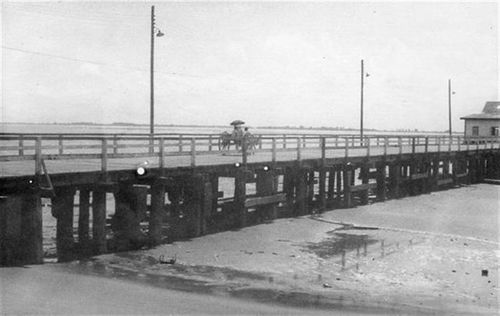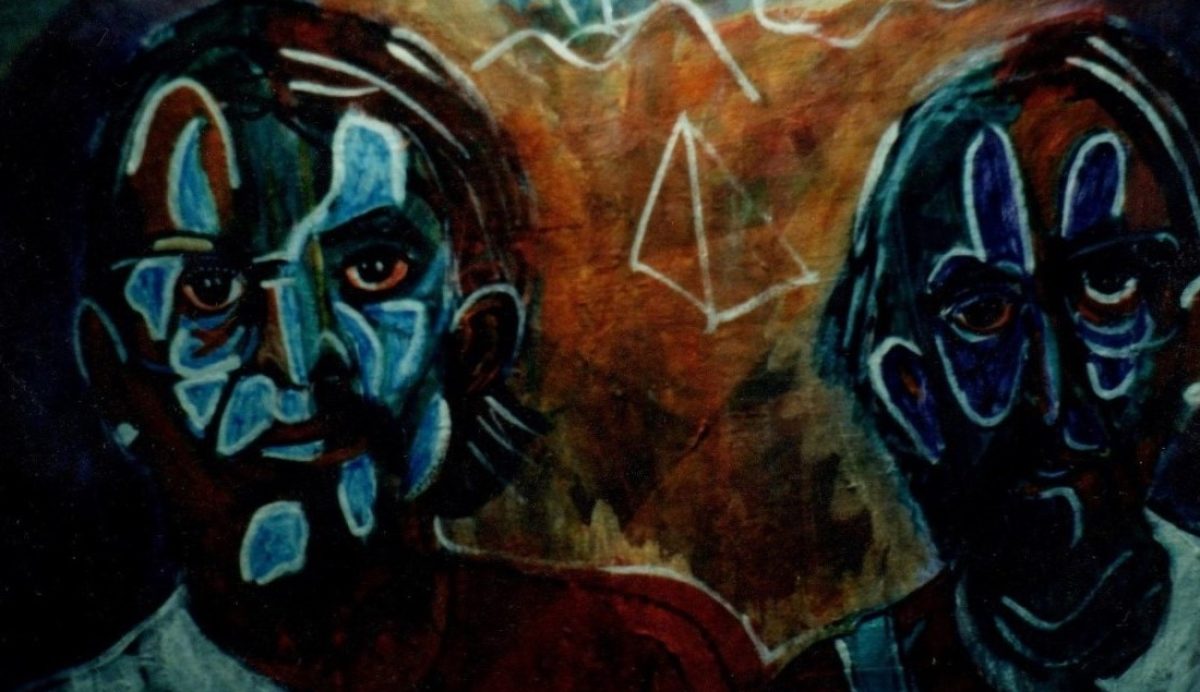
Review Article: ANATOMY OF A MARRIAGE: QUEENSTOWN, 1920s GUIANA


                 A newspaper columnist in British Guiana writing a Sunday column (February 1922)
                 makes the following statement:
“Georgetonians are of two kinds: those who live
                 in Queenstown and their
unfortunate neighbours who inhabit the remaining part
                 of our garden city.” That
newspaper columnist is a fictional character, and the
                 statement sets the stage
for Roy Heath’s first novel From the Heat of the Day
                 (1979).

                    The Queenstown part of the city was apparently not fully developed at the time.
                 From a home on Anira
Street you could hear the “incessant roaring of the waves
                 at floodtide” coming all the way from the seawall. Heath describes the
area as
                 “the unblemished district with its tall houses and blossoms on year
end, and
                 painted palings like flattened spears embracing yards darkened by
thick branches
                 of fruit trees.”

                 Residents hired gardeners to tend all              __________________________
                 those blosoms. New Garden street was
                 remarkable for its fine houses with large          FROM THE HEAT OF THE DAY
                 gardens in front of them, "in which they                        by
                 flourished roses and dahlias, their stalks                  ROY HEATH         
                 maintained by a staff to which they were           Persea Books, New York, 
                 tied". A pipeline sewage system was set                   1994, 150 pgs 
                 up in the early twenties foreseeing dignity     _____________________________
                 for the fortunate (and the end of posies
                 under the bed). Who could resist the dream of moving one day to the good life 
                 in Queenstown?                                               

                 Over decades, and rapidly since the 1990s, the beauty and social mores of the
                 city have deteriorated. Parcels of dilapidation and vacant grassy lots remain;
                 clogged drains and ocean threat defy permanent solution. New fire-proof struc-
                 tures tower over old places (neglected, and now eyesores); and new migrant
                 and vagrant occupiers have established a kind of pell-mell opportunity ethos – a
                 modus vivendi that tends to discourage the best in people.

                  On Peter Rose Street, jostling with once elegant homes, there’s an Auto
                  business, cars or vans packed tightly in a paved yard, with streamers flapping in
                  the wind across the road. Of interest, too, is a mosque, and a house turned into
                  an office for taxi service; and a fruit vendor’s shack set up at the entrance of an
                  Oronoque Street home.  

                  You could argue these are buoyant signs of post-Independence development in
                  the city; a messy kind of free for all residential zoning that disdains vestiges of
                  colonial order and respectability, even as a new moneyed and political class
                  finds finer prospects of manicured grass elsewhere.

                  Today minivans take short cuts through Queenstown’s narrow, quiet streets, 
                  honking to get the attention of evening strollers. And Bastiani (“the under-
                  taker” in Heath’s novel) and the smell of horse manure from the shed housing
                  his funeral carriages have long gone; his Forshaw Street business has been
                  replaced by a more upbeat entrepreneur selling bridal accessories.

                  But colonial Queenstown was where Roy Heath situated his main characters, 
                  Armstrong and his wife Gladys, in his novel  From the Heat of the Day;the
                 1920s Queenstown, its alleyways well-maintained by “men spraying the gutter-
                  water with cisterns of oil”.  Heath examines what happens when their marriage
                  falls apart in the Forshaw Street property they occupy.

                                                                   ≈ ↨ ≈       

                  After two years and two children, the flush of cohabitation worn off, a rift
                  develops in their relationship. Gladys Armstrong, a woman of healthy appetite, 
                  gentle, pledged “to breed and obey”, cannot understand what she’s doing
                  wrong. She must cope all of a sudden with “a wave of irritability" sweeping over
                  her husband, "that seemed to have no cause” .

                  Her husband is doing very well by colonial standards; he has gained promotion
                  to Post Master at the Georgetown post office. But he wraps himself up in uncom-
                  promising “silences”; and her attempts at conversation are cut short by
                  reminders, for instance, that he is "reading”; a hint at his interest in personal
                  development through knowledge. 

                  Beneath the newly-married love routines, Heath suggests their union was 
                  anchored in sexual passion. Gladys Armstrong recalls “the sweetness of cop- 
                  ulation which became for her the heart of their marriage”. What she finds
                  hard to take now is her husband's growing indifference, the cold bed at night.

                  Heath offers her no religious faith for solace and strength; she doesn’t consider
                  returning to her father’s home. She chooses a long-suffering wait for her
                  husband’s self-isolation to end, absorbing his “outbursts” and irritability.

                  Armstrong is somewhat mystified at the downturn of his marriage. Alert to his
                  wife's inadequacies, he finds fault with her “passivity”; he notices “her thighs
                  becoming thick, and her breasts flabby”. Libidinal urgencies overwhelm his
                  thinking, and most nights he stumbles home sullen and inebriated; sometimes he
                  slips into the servant’s room.

                  Armstrong's conversations with himself stir doubt and self-pity. He wonders if he
                  had married above his station. He had plucked Gladys from a well-to-do
                  household respected for its piano playing, embroidery and sketching. Maybe he
                  should have settled for a woman from his village in Agricola, “one of them big-
                  batty women with powerful build who kian’ tell a piano from a violin.”  He
                  suspects he’s being constantly “judged” by his wife’s family, viewed as some- 
                  one lacking an acceptable “background”.

                  To deepen his dilemma, the colony is plunged into economic turmoil. The 
                  collapse of the sugar market spreads fear among workers. There’s talk of
                  “retrenchment” (a word as frightening then as “recession” today) among Civil
                  Service employees. Armstrong hangs on, but his job security eventually falls
                  victim to budget cuts. Gladys responds with belt-tightening courage, holding
                  fast to her vows of love till death; and hoping her patience and sacrifices
                  would salve Armstrong's closed-off inner seething.      

                  Just when you wonder how long she can remain emotionally cut off from her
                  husband, Gladys Armstrong dies; and Heath's prose seizes the moment to turn
                  damp and maudlin. Pages dwell on and depict scenes of the husband’s grieving
                  disbelief: “the tears trickled through his fingers, down his chin to fall on to
                  his shirt.” Images of his remorse pile up, and after the funeral, “desolation
                  in his heart”.

                     Queenstown 003
                               [Roadway to Queenstown, Guyana 2009]

                                                                          
                                                                   ≈ ↨ ≈   

                  Heath is not a stern moralist, but the school-teacher side of him sometimes
                  nudges his narrator to offer "lessons" from tragedy. Readers might empathize
                  with Gladys, or feel dismay at her unwearied virtuous waiting. And Armstrong
                  comes across as a curiously tormented, though not wholly unfeeling family man;
                  certainly a notch or two above other men in the colony who in similar situations
                  might have ceased quickly to care.

                  Heath suggests, too, that marriage (of the average, or below average couple) 
                  in the colonial 20s was often no more than a simple self-serving arrangement
                  based on mutually accommodating roles and expectations, which did not  
                  include the possibility of change. As Gladys mused: “Things were just so. There
                  was a sky and an earth; there was the wind and the sun; and there was
                  marriage.”

                  Readers today might hope to find some causal insights in the novel, though there
                  was little public understanding then (and little now) of human impulse and 
                  intimacy. Heath chose simply to present the unraveling of a 1920s union in
                  stages: withdrawal, drinking, outbursts; stifled goodness, the misery of the
                  cold bed; the male impulse to roam outside the roost. Children, like molasses
                  from sweet cane, were often byproducts of unbridled passion, lucky to be 
                  cherished in extended family folk ways.

                  From the Heat of the Day is the first in a trilogy of novels. Old Georgetown
                  neighborhoods are faithfully restored in Heath’s patient (at times, plodding)
                  prose. Readers can follow the tribulations of the Armstrong children and their
                  grief and guilt-burdened father in the follow-up novels, One Generation and
                  Genetha.

                  Heath’s 1920s Guiana is in essence an imagined world, but many of the issues
                  explored in From the Heat of the Day could throw light on marital (and extra-
                  marital) relations in Guyana today  ̶  if you pay attention to distress signals
                  that sometimes breach community walls; if you listen to male talk about
                  copulation.   
                                                 – Wyck Williams

                 (A version of this review article was posted elsewhere in 2008)  


Review Article: USEFUL RETRO SPECS: ROY HEATH


                 Shadows Round the Moon (1990) the last book released by Guyanese   
                 author Roy Heath is described, perhaps for marketing purposes, as his
                 “Caribbean Memoirs”. In fact, its range is limited to Guyana, and what 
                 Heath delivers in his gently reflective prose are fond recollections of 24 years
                 growing up from boy to manhood. Readers hoping for insights into how his
                 writing career began might be disappointed.

                 Heath takes his time scaffolding these memoirs (at page 70 he’s not yet 10
                 years old). “Whilst still a small child” he writes, “ I always felt that I 
                 belonged to a group larger than the family…This feeling of belonging, the
                 notion of the larger family, was very strong and, as I know now, a source of
                 confidence in case of destitution.”  

                 His great grandfather came from the island of St Martins in the 1850s. His
                 foreparents, the de Weevers, settled and struggled on the coast, not on the
                 plantations. His father died when he was 2yrs old. Raised by a proud,
                 controlling mother he experienced a sort of internal migration, residing 
                 (then changing homes) in Agricola, Bagotstown, Queenstown.

                 There were August holiday visits to relatives in Essequibo (it’s as close as
                 Heath gets to author Wilson Harris’ territory, to encounters with “men in
                 quest of diamonds… [and] in pursuit of their souls”) and forays into Berbice
                 and the sugar estates. He comes close to VSNaipaul territory during a
                 stint as Clerk at the Crosbie Court, a special court held on Wednesdays for
                 Indian immigrants and their descendants. There he heard the disputes and
                 full disclosures of testifying family members, and gained insight into issues
                 and problems (domestic and psychological) that often dwelt unarticulated as
                 community elders chose veils and dissembling over transparency.

                 You could develop a profile of Heath as: a man of mixed-race origins, bred
                 and raised in Demerara, who somehow remained unaffected by colonial or
                 plantation depredations. In fact, so circumscribed was his living environment
                 readers will barely notice the overarching management role of the imperial
                 power in these memoirs.

                 There’s reference to the pervasive American presence at the Atkinson
                 (Timehri) airbase during World War II, and the social aftermath when the
                 war ended. The riots at Enmore were happening round about the time
                 Heath was getting ready to depart. He recalls “meetings of the People’s
                 Progressive Party under the lamplight at street corners”; though what stands
                 out in his memory at that time was “a reduction of daily funeral
                 processions”, which Heath attributes to a sustained DDT campaign to cleanse
                 the colony of malaria.

                 Heath’s fiction conveys none of that anguish of being transplanted and
                 culturally challenged. His feelings of “belonging”, he says, extended no
                 further back than his maternal grandparents. The major life hazards were
                 more indigenous and persistent – disease, poverty and destitution. As Heath
                 looks back, the reader discerns the importance of Georgetown and its
                 ordered environs in shaping his sensibility. It was in the city that an
                 apprehension of self “as separate from his family” would later develop.


 Img013 (Medium) (Large)

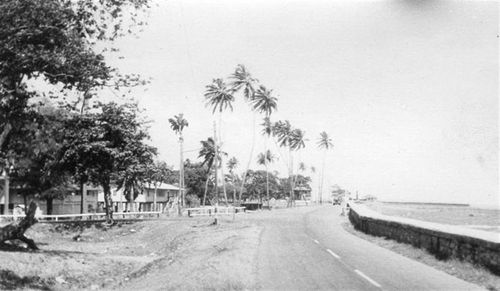
                                                                       [Georgetown Seawall, Guiana 1962]    

                 Shadows revisits his growth to young manhood and the influence of 
                 relatives and friends in those early years. Pivotal to his growth were a
                 multi-talented uncle, a Georgetown school friend; several self-made men
                 who took pride in what they knew; plus the streets he walked, the
                 neighborhoods he lived in and the ethnic-varied behaviours he observed
                 outside the city.
                
                 An intriguing revelation is his young man’s transgressive interest in city 
                 brothels and the forbidden pleasures of Tiger Bay. There is, too, a lingering
                 description of an affair – one of those “landmarks in my awareness” – with
                 the unhappy wife of a Forest Ranger too often away on duty in the bush.
                 These were probably the earliest indications of Heath’s restless, indepen-
                 dent will in a time of fluid (if puritanical) proprieties.

                 The book ends with his departure for England. His reasons for leaving are
                 familiar ones: intense frustration, the futureless environment of his civil
                 service job, “the stifling rule of parochial norms”. When he gets to England
                 unknown potentials would emerge transforming his colonial origins into what
                 he later became: a multi-faceted individual who carried inside him not just
                 “dreams”, but embryonic talents that must have been quietly evolving.

                 He recalls the friendly advice of a Clerk at the Crosbie Courts (a Mr. U)
                 who said to him one day “Once we find a solution to our material wants
                 we will have penetrated the forest only to be faced with the desert”.  
                 There’s a modesty (at least that resistant colonial strain of modesty) and an
                 adjustable serenity about the Roy Heath narrative. For all his achievements
                 (novelist,teacher, poet, fluent in
 French and German, barrister-at-law) 
                 he may have decided to pitch his tent closer to the forest (with fewer
                 risks); choosing difficult but reachable goals over trailblazing aspirations;
                 and settling as a writer for an elegantly mannered prose more likely to
                 engage ordinary readers than attract the vocabulary of scholarship.

                 But in his pursuit of migrant success how, you might still wonder, did the
                 possibilty of a writer’s vocation emerge? How did a man from the colonies
                 fire up those engines, sustain the focus to produce eight respectfully 
                 received works of fiction?

  Img014 (Small) (Medium) (Large)                                                        [Leguan Stelling, Guiana 1962]
 

                 His first novel was published in 1974, almost 20 years after he arrived in
                 England. This discovery of creative purpose is barely touched on in his
                 memoirs, and there’s little evidence of its genesis in Guyana. In the 1930s,
                 he says, English was the subject that attracted all the unqualified teachers. 

                 Books were not part of his gregarious youth; school rituals he found boring;
                 and though he lived on the fringe of that tradition of public story telling
                 among the creoles, he would make a self-conscious effort later – in his 20s
                 “amidst a growing torment about my place [in the world]” – to acquire “an
                 adequate fund of words” with which to set off for fresh start possibilities in
                 England. 

                 His novels, he points out, were inspired by the exceptional circumstances of
                 his personal life. His fiction characters are grounded in observations of his
                 colonial neighbourhoods and shaped by the reading habits he acquired in
                 England. Heath worked within himself, it seems, maintaining a low visibility 
                 among other migrant (Caribbean) writers, as if writing was not a profession
                 to which he naturally “belonged”.

                 Shadows Round The Moon offers spare glimpses of Guyana’s social history
                 back in the days. There are references to authoritarian fathers (“those
                 embodiments of terror”); the 1930s “public morality” that allowed the
                 disciplining of children by concerned neighbors; the hardships and indignities
                 of colonial existence within which Guianese struggled day by day to eke out
                 memoir-worthy lives.

                 In that simpler time when generalizations were admissible, Heath notes, in
                 reference to East Indians, “the powerful undertow behind their passive
                 conduct and outward display of prayer flags”. And the village of Agricola, he
                 says, was curiously divided: nearer the Public Road a class of strivers – school 
                 teachers, village council employees, policemen, dressmakers – but deep in 
                 the backland areas, smaller houses and subsistent plots, and “the sound of 
                 drums with a forbidden beat”, heard at night and feared by the children. 


              Img015 (Large)
                                                   [Parika Wharf, Guiana1962]

                                                   
                 Georgetown then was a society of blossoming prejudice and hidden taboos;
                 race jostling with race but finding civil accommodation; where a mother
                 from a family “with background” would guard her daughter against 
                 undesirables (“I don’t allow her to mix.”) But harsh material deprivation 
                 brought on by a 30% unemployment among working people) “threw up 
                 characteristic relationships of dependency”, which then nurtured the
                 often noted (and easily exploited) Guyanese generosity of spirit.

                 Shadows Round the Moon brings pleasing closure to the unspectacular yet 
                 very productive writing career of author Roy Heath. As a model of personal
                 development his coming-of-age-and-leaving-home narrative might inspire
                 free searching individuals whose lives creep by on dismal days fighting off
                 the omens of VSNaipaul"s "futility".

                 As the Guyanese nation unwittingly rolls back its future to the plantation
                 years when a one-eyed, intransigent directorate commissioned obedience,
                 punished difference, while a sulking carelessness bided time, readers might
                 want to look again at Heath’s book of memories: his accounts of colonial
                 frictions and behaviours still active in our nation’s organism: the old fears
                 (destitution, dead ends), the old ambivalence about "belonging"; and (when
                 the spirit senses prison or wilderness in the air) the familiar recourse to
                 flight and fresh purpose elsewhere.

                 Book Reviewed: Shadows Round The Moon: Roy Heath: Flamingo: London,
                1990, 254 pages. (A version of this article appeared elsewhere in 2008)