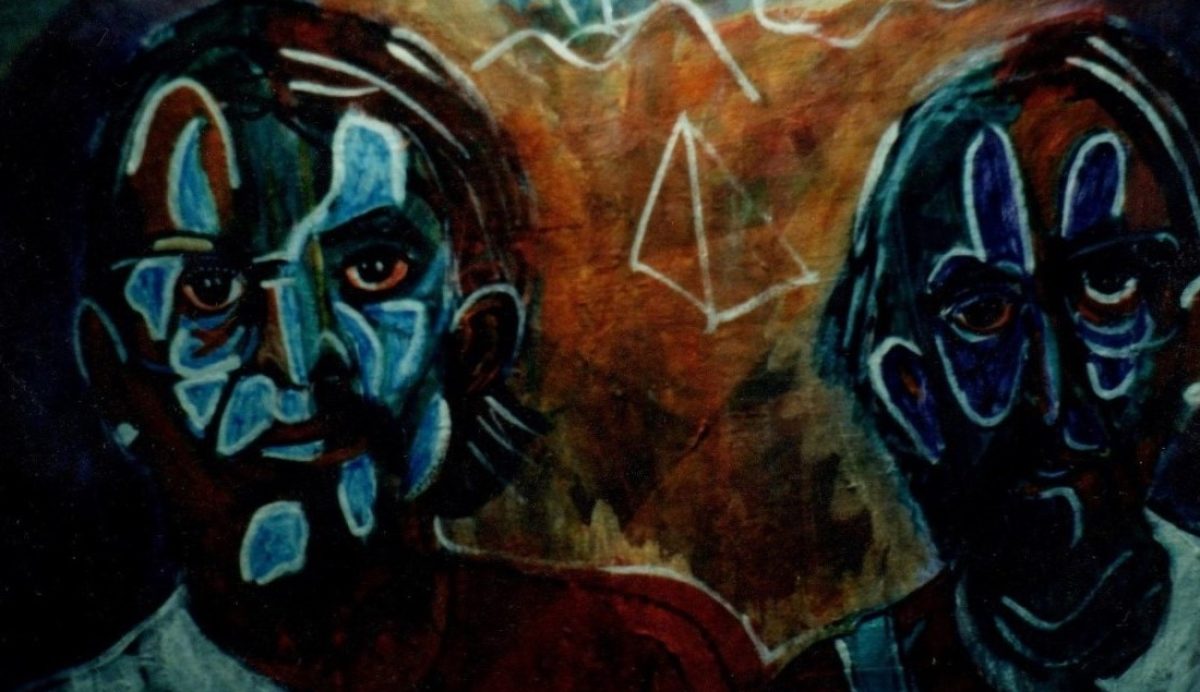
Shadows Round the Moon (1990) the last book released by Guyanese
author Roy Heath is described, perhaps for marketing purposes, as his
“Caribbean Memoirs”. In fact, its range is limited to Guyana, and what
Heath delivers in his gently reflective prose are fond recollections of 24 years
growing up from boy to manhood. Readers hoping for insights into how his
writing career began might be disappointed.
Heath takes his time scaffolding these memoirs (at page 70 he’s not yet 10
years old). “Whilst still a small child” he writes, “ I always felt that I
belonged to a group larger than the family…This feeling of belonging, the
notion of the larger family, was very strong and, as I know now, a source of
confidence in case of destitution.”
His great grandfather came from the island of St Martins in the 1850s. His
foreparents, the de Weevers, settled and struggled on the coast, not on the
plantations. His father died when he was 2yrs old. Raised by a proud,
controlling mother he experienced a sort of internal migration, residing
(then changing homes) in Agricola, Bagotstown, Queenstown.
There were August holiday visits to relatives in Essequibo (it’s as close as
Heath gets to author Wilson Harris’ territory, to encounters with “men in
quest of diamonds… [and] in pursuit of their souls”) and forays into Berbice
and the sugar estates. He comes close to VSNaipaul territory during a
stint as Clerk at the Crosbie Court, a special court held on Wednesdays for
Indian immigrants and their descendants. There he heard the disputes and
full disclosures of testifying family members, and gained insight into issues
and problems (domestic and psychological) that often dwelt unarticulated as
community elders chose veils and dissembling over transparency.
You could develop a profile of Heath as: a man of mixed-race origins, bred
and raised in Demerara, who somehow remained unaffected by colonial or
plantation depredations. In fact, so circumscribed was his living environment
readers will barely notice the overarching management role of the imperial
power in these memoirs.
There’s reference to the pervasive American presence at the Atkinson
(Timehri) airbase during World War II, and the social aftermath when the
war ended. The riots at Enmore were happening round about the time
Heath was getting ready to depart. He recalls “meetings of the People’s
Progressive Party under the lamplight at street corners”; though what stands
out in his memory at that time was “a reduction of daily funeral
processions”, which Heath attributes to a sustained DDT campaign to cleanse
the colony of malaria.
Heath’s fiction conveys none of that anguish of being transplanted and
culturally challenged. His feelings of “belonging”, he says, extended no
further back than his maternal grandparents. The major life hazards were
more indigenous and persistent – disease, poverty and destitution. As Heath
looks back, the reader discerns the importance of Georgetown and its
ordered environs in shaping his sensibility. It was in the city that an
apprehension of self “as separate from his family” would later develop.
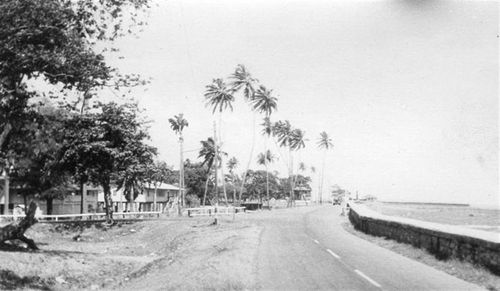
[Georgetown Seawall, Guiana 1962]
Shadows revisits his growth to young manhood and the influence of
relatives and friends in those early years. Pivotal to his growth were a
multi-talented uncle, a Georgetown school friend; several self-made men
who took pride in what they knew; plus the streets he walked, the
neighborhoods he lived in and the ethnic-varied behaviours he observed
outside the city.
An intriguing revelation is his young man’s transgressive interest in city
brothels and the forbidden pleasures of Tiger Bay. There is, too, a lingering
description of an affair – one of those “landmarks in my awareness” – with
the unhappy wife of a Forest Ranger too often away on duty in the bush.
These were probably the earliest indications of Heath’s restless, indepen-
dent will in a time of fluid (if puritanical) proprieties.
The book ends with his departure for England. His reasons for leaving are
familiar ones: intense frustration, the futureless environment of his civil
service job, “the stifling rule of parochial norms”. When he gets to England
unknown potentials would emerge transforming his colonial origins into what
he later became: a multi-faceted individual who carried inside him not just
“dreams”, but embryonic talents that must have been quietly evolving.
He recalls the friendly advice of a Clerk at the Crosbie Courts (a Mr. U)
who said to him one day “Once we find a solution to our material wants
we will have penetrated the forest only to be faced with the desert”.
There’s a modesty (at least that resistant colonial strain of modesty) and an
adjustable serenity about the Roy Heath narrative. For all his achievements
(novelist,teacher, poet, fluent in French and German, barrister-at-law)
he may have decided to pitch his tent closer to the forest (with fewer
risks); choosing difficult but reachable goals over trailblazing aspirations;
and settling as a writer for an elegantly mannered prose more likely to
engage ordinary readers than attract the vocabulary of scholarship.
But in his pursuit of migrant success how, you might still wonder, did the
possibilty of a writer’s vocation emerge? How did a man from the colonies
fire up those engines, sustain the focus to produce eight respectfully
received works of fiction?
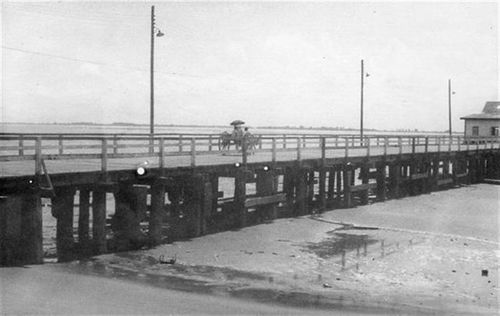 [Leguan Stelling, Guiana 1962]
His first novel was published in 1974, almost 20 years after he arrived in
England. This discovery of creative purpose is barely touched on in his
memoirs, and there’s little evidence of its genesis in Guyana. In the 1930s,
he says, English was the subject that attracted all the unqualified teachers.
Books were not part of his gregarious youth; school rituals he found boring;
and though he lived on the fringe of that tradition of public story telling
among the creoles, he would make a self-conscious effort later – in his 20s
“amidst a growing torment about my place [in the world]” – to acquire “an
adequate fund of words” with which to set off for fresh start possibilities in
England.
His novels, he points out, were inspired by the exceptional circumstances of
his personal life. His fiction characters are grounded in observations of his
colonial neighbourhoods and shaped by the reading habits he acquired in
England. Heath worked within himself, it seems, maintaining a low visibility
among other migrant (Caribbean) writers, as if writing was not a profession
to which he naturally “belonged”.
Shadows Round The Moon offers spare glimpses of Guyana’s social history
back in the days. There are references to authoritarian fathers (“those
embodiments of terror”); the 1930s “public morality” that allowed the
disciplining of children by concerned neighbors; the hardships and indignities
of colonial existence within which Guianese struggled day by day to eke out
memoir-worthy lives.
In that simpler time when generalizations were admissible, Heath notes, in
reference to East Indians, “the powerful undertow behind their passive
conduct and outward display of prayer flags”. And the village of Agricola, he
says, was curiously divided: nearer the Public Road a class of strivers – school
teachers, village council employees, policemen, dressmakers – but deep in
the backland areas, smaller houses and subsistent plots, and “the sound of
drums with a forbidden beat”, heard at night and feared by the children.

[Parika Wharf, Guiana1962]
Georgetown then was a society of blossoming prejudice and hidden taboos;
race jostling with race but finding civil accommodation; where a mother
from a family “with background” would guard her daughter against
undesirables (“I don’t allow her to mix.”) But harsh material deprivation
brought on by a 30% unemployment among working people) “threw up
characteristic relationships of dependency”, which then nurtured the
often noted (and easily exploited) Guyanese generosity of spirit.
Shadows Round the Moon brings pleasing closure to the unspectacular yet
very productive writing career of author Roy Heath. As a model of personal
development his coming-of-age-and-leaving-home narrative might inspire
free searching individuals whose lives creep by on dismal days fighting off
the omens of VSNaipaul"s "futility".
As the Guyanese nation unwittingly rolls back its future to the plantation
years when a one-eyed, intransigent directorate commissioned obedience,
punished difference, while a sulking carelessness bided time, readers might
want to look again at Heath’s book of memories: his accounts of colonial
frictions and behaviours still active in our nation’s organism: the old fears
(destitution, dead ends), the old ambivalence about "belonging"; and (when
the spirit senses prison or wilderness in the air) the familiar recourse to
flight and fresh purpose elsewhere.
Book Reviewed: Shadows Round The Moon: Roy Heath: Flamingo: London,
1990, 254 pages. (A version of this article appeared elsewhere in 2008)
 FARJOURNEY CARIBBEAN