NY SLIDE 6.7: ALL YOU DESIRE, MR. BREBNOR


                 Being friendly with students had its rewards and boundaries.
“Look all you
                 want, don’t touch,” McCraggen in Phys. Ed would say. “And if you
touch, don’t
                 roam.” Which was alright for him to say, teaching in the gym. He’d
kiss the
                 Hispanic girls on both cheeks, the Spanish way; he’d hug them and
squeeze
                 them, and heaven knows what else he did – and got away with.

                     Last year in the Regents test room this girl Theresa Santos
– she was a senior
                 now, getting ready for college life – caught him,
Mr. Brebnor, looking. She
                 had this short skirt on, you could see right up the canyon of her thighs. She
                 caught him
sneaking a peek.

                 His eyes sort of swept past her body like the beam of a
search light, and there,
                 like a breach in the fence of a POW camp – her open
thighs. She looked up at
                 him, smiled and crossed her legs. The search light
moved on. It circled and
                 passed her way again, and – holy camoli! – the breach was there again.

                    Now she was writing furiously, head bowed with a strange
inspired concen- 
                 tration, as if the answers to all the questions on the page had started
flooding
                 her brain; she had no time for ladylike proprieties; she had to
put pen to
                 paper fast.

                 The heads of the other students were bowed over their
papers. Brebnor peeked.
                 His eyes popped alert in his skull and became a
hairy-legged insect. It crawled
                 up the girl’s legs, over her knees, it started down those
thighs. Not once did
                 Theresa Santos flinch; she chewed her gum a little harder,
but not one muscle
                 of awareness twitched on her thighs.

                      At some point she must have felt a frisson of impropriety,
prompting her to
                 cross her legs; he looked away with one fast beat of his hot
heart.

                 That was last year in January. Here, now, so far, nothing
quite as world-
                 upturning  happened. Just
dark thoughts - as yet to slide into a zone of
                 depression, but all the same
dark, angry dark thoughts. Like the tardiness of
                 the teacher who should have relieved
him long minutes ago!

                      He heard her shoes clack
clacking
up the hallway. He started gathering his
                 things for an abrupt hand
over and wordless exit. He didn’t look up to see who
                 it was; he knew who it was,
from the footsteps in all haste, apologizing for
                 being late. He knew the old
hag face, the fading, single picket fence of the
                 body, the short skirts she wore,
too short, despite the firm, youngish legs. No
                 man would want to hold her in
his arms, he thought; but the legs merited,
                 maybe, a quick second look.

                           (from "Ah Mikhail, O Fidel"", a novel by N.D.Williams, 2001)


ISLAND GET AWAY COOL MOVES ON


                       The flight plane left no vapor trail, her sister
                     waived, sighting street costumes in sky gray blue; 
                     not taking on the baggage handlers who’d catch her 
                     breezy skirt in the shutter of an eye any Republic day; 
                     then likki ting, likki ting, till the next out bounders gather.

                          Everybody stands, pulling down carry ons; bend, 
                     twist, cabin door waiting 1st check. Sitting, sensible
                     you might seem disabled, unfit to race; breath 
                     holding in place. How to move – borne bred
                     braised from bati mamzelle, douens on lime? 
                     done with hot oil pan, kilkitay off line?

                          Your bags on the carousel need identity marks, 
                     otherwise you could spend all day watching 
                     your belongings go round and back. At Arrivals, not
                     kindred eyes in hoodies, muttering, seem to dress you 
                     up and down – you’re never Whom they’re expecting.

                     Wait, is that you?  knit hat red, cheeks peckish
                     smooth touch cold, all set to pinch?  from blood thin
                     lips, How are ya?  puffs back at you. O, the permanence
                     new in the hug hello, new fat embedding.

                     Alone in the basement where folks let you bide, 
                     bundle loose near the storm door; kindness will gust 
                     then settle for passing wind. Turn, toss the cicadas,
                     Aedes of Aegypt perforating sleep; sink
                     marks on dreams you fleshed. Log in to night
                     engine noise, snow silent coating.

                                                                       You’ll wake to revelations –
                      old poet hands love stroking start up thighs; lift that
                           veil, heart that steel. When you’re clear to launch, step
                           over Ave Marias passed out in the lobby, mementos
                           not saved. Cross the street – see at the corner?  a store
                      front of Eve white roses, like island immortelles 
                      but with price tag?  Take the bus there to a far state.

                      They’ll see you coming miles away, like twilight      
                      hills on fire; steady – Set your mode? – scratch burn

                           through their frost – curve up ahead – Crow
                           scare power signs, bald eagles gripping the wires 
                           and – there, there, see? – you’re in – swing
                           or miss, your stem’s in play; breathe blue
                              particles of air,  
                      pitch your world, work at the who you are.

                                                                                             – W.W.      


                        FATES 
    
                       
We are of our times as peas are of the pod
                       
which they must quit, green and sweet to be devoured
                        by Time, or dry and eager to be sprouted
                       
in the hearts of infants yet to be conceived.
                   
                               (from “Within the Wind” ©  Brian Chan )


NY SLIDE 6.6: BLUES FOR MR. BREBNOR


                 Brebnor was standing at the window of a classroom on the third floor, a
                 proctor for the state Regents Math exam; his mind stretched out on a nail
                 bed of introspection.

                 So Bob Meier had gone on sabbatical; he hadn’t said a word about it to his
                 buddies, except that asshole Jim Lightbody, who seemed determined these
                 days to sound upbeat and cheery about everything; from the proposal to
                 close of the school, to his crumbling marriage. Asshole.

                     The man’s marriage was on the rocks, on the rocks; and there he was 
                 making stupid little jokes, telling the carpool that his daughter, a high school
                 senior, had decided to drop out. She was dropping out, from a school in
                 Westchester; a good school, with opportunities and advantages, clubs and
                 advanced courses, and nurturing sports programs. You’d think they’d have no
                 drop out problems out there; you’d think a girl, whose father was a teacher,
                
would have no reason to drop out.
And what did Lightbody, the loving
                 father, say to her? Go ahead, drop out, if that’s what you want to do.

                 He disclosed all this on a Monday. Lightbody’s cheeks and chin always had a
                 freshly shaven look on Monday. And there he was, all clean and smooth,
                 bringing the carpool up to date about his family situation, like it was
                 someone else’s family situation: “So she says to me, If you guys break up
                 don’t expect me to stay with either of you
. So I said, Fine, fine. But
                 where are you going to go
? And she says, I’ll move in with my boyfriend
                 Move in with her boyfriend!… So I said, Fine, fine, do whatever you want.        

                 Sharing this very private family…mess…that Monday morning with the carpool.
                 With Ghansam, for chrissakes! He didn’t care if Ghansam found out. The man
                      was clearly in need of professional help. One of us should have told him that,
                 instead of just going along with his jaunty…crapulous…crap.

                 January was the most difficult time of year for Brebnor. So many issues floating
                 up to the ceiling like helium balloons. Always in January. First month of the new
                 year, end of the semester. Nothing but work, piles of
paperwork; final grades,
                 all kinds of pressure. And always the air escaping
from those helium balloons
                 leaving him acid with mistrust and resentment.

                 Here he was watching over the bowed heads of ill-prepared students taking the
                 State Regents exam; grappling with questions they had
little hope of answering.

                      He was losing it – the love of teaching, the passion he’d started out with never
                 mind the low salary. He’d begun to look back, regretting
missed opportunities,
                 forks in the road not taken. He was thinking about his
teaching schedule for the
                 next semester, the school set to close at the end;
the years he had left before
                 retirement.

                     And his marriage – his wife was refusing to have sex with
him. Going on two
                 weeks now, no sex. Not tonight. No,
I’m too tired.
And all because he’d
                 forgotten their wedding
anniversary. Forgotten to take her out to dinner. First
                 time this had ever
happened, and suddenly she’s acting peculiar. You’d think
                 she’d understand
after all these years living with him, sleeping with him.

                 Of course, there was more to it than that. Things weren’t going too well
                 between them – little things, stupid petty things; snappish
arguments at dinner,
                 sullen shoulders in bed.

                 He went to the door and looked up and down the hallway. He wasn’t allowed to
                 sit. They didn’t want you sitting. It didn’t make a fucking
difference standing or
                 sitting, but the assistant principal walked in on him
the other day and made a
                 big deal about it; telling him there might be Board of
Education people in the
                 building monitoring how the exams were being proctored;
looking for small
                 things, like teachers standing, not reading the New York Times at the desk.
                 Little shitty
things. Like remembering to write on the board at 10 minute
                 intervals
how much time had elapsed.

                 He looked at his watch. He should have been relieved 5 minutes ago by
                 someone. Some teachers took their sweet time showing up for
relief
                 assignments, and the assistant principals did nothing about that! He
decided
                 not to stand at the door, scowling, evidently waiting to be relieved.
He went
                 back to the window. 

                   (from “Ah Mikhail, O Fidel!”, a novel by N.D.Williams, 2001)


Review Article: USEFUL RETRO SPECS: ROY HEATH


                 Shadows Round the Moon (1990) the last book released by Guyanese   
                 author Roy Heath is described, perhaps for marketing purposes, as his
                 “Caribbean Memoirs”. In fact, its range is limited to Guyana, and what 
                 Heath delivers in his gently reflective prose are fond recollections of 24 years
                 growing up from boy to manhood. Readers hoping for insights into how his
                 writing career began might be disappointed.

                 Heath takes his time scaffolding these memoirs (at page 70 he’s not yet 10
                 years old). “Whilst still a small child” he writes, “ I always felt that I 
                 belonged to a group larger than the family…This feeling of belonging, the
                 notion of the larger family, was very strong and, as I know now, a source of
                 confidence in case of destitution.”  

                 His great grandfather came from the island of St Martins in the 1850s. His
                 foreparents, the de Weevers, settled and struggled on the coast, not on the
                 plantations. His father died when he was 2yrs old. Raised by a proud,
                 controlling mother he experienced a sort of internal migration, residing 
                 (then changing homes) in Agricola, Bagotstown, Queenstown.

                 There were August holiday visits to relatives in Essequibo (it’s as close as
                 Heath gets to author Wilson Harris’ territory, to encounters with “men in
                 quest of diamonds… [and] in pursuit of their souls”) and forays into Berbice
                 and the sugar estates. He comes close to VSNaipaul territory during a
                 stint as Clerk at the Crosbie Court, a special court held on Wednesdays for
                 Indian immigrants and their descendants. There he heard the disputes and
                 full disclosures of testifying family members, and gained insight into issues
                 and problems (domestic and psychological) that often dwelt unarticulated as
                 community elders chose veils and dissembling over transparency.

                 You could develop a profile of Heath as: a man of mixed-race origins, bred
                 and raised in Demerara, who somehow remained unaffected by colonial or
                 plantation depredations. In fact, so circumscribed was his living environment
                 readers will barely notice the overarching management role of the imperial
                 power in these memoirs.

                 There’s reference to the pervasive American presence at the Atkinson
                 (Timehri) airbase during World War II, and the social aftermath when the
                 war ended. The riots at Enmore were happening round about the time
                 Heath was getting ready to depart. He recalls “meetings of the People’s
                 Progressive Party under the lamplight at street corners”; though what stands
                 out in his memory at that time was “a reduction of daily funeral
                 processions”, which Heath attributes to a sustained DDT campaign to cleanse
                 the colony of malaria.

                 Heath’s fiction conveys none of that anguish of being transplanted and
                 culturally challenged. His feelings of “belonging”, he says, extended no
                 further back than his maternal grandparents. The major life hazards were
                 more indigenous and persistent – disease, poverty and destitution. As Heath
                 looks back, the reader discerns the importance of Georgetown and its
                 ordered environs in shaping his sensibility. It was in the city that an
                 apprehension of self “as separate from his family” would later develop.


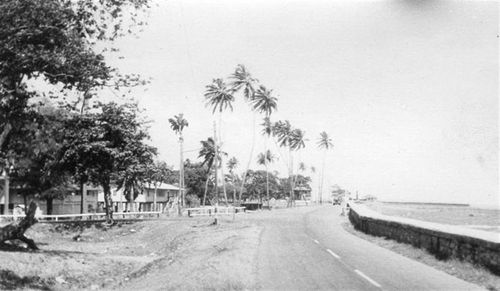
 Img013 (Medium) (Large)

                                                                       [Georgetown Seawall, Guiana 1962]    

                 Shadows revisits his growth to young manhood and the influence of 
                 relatives and friends in those early years. Pivotal to his growth were a
                 multi-talented uncle, a Georgetown school friend; several self-made men
                 who took pride in what they knew; plus the streets he walked, the
                 neighborhoods he lived in and the ethnic-varied behaviours he observed
                 outside the city.
                
                 An intriguing revelation is his young man’s transgressive interest in city 
                 brothels and the forbidden pleasures of Tiger Bay. There is, too, a lingering
                 description of an affair – one of those “landmarks in my awareness” – with
                 the unhappy wife of a Forest Ranger too often away on duty in the bush.
                 These were probably the earliest indications of Heath’s restless, indepen-
                 dent will in a time of fluid (if puritanical) proprieties.

                 The book ends with his departure for England. His reasons for leaving are
                 familiar ones: intense frustration, the futureless environment of his civil
                 service job, “the stifling rule of parochial norms”. When he gets to England
                 unknown potentials would emerge transforming his colonial origins into what
                 he later became: a multi-faceted individual who carried inside him not just
                 “dreams”, but embryonic talents that must have been quietly evolving.

                 He recalls the friendly advice of a Clerk at the Crosbie Courts (a Mr. U)
                 who said to him one day “Once we find a solution to our material wants
                 we will have penetrated the forest only to be faced with the desert”.  
                 There’s a modesty (at least that resistant colonial strain of modesty) and an
                 adjustable serenity about the Roy Heath narrative. For all his achievements
                 (novelist,teacher, poet, fluent in
 French and German, barrister-at-law) 
                 he may have decided to pitch his tent closer to the forest (with fewer
                 risks); choosing difficult but reachable goals over trailblazing aspirations;
                 and settling as a writer for an elegantly mannered prose more likely to
                 engage ordinary readers than attract the vocabulary of scholarship.

                 But in his pursuit of migrant success how, you might still wonder, did the
                 possibilty of a writer’s vocation emerge? How did a man from the colonies
                 fire up those engines, sustain the focus to produce eight respectfully 
                 received works of fiction?

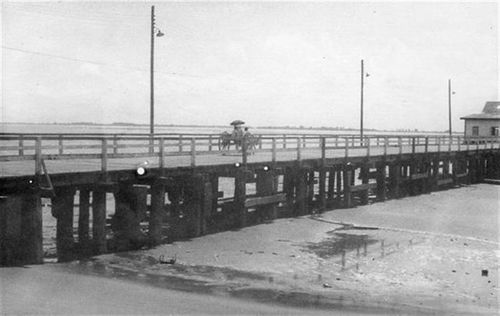
  Img014 (Small) (Medium) (Large)                                                        [Leguan Stelling, Guiana 1962]
 

                 His first novel was published in 1974, almost 20 years after he arrived in
                 England. This discovery of creative purpose is barely touched on in his
                 memoirs, and there’s little evidence of its genesis in Guyana. In the 1930s,
                 he says, English was the subject that attracted all the unqualified teachers. 

                 Books were not part of his gregarious youth; school rituals he found boring;
                 and though he lived on the fringe of that tradition of public story telling
                 among the creoles, he would make a self-conscious effort later – in his 20s
                 “amidst a growing torment about my place [in the world]” – to acquire “an
                 adequate fund of words” with which to set off for fresh start possibilities in
                 England. 

                 His novels, he points out, were inspired by the exceptional circumstances of
                 his personal life. His fiction characters are grounded in observations of his
                 colonial neighbourhoods and shaped by the reading habits he acquired in
                 England. Heath worked within himself, it seems, maintaining a low visibility 
                 among other migrant (Caribbean) writers, as if writing was not a profession
                 to which he naturally “belonged”.

                 Shadows Round The Moon offers spare glimpses of Guyana’s social history
                 back in the days. There are references to authoritarian fathers (“those
                 embodiments of terror”); the 1930s “public morality” that allowed the
                 disciplining of children by concerned neighbors; the hardships and indignities
                 of colonial existence within which Guianese struggled day by day to eke out
                 memoir-worthy lives.

                 In that simpler time when generalizations were admissible, Heath notes, in
                 reference to East Indians, “the powerful undertow behind their passive
                 conduct and outward display of prayer flags”. And the village of Agricola, he
                 says, was curiously divided: nearer the Public Road a class of strivers – school 
                 teachers, village council employees, policemen, dressmakers – but deep in 
                 the backland areas, smaller houses and subsistent plots, and “the sound of 
                 drums with a forbidden beat”, heard at night and feared by the children. 


              Img015 (Large)
                                                   [Parika Wharf, Guiana1962]

                                                   
                 Georgetown then was a society of blossoming prejudice and hidden taboos;
                 race jostling with race but finding civil accommodation; where a mother
                 from a family “with background” would guard her daughter against 
                 undesirables (“I don’t allow her to mix.”) But harsh material deprivation 
                 brought on by a 30% unemployment among working people) “threw up 
                 characteristic relationships of dependency”, which then nurtured the
                 often noted (and easily exploited) Guyanese generosity of spirit.

                 Shadows Round the Moon brings pleasing closure to the unspectacular yet 
                 very productive writing career of author Roy Heath. As a model of personal
                 development his coming-of-age-and-leaving-home narrative might inspire
                 free searching individuals whose lives creep by on dismal days fighting off
                 the omens of VSNaipaul"s "futility".

                 As the Guyanese nation unwittingly rolls back its future to the plantation
                 years when a one-eyed, intransigent directorate commissioned obedience,
                 punished difference, while a sulking carelessness bided time, readers might
                 want to look again at Heath’s book of memories: his accounts of colonial
                 frictions and behaviours still active in our nation’s organism: the old fears
                 (destitution, dead ends), the old ambivalence about "belonging"; and (when
                 the spirit senses prison or wilderness in the air) the familiar recourse to
                 flight and fresh purpose elsewhere.

                 Book Reviewed: Shadows Round The Moon: Roy Heath: Flamingo: London,
                1990, 254 pages. (A version of this article appeared elsewhere in 2008)


NY SLIDE 6.5: WHAT’S GOING ON


                The future of John Wayne Cotter H.S., clouded with rumour, made more
                frightening by speculation, now loomed with certainty once they’d turned into
                the new year. Everyone went about their tasks with strained or surly temper,
                sensing that the Spring semester could very well be their last together.

                The ripples of change had already touched the carpool. Jim Lightbody tried to 
                put a bolder than usual face on things. Bob Meir was going on sabbatical.  
                Apparently he’d told only Lightbody about it. “Didn’t he tell you?”  Lightbody 
                asked the others, a little chagrined he was the only one who knew. “I’m sure
                he mentioned it some time.” Meir wasn’t with them that day.

                “I see you’re putting on weight in certain quarters,” Ghansam said, patting 
                Lightbody on the stomach. Lightbody glanced at his stomach and made a
                dismissive noise, not quite ready to change the subject.


                “So what’s he going to do?” Brebnor asked.

                “Well, he has to take nine graduate credits…I think he’s going to St Joseph’s
                College, in Westchester.”
 
               
“Why is he going on sabbatical now?” Ghansam wanted to know.

                “That’s what everybody does. You take your sabbatical in the spring, it flows
                right into the summer holidays, you come back in September…”

                     “Nine education credits…that’s like going back to college again…which is why
                 I haven’t taken sabbatical. I’ve had enough of college courses,” Brebnor said.

                “It’s not that bad. You take the courses that are related to your field,”
                 Lightbody said.

                “What’s Bob going to do? Did he tell you?”

                “I think he said Human Sexuality…”

                “…that should spice up his marriage!”

                “…and the History of Television

                “Sexuality and television,” Ghansan gave a short laugh. “But wouldn’t that 
                 raise a few eyebrows at the Board of Education?”


                The school was closed for Martin Luther King Day, which fell near the end of 
                the fall semester. It seemed not a good time to celebrate King or any slain
                hero; teachers were digging out from under mounds of paperwork, final
                grades had to be entered, pass/fail issues dealt with. Many truants showed 
                up at this time with smiles and a bright determination to make things right.
                In English class they offered to do a book report, do anything to make up for
                weeks of absence or missed assignments.

                During the days before the Martin Luther King break, Mrs. Haliburton, for
                reasons she never fully explained, showed up without her head wrap. It
                caught the attention of Marjorie Paige (Math) who secretly monitored Mrs.
                Haliburton’s words and wardrobe; who now simply had to tell someone what  
                she’d noticed.

                “Have you seen her this morning?” she said to Mrs. Boneskosky (English). 
                They were on line in the teacher’s cafeteria. Mrs. Boneskosky, not happy 
               
with the day's lunch menu, was considering the pizza slices along with the 
                French fries. She felt tired and a bit cranky; she’d just done three-classes
                -in-a row.

                “Seen who?” 

                “Our Equal Opportunity Advisor… Mrs. Haliburton? I mean, have you 
                noticed anything strange about her?”

                “No I haven’t… I haven’t seen her.” Mrs. Boneskosky tried to shake off 
                Marjorie Paige. She was in no mood for idle gossip, especially from this 
                odious little plump woman who, like her colleagues in the Math depart-
                ment, could not lift their conversation above the level of backbiting gossip.

                     “She hasn’t got her turban thing on today.”

                “Her what?”

                “You know, that wrap thing she always wears wrapped round her head. 
                She’s not wearing it today.”

                “Oh, really? I hadn’t noticed,” Mrs. Boneskosky seemed at that moment 
                absorbed with food selection.

                “Well, she’s got short hair…I mean, she’s a shorthaired woman…I was 
                flummoxed.” Mrs. Boneskosky’s own thoughts had begun to drift, but that 
                word flummoxed, so rare a choice for a Math teacher, snapped a finger at 
                her weary spirit.

                With a quick intake of breath she made an effort to listen to Marjorie Paige 
                who, it appeared, was also having a pizza slice, the French fries and some
                soggy broccoli. “And all this time,” Marjorie Paige continued, “I used to think
                she had a full head of hair under that…turban thing…and this morning she
                steps into the elevator and… I almost fell to the floor. It was so…” Marjorie
                Paige seemed lost for the next word, and Mrs.Boneskosky promptly lost
                interest in her again. “I mean, I couldn’t recognize her at first…just this itsy-
                bitsy bit of hair on her head.”

                Mrs. Haliburton may or may not have sensed the mild consternation her 
                headwear had provoked. After the Martin Luther King holiday, just as 
                mysteriously, she resumed the wearing of her head wrap.

                      (from “Ah Mikhail, O Fidel!”, a novel by N.D. Williams, 2001)


NOT NIAGARA, AND HOW LOVE FALLS


                                        Not ours to own, like a book, but to be with, and sometimes
                                  to be without, alone and desperate.
                                  But the fantasy makes it ours…”

                                            – John Ashbery, “Soonest Mended”


                  Vijinie, who lets my gold rush pour into her gorge  ̶  the force!
                  she grips  ̶  confessed our Falls frightens her. On the ledge
                  she stands back trembling at its unreversing One Way.
                  There is no observation deck. Closer to the edge outstretched
                  arms could wrap around our wonder of the world.

                  You could take a plane there, a honey moony day trip; or hike
                  through ego friendly rivers, knotted stillness; one last
                  snake tailing trail. Tourist brochures gloss the cascade
                  Vámos! which local scribes consider for book covers.

                      According to reports, Aliya, at 23 fragrant & unfeathered, 
                  with a site tour party and a Korean couple, had seen 
                  enough, was heading back; stopped, turned  ̶  spark  
                  burn  ̶  dived in fusion, riding a silo beam straight up
                     our Fall 226 metres  ̶  breath 226 in out?
                           
                  The recovery team  ̶  Army Officers, 12 soldiers, 3
                  civilians  ̶  used a 1200 ft rope to winch the body
                     up the Fall side  ̶  trip switch not found.  
 
                              …  In mem. Aliya Bulkan


                  Suicides are not uncommon here; thwarted young   
                  l
overs use old sugar estate exits; usually they swallow
                  poison like Juliet, or password distress. Family grief
                  howls like Lear, and leaves messages. Newscasts cry
                  Horror! then break away for theorists in swim suits: 
                     their stunts you wouldn’t believe.

                  In our Interior people hear voices . angels whispering
                  Come with us . spreading legends of the abyss  ̶   
                  the Indians who paddled over in sacrifice 
                  to the Great Spirit who, they say, craves
                  star crossed slits and tenders sweet deals.   

                  Vijinie, at 33 nymphish, back flips her All you Need
                  is Love tattoo, gold dust in hair wet. Her basin
                  bubbles until my down drawn loneliness hits rock
                  bottom. Her swirled pools send up a mist pillowing
                  rescue read rapture . making the dive splash free,
                  loss defying  >  Good gracious, 10  < perfect wonder.

                                                                                – W.W.


                              LOVE AT LAST SIGHT

           
                         When some marvel fools the eyes it is the one

                             and final. When a love, lonely known
                         only as buried beneath distraction-stones,
                            lifts its head, shows its face – like the Sun’s

                         above the pale curb of night’s despair over
                            not being ever known for its stars
                         climbing and falling to disappear never;
                           like one such star’s arcing through the spheres –

                         to rhyming recognitions of eyes eager
                           for sharp surprises of the Other
                         no stranger but the reprise of the Sister

                           or Brother or Mother or Father

                                     or other memory of angelic trust
                           – and even if trust was betrayed, cast
                        away, lost or unacknowledged like a ghost

                           too close not to be ignored, but 

                        when it wanders off, an unattended cloud
                           of revisions needing to be read
                        – unless trust-blind lovers would lose for good
                          one last glimpse of love’s star unfaded.

                           (from “Within the Wind.” ©  Brian Chan )


NY SLIDE 6.4: THIS PLACE, THIS SEASON


              Three weeks before the Christmas break Principal Wamp in an effort to
                 maintain a serious tone of instruction sent a notice to her staff. There were
                 to be no Christmas parties. Celebrations of any kind should be discouraged.
                 Teaching on a regular serious basis should continue right down to the last
                 day, which happened to be the day before Christmas Eve.

                 She needn’t have bothered. In happier times when the mood in the building
                 was less charged with uncertainty – the school closed a few more days before
                 Christmas to give everyone time to complete Christmas shopping – in those
                 happier days a more spontaneous festive mood was tolerated. Back then, the
                 secretaries explained, favorite teachers received Christmas cards; students
                 swapped tokens of friendship. One or two teachers might have sported a
                 Santa Claus hat; and the music department would surely have mounted a
                 Christmas Carol show in the auditorium for specially invited classes.

                 No such mood prevailed at John Wayne Cotter this year. Classroom attendance
                 was sparse; nobody felt much like teaching or learning. Mischief and vandalism
                 made duties difficult for the security staff who spent all morning chasing after
                 violators. Teachers and students could hardly wait for the bell at the end of
                 the day.

                 Radix came home, dropped his briefcase and wondered how the season would
                 pass. No traditional celebrations for him; no rushing about spending money on
                 gifts. Just a bone-dry waiting for the frenzy of consumption to pass. He would 
                 try, however, to make every day count.

                 That evening he took a stroll to the barbershop. The cold wind, the grey skies
                 with no forecast of snow, set the stage for a Christmas in the Bronx that       
                 would be little more than a fierce struggle to stay warm in cold buildings; be
                 cheerful, have much to eat and drink.

                 The barber, his two young apprentices and the customers were in seasonal
                 mood; the music was loud, the humor unrestrained, the conversation (about
                 domestic violence, police violence) served up with excitement. Young men,
                 talking fast, kept popping in with duffel bags offering watches, toys, cologne
                 at cut-rate price. The barber and the apprentices stopped what they were
                 doing to inspect the merchandise.

                 Back outside on the sidewalk, feeling stranger than ever with his fresh
                 haircut, dust and litter blowing up at his ankles, Radix sensed around him
                 some willed effort at merriness; at the same time a guarded edginess, the
                 kind of edginess that kept everyone moving on the sidewalk, stopping to
                 chat, but wary of popping interruptions, a half-forgotten slight that could
                 surface at any moment.

                 The following morning, still determined to make every day count, he decided
                 to make a trip to bookstores in Manhattan. He’d stopped in once at the
                 neighborhood public library. It was stocked with books which someone must
                 have deemed appropriate for the neighborhood’s income or reading levels –
                 popular romance, technical job-related books, a much-handled children book
                 section.

                 On the bus to the subway he looked out at the buildings and movement on
                 the sidewalks; at the vacant lots; that woman at the corner, thin legs twisting
                 on heels, sad-looking eyes in a bony face hoping to arouse desire; at the
                 next corner where young and old men waited outside the Deli, jobless, with 
                 quick darting eyes; a young woman in straight-ahead hurry, a child quick-
                 stepping to keep up.

                 Over there more people idling; and now another vacant lot across which
                 sheets of newspaper rolled, came to rest, then picked up again, sheet after
                 once folded sheet dispersing; unpainted signs over those shops, sagging
                 awnings. A cold, hellish place – so it would strike anyone moving away from
                 it, looking out from a bus; leaving it behind, if only for a short time.

                   (from “Ah Mikhail, O Fidel!”, a novel by N.D. Williams, 2001)


PARAMARIBO: EVENTS AND DREMPELS II


                                                                                    wan gowtu ati
                                                                                    a wan d' e taki
                                                                                    a mindri wi brudu
                                                                                    lek’ wan oloysi f’ a ten
                                                                                    awansi dede e kon
                                                                          - Johanna Schouten-Elsenhout
                                                                       from “Gowtu Ati”/ “A Golden Heart”


                  At the Piarco International airport, Trinidad, it’s getting harder to tell the
                  purpose of travel for outbound passengers. Used to be you could gauge
                  intention by the measure of bundled support and sentiment in the lobby:
                  families huddling, wishing the traveler safe trip, whether the flight is for
                  leisure, business or golden opportunity. Airport security procedures now
                  interrupt departure gate rituals for everyone. Besides, the world and its
                  transports pour in through multiple electronic inlets, stripping travel between
                  island and continent of that intuitive leap overseas.

                  For travelers coming in to the island there’s a welcome stimulus in the form
                  of the “Arts & Travel” magazine found in the pocket of the cabin seat.
                  Caribbean Beat has been around for awhile, but its expert glossy packaging
                  might tempt visitors not to leave it behind as they disembark; and its wide
                  spread of content (art, literature, cuisine, music, environment) reflect the
                  seriousness with which editor and contributors embrace the Caribbean as
                  home.

                  Local newspapers, available for en route travelers to keep updated,       
                  deliver commentary from tough, vigilant writers; like the columnist  
                  Raffique Shah – clearsighted, grounded in experience, spiked with humour. 
                  In that distinctive Trini word tradition, blazed by (the late) author Samuel
                  Selvon and (the late) columnist Keith Smith, Shah, who values truth, comes
                  across as a “mutineer” – against resident pomposity, vapor, rant.

                  Glimpses of ordinary life on the island might get your attention, as in this 
                  paragraph, done with steeups and style (by Vaneisa Baksh, Trinidad
                  Express
, 5/9/12): “On this hapless Hollis Street, a car has been
                  abandoned for years. At the corner with Bushe Street, a major thorough-
                  fare for those going to the Bus Route and the Aranjuez Savannah,  
                  another lot of land has been left to become a garbage dump overgrown  
                  with bushes. One day as I passed, I saw that someone had dropped off
                  four toilet bowls, lined them up like thrones looking out at passersby,
                  jeering it seemed, at the crap we have to take.”
V. S. Naipaul-lite you
                  could say.

 ≈☼≈


                  So where and what with its born free coconut palms is Surinam these days?

                  As its colonial destiny took shape, the land shared contours with adjoined
                  dependencies, forming a triplet of Guianas (British, French, Dutch). The
                  structures and dispositions laid down in the colonial period could not have
                  been more varied. The Netherlands granted Surinam its independence 30
                  years after territories in the region gained theirs.

                  Unlike Trinidad, it seems frugal with humour, though advanced in
                  courtesies; and just as unrestrained in costumed (Arrival or Abolition) street
                  celebrations. Once regarded as a country of placid order, easily overlooked,
                  Surinam, in recent years has begun to reconfigure its relevance and position
                  of influence in the region.

                  Paths of development are uppermost in the minds of “progressive”
                  individuals you might encounter in Paramaribo. They’ve kept good 
                  neighborly eyes on French Guiana, still a dependency; on Guyana, stuck
                  with delusions and foul play stench (awaiting cleansing agents or satire).
                  In Surinam, which offers surfaces of a benign multi-ethnic getting along,
                  contrasts have yet to sharpen into the identity issues that often uncover
                  fearful assumptions.

                  You might detect, however, a new stridency of tone among the
                  “progressives” when they speak of the former colonial power. They sense 
                  a patron-saintly readiness from The Hague to assist, and at the same time
                  a wish to leverage the inequities of old relations. They would move step by
                  step to decouple Surinam’s destiny from Dutch language and history, relo-
                  cate its future nearer the Caribbean and Latin America, close to those far
                  nations willing to invest. New links would introduce alternatives for tertiary
                  education, trade and economic partnership, vacation, language, romance.
             
                  Distrust of the shadowing Dutch canopy, a readiness to cast off in “truly
                  independent” directions, could exercise public energies across the land for
                  generations. Nothing is certain.

                  In the meantime, new “human capital” has swarmed ashore drawn to the
                  bells and the banners of “opportunity”: among them, opportunists, washed-
                  up carriers of inflated account; merchants of the cheap; oil riggers in search
                  of bullion; big shippers, high flyers; bold enterprise, new enemies; and an 
                  assortment of terrestrial “others” who protect their interests with potent
                  hardware and software. All eager to help shape the way forward, all set
                  to rebrand and market.

                  Young Surinamese, working or not working, appear indifferent to all this,
                  the fables of “progress” made flesh. Could be they’re not "plugged in", not
                  mature enough to grasp or care. 

                  At times clouds of speculation and rumor hover. Folks will assert – though
                  “it cannot be independently verified” – that the Americans plan to build a 
                  new embassy (or watch tower). On acreage viewed as swamp land. With
                  foundation supports elevated 3 metres. Why there? What do the Americans
                  know about the land that the locals don’t yet understand? 

                                                                                           ≈☼≈


                                                                     Dya mi bribi ankra mindri friman gron
                                                                     ini mi eygi masanga
                                                                     pe m’ e prey boskopu dron
                                                                     a mindri den loweman bậna
                                                                     dyaso mi ati doro man
                                                                        - Johanna Schouten-Elsenhout
                                                                       from”Masanga”/ “The Bush Cabin”


                  You might also find and enjoy the company of residents with different
                  passions; someone like Mr.Grauwde, a much travelled, urbane man with a
                  knowledge of wines and restaurants and citizenry in far-flung capitals;
                  and an appreciation of almost forgotten Olympic champion performers,
                  their special moments of glory.

                  Like Hasely Crawford, 1st champion for Trinidad, who came out of nowhere
                  to win gold (1976); who was honoured with a stadium and a postal stamp
                  and a kaiso ("Crawfie") in his name, but never repeated the success; and
                  Canada’s Ben Johnson (in the 80s) whose shoulder muscles bulged with rotor
                  blade effect, propelling him up and away from starting blocks; and the way 
                  in his heyday (in the 00s) the toes of the American Justin Gatlin peck-
                  pecked the track like a panther’s as he raced to the finish.

                  Our much loved legend is Jamaica’s Merlene Ottey, an intense, coal-glowing
                  presence on the track; winning bushels of medals in the 80s and 90s, but no
                  crowning glory; cast off as an “aging icon” in 2000, only to recalibrate her
                  goals, “globalize” her passion and identity (new citizen of Slovenia); and
                  continue the pursuit of triumphs that eluded her. A fine, fierce champion,
                  you’d have to say, of choice and individual liberty from the Caribbean.

                  Ardor and dedication of a different sort you might encounter in the person
                  of D. France Oliviera, a Surinam resident educator, also widely travelled,
                  committed now to restoring and raising the profile of a Surinamese poet
                  barely known in the region – Johanna Schouten-Elsenhout. He has edited,
                  translated and written an introduction to what he considers her best work,
                  a book of poems, Awese, “Light In This Everlasting Dark Moon(2010).

                      With little more than a high school education, Johanna Schouten-Elsenhout
                  (1910-1992) was well-known in her day as a stage and radio personality.
                  Her work was written and performed in Sranan, the Surinamese creole
                  language. Her fresh emergence in the region as a poet-performer invites
                  quick comparisons with Jamaica’s Louise Bennett (1919-2006); though there
                  are darker themes, grey hues of perplexity and resignation – with death or
                  “Lord Jesus” or the Awese felt as passageways of comfort towards 
                  emancipation.

                  Still, D. France Oliviera believes that anyone wondering how and why
                  Surinam exists could start the search for answers in her moonlit (if not
                  technically accomplished) lines – like these from “Gowtu Ati”/ “Golden
                  Heart”: “A golden heart/is one that speaks/in our blood/like a clock shows 
                  time/even when death strikes.”

                  Much like Jamaica’s Merlene Ottey, away and running, reinventing her own
                  destiny (and, too, the glamorous upgrade of the Trinidad-based Caribbean
                  Beat
magazine) Oliviera’s  tribute to a Surinamese poet sorting the nerve
                  ends of her tattered time and world must work its way through capricious
                  winds, sucking undercurrents; the sighting and promise of tangled destinies
                  ahead.
                                         -W.W.


NY SLIDE 6.3: MOVING ON UP


                From the Desk of the Chapter Chairperson, Phil Quickenbush

                First, let me say you are the best staff the students and this city have seen or
                will ever see. Your poise in these trying times and under the relentless pressure
                put upon us by the community, the administration as well as the Superintendent
                has been gallant.

                For those of us who have had enough and want to see action, please contact me
                if you wish to volunteer to help me take this to another level – the removal
                from the State legislature of those who have failed so miserably to serve,
                protect and respect us as a staff.

                Second, the two Article 10 safety grievances approved by the Executive
                Board six weeks ago were heard last Friday. The first was in protest of the
                principal’s failure to evacuate the building in response to the flood of raw
                sewage that flowed through the basement, which exposed our students and
                staff to needless risk and illness, as well as creating a security nightmare. 
                The second grievance was to protest the failure of the administration to
                inform the staff about a fire for ELEVEN minutes while the alarms were
                going off. The staff will be kept informed of the outcome of these
                grievances.

                Third, the Superintendent denied our appeal to the principal’s obstinate
                refusal to permit staff to sit while on hall assignment. We intend to take
                this matter to Step II.

                The list of reported incidents occurring in and around the building in the
                last week:
                             Monday, March 30: Students yell “Heil Hitler” and “I worship
                             Hitler” to a Social Studies teacher of the Jewish faith.

                
                A bell rang and Radix stopped reading. An announcement from the main
                office reminded teachers of the afternoon sessions in professional
                development. Phil Quickenbush started to exit the cafeteria and was pursued
                by a tiny voluble group with more questions and stormy hearts.

                “So where do we go next?” Radix asked Bilicki. They hadn’t moved from their
                seats.

                Bilicki shrugged his shoulders. “By the way, you also missed the announcement 
                this morning…our new acting assistant principal…in Business Education… Dave
                Degraffenbach?”

                “Degraffenbach…? Didn’t he start teaching yesterday?”

                “Youngest AP the school ever had. Talk about meteoric rise…he must have 
                taken all the Supervisory exams in pretty quick time…and speaking of the 
                devil.” Dave Degraffenbach had entered the cafeteria.

                He was accompanied by Mrs. Haliburton who stuck to his shoulders like an
                appointed escort. At tables she stood a little apart, then drew close to join
                in humorous exchange about what this all meant. As they bore down on Radix
                and Bilicki, she beamed delight and pride. For all intents and purposes
                Degraffenbach was her newfound protégé, the source of her new joy.

                “Well, well, well,” Bilicki said, as they approached. “The man of the hour…
                the only man in the building with reason to celebrate.”

                “Same thing I was saying just this minute,” Mrs. Haliburton said. “Here we 
                are approaching doomsday, wondering what’s going to become of us, while
                this young man gets appointed assistant principal.” She looked directly at
                Radix as if her remarks were intended specifically for him, man without a
                country.
“But tell us, Dave, how'd you do it? When did this all happen?”

                Degraffenbach, who would have preferred not to go into details given the
                prevailing atmosphere, sighed and shook his head.

                “I took the exams in bunches,” he revealed. In bunches? “I found out what 
                courses I had to take, and I took them in bunches. Took a big bunch last
                summer and finished up. I wanted to get it over with quickly.”

                “Well, you sure tore up that track like Jesse Owens,” Mrs. Haliburton said.

                “Hey, what difference does it make? The way things are shaping up, we’ll all
                be gone by next September I’ll be looking for a school just like everybody 
                else.”

                “I’ll say one thing I’m happy about,” Mrs. Haliburton lowered her voice for 
                her next words. “There will be no more John Wayne Cotter. I was never a
                fan of John Wayne movies. This community owes nothing to the John
                Waynes and Cotters of this world. Amen, I say, to reforms. Bring on the
                changes to this school.”

                She chuckled; her body shook with mirth. Bilicki checked his watch. And with 
                that everyone prepared to disperse.

                   (from “Ah Mikhail, O Fidel!”, a novel by N.D. Williams, 2001)


NY SLIDE 6.2: THE HELMSMAN


                 A day like this, filled with uncertainty and consternation, teachers walking
                 around dazed, wondering what is to become of us – this atmosphere of
                 fearful anticipation seemed scripted for the becalming talent of Pete
                 Plimpler, English Department chairman. Sitting in his office, minutes before
                 his department meeting, he scanned the agenda he’d prepared; and he
                 gazed through the window as he’d done so many times: first down below at
                 the streets where fierce windows pummeled anyone out walking; then across
                 the rooftops and over the trees into the chilly grey distance.

                 It was a kind of mental warm-up exercise. He’d let his mind float off in
                 travel through the sky. At some far-off astral point he’d feel ready to start
                 the day. His mind would return with the speed of light and set off a spark
                 that sent energy flowing through his body. He’d step out of his little cubicle,
                 rubbing his palms with odd excitement, and he’d say to Felicity Rudder, his 
                 secretary, “Alright, where do we start? What dangers do now beset us?”

                      What dangers! Last September he’d returned to find his radio missing. It
                 was an old German Grundig, with a distinctly pleasing sound; it had served
                 him for over ten years. It sat on a bookshelf tuned in to WQXR, a classical
                 music station; it played even when no one was there.

                 He’d sip his coffee and listen to the announcer’s measured phrasing and 
                 introduction. He felt in a zone of tranquility. Were a tornado to descend and
                 rip the roof off the building, leaving him exposed to the elements, he’d
                 remain unperturbed, his knees crossed, fingers touching his lips.

                 He’d gone downtown to look at the latest Japanese transistor imports.
                 They had sharp trebles, good for talk, but in the lower frequencies music
                 sounded tinny. In any event he’d grown attached to the German Grundig
                 sound. He wanted the Grundig back, not something new.

                      Felicity Rudder peeked in to say the department was waiting; she was on her
                 way with copies of the agenda. He nodded. “I’ll be right there.”  

                 They were a fine troop, an intimate troop, his department. He’d worked   
                 with them all these years. He knew their eccentricities and loved them all for 
                 precisely those wonderful contradictory oddities of character that made them
                 individuals.

                 Irene, Hermione – and Carmen Agulnick with her awful transparent wardrobe
                 considering how old she was; Felicity Rudder, of course, and Jeff and Peter.
                 Mrs. Boneskosky, Mrs. Helmsclaw; Mrs. Ballancharia from India, still speaking
                 in her old Indian accent, a delightful generous-hearted soul; and Bilicki who
                 had been with him almost from the beginning, who had strayed in recent
                 years, behaving more and more like a mobster. Even Bilicki, despite his
                 decision to pitch his tepee outside the pale, remained a trooper, dedicated
                 to the development of the mind.

                 They’d stuck it out – this was what he truly liked about them – they came in
                 to this building to do what was necessary; they loved books and agile minds and
                 wished to bring the two in fertile union – even the students so lacking in basic
                 reading skills. Through all the turmoil, the concern for one’s physical safety,
                 the car thefts, they’d come through as brave souls through a storm.  

                 When he entered the room for the meeting there was a satisfying hum of
                 concern among his staff, not the scenes of teeth-gnashing he’d witnessed in the
                 auditorium at the close of the faculty meeting. Understandably his department
                 was worried. As their captain he’d do what was necessary to set the right
                 course.

                 He cleared his throat, he reached for the box of tissues and blew his nose.
                 There was a diminishing hush.

                 “And so we beat on, boats against the current,” he began with words he
                 knew they’d recognize from The Great Gatsby. He lowered his head and
                 appeared to study his notes. The department searched his face for errant
                 feelings. He cleared his throat again.

                 “Good morning. I’d like to welcome each and every one of you back… to
                 what promises to be an interesting… if not perplexing…year…I must say, you
                 all look in fine fettle.”

                 (from “Ah Mikhail, O Fidel!”, a novel by N.D.Williams, 2001)